"Growing" Seawalls with 3D Printing: How This Company is Making Coastlines Come Alive
Facing the dual crises of rising sea levels and declining coral reefs, traditional concrete seawalls protect coastlines at the cost of marine ecosystems. Now, Miami-based Kind Designs offers a best-of-both-worlds solution: using 3D printing technology to manufacture "Living Seawalls" that both withstand storms and nurture life.
Founder Anya Freeman's inspiration came from personal experience. Living in Miami Beach, she and her neighbors endured increasingly severe street flooding year after year. She discovered that traditional seawalls not only cost as much as $300,000 but also damaged marine habitats. This led her to establish Kind Designs to find a solution that was both economical and ecological.
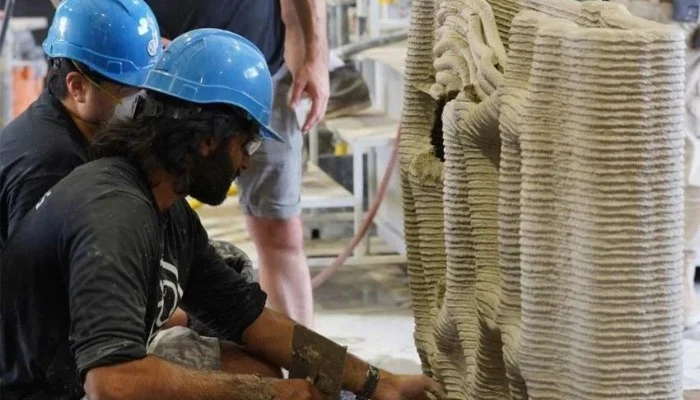
The company's core technology lies in "biomimetic design." Using 3D printing, they can rapidly manufacture seawall panels at speeds of 500 mm/sec, precisely constructing complex textures and cavities on the surface. These designs mimic natural structures like mangrove roots, providing perfect surfaces for attachment and shelter for corals, algae, and small marine organisms.
While matching the structural strength of traditional seawalls, the "Living Seawalls" are made from patented eco-friendly materials that release no harmful substances. They are essentially an artificial reef system that actively promotes biodiversity. They can even be equipped with sensors to monitor water quality in real time, forming an intelligent marine data network.
One of Kind Designs's key commitments is "no additional cost." By optimizing the printing process and working with governments to streamline permitting, they aim to make this eco-friendly technology price-competitive with traditional solutions, making it affordable for more coastal communities.
This innovation shows that with technologies like 3D printing, human infrastructure can shift from fighting against nature to coexisting with it. It is not only a breakthrough in coastal engineering but also offers a hopeful new paradigm for how we build in the age of climate change.