Minarium uses AI and natural-language search to simplify finding and sharing 3D printable tabletop miniatures.
3D model marketplace Minarium has launched an AI-driven platform designed to reduce the challenges creators and buyers face with 3D printable tabletop and role-playing game (RPG) miniatures.
Rather than relying on long lists of tags or rigid categories, Minarium uses natural-language search that interprets everyday descriptions and matches them against mathematical representations of each model’s form. The intent is to reduce the disconnect between how artists describe their work and how customers try to find it.
Industry forecasts point to significant growth by the end of the decade, and the influx of new creators has made visibility harder to secure. Many artists now spend considerable time experimenting with search terms and metadata, hoping to increase their chances of being discovered.
Buyers experience the same shortcomings from the opposite end, often needing to guess the exact phrasing that will surface what they want. Minarium’s approach is meant to soften that tension by allowing both sides to meet in a shared, more flexible language.
“As a creator, I was tired of wasting time describing my models instead of designing them, so I built Minarium to fix it,” said Robert Walczak, founder and CEO of Minarium. “I knew that if I could identify a simple way to help people find what they were looking for based on the ‘aboutness’ of their search instead of the specific contents of their query, I could change the game in the 3D printable miniatures market. Today with Minarium, if you search for [a] brutal battle ogre, you will find exactly what you’re looking for instead of only items that matched the precise words of your search.”
Building a safer digital marketplace
As Minarium works to improve how creators and buyers find models, the company is also trying to resolve the deeper issues that shape the digital miniatures economy. Piracy and trust have long influenced how creators price, distribute and protect their work, and they remain central concerns as the market continues to grow.
To tackle this, Minarium is developing fingerprinting technology that embeds an invisible identifier into each file, allowing creators to trace how leaked models move through unauthorized channels. It is pairing that tool with a blockchain-based transaction system designed to create a transparent and durable record of purchases, offering buyers and sellers a clearer view of where their files originate and how they are used.
Those technical choices feed into Minarium’s business model, which the company frames as an attempt to lower the financial burden typically placed on creators. It plans to charge single-digit commissions and avoid monthly fees, while giving early sellers added support and visibility.
In turn, buyers are promised quicker performance, flexible payment options and a private space to store their purchased models. By reducing costs on one side, the company argues, it can encourage more competitive pricing on the other.
Although the company has not provided specific launch dates for all upcoming features, it frames the marketplace as an attempt to address the core structural issues that have shaped digital model commerce: difficulty discovering assets, inconsistent search tools, intellectual-property risks and high platform costs.
Industry moves reshaping 3D marketplaces
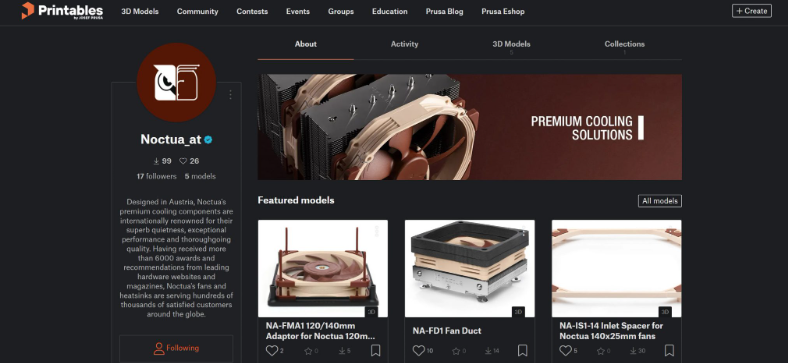
Away from Minarium, Czechia-based 3D printer manufacturer Prusa Research runs the Printables Store, a paid 3D model marketplace that lets creators sell printable designs directly through the Printables platform. Creators receive most of the revenue from each sale, with a 20% fee covering site maintenance and payment processing.
The store operates separately from Printables’ free model repository and includes rules to maintain quality, such as a $5 minimum price and upload limits that expand with sales volume. It supports multiple licensing options and complements Prusa’s subscription-based Printables Clubs by offering a one-time-purchase alternative.
In other news, renowned video game developer Epic Games acquired Sketchfab, a major web-based 3D model marketplace that had grown to more than five million users and four million assets, including 3D printable files.
Sketchfab’s platform allowed users to share, edit, buy, and sell 3D, AR, and VR content and integrated with tools such as Blender, Maya, Unity, and Epic’s own RealityCapture and ArtStation. Following the acquisition, Sketchfab continued operating independently while collaborating with Unreal Engine, and Epic reduced marketplace fees from 30% to 12% and expanded upload limits, making the platform more profitable and accessible for creators.