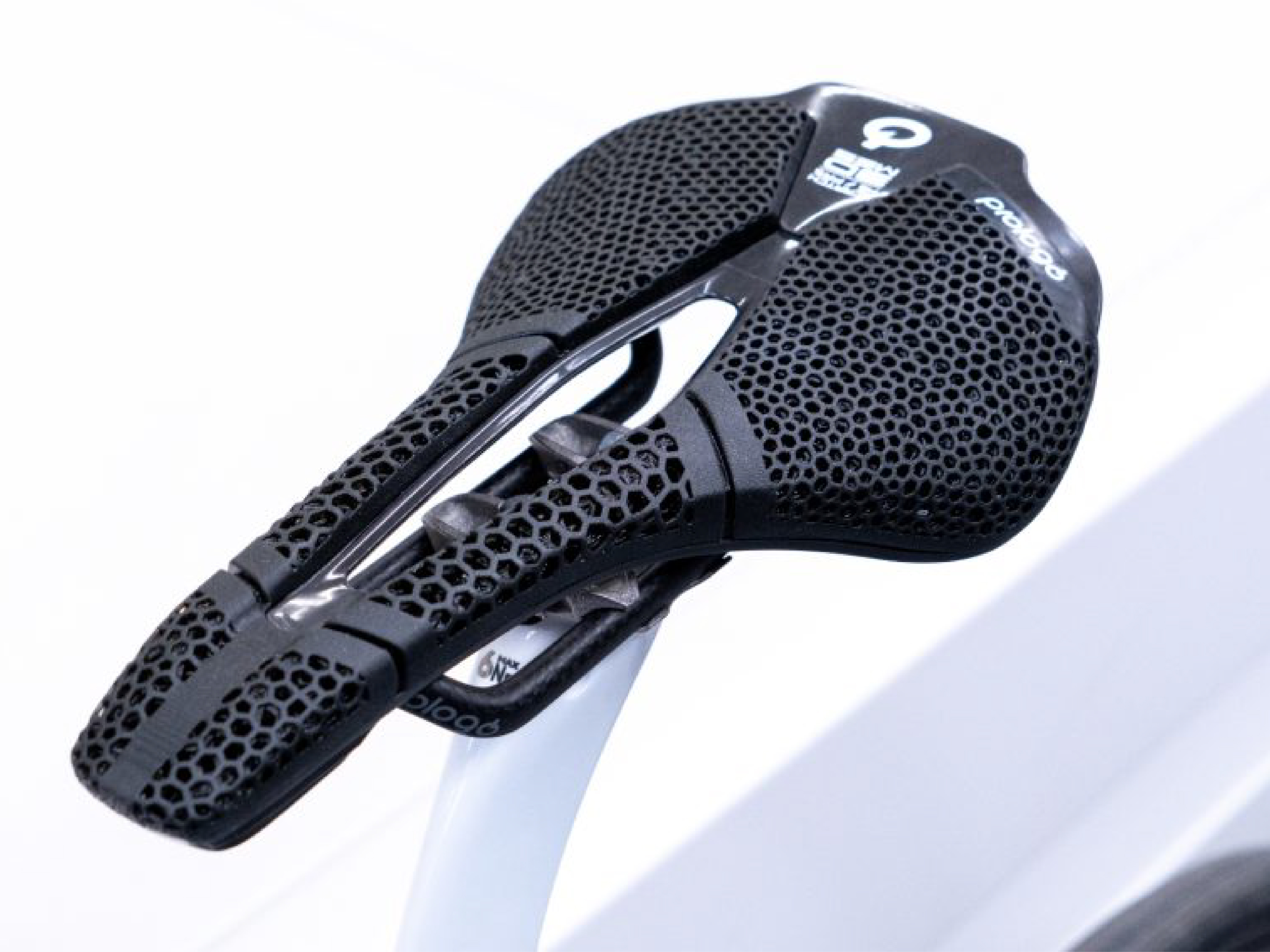
Smart 3D-printed bike saddles use zoned lattice structures for customized comfort and vibration absorption, trending across cycling.
For cycling enthusiasts, the biggest challenge of long-distance riding often isn't physical endurance, but the discomfort and pain caused by the saddle. Today, 3D printing technology is offering a brand-new solution to this age-old problem. The recent release of the Pro Stealth 3D saddle by Japanese cycling component giant Shimano is the latest product born from this trend.
Core Technology: The Zoned "Smart Mesh"
Unlike traditional saddles that use a single block of foam, this saddle's padding is entirely made from 3D-printed Expanded Polyurethane (EPU). At its heart is a zoned, multi-density lattice structure:
High-density front: Supports aggressive, forward-leaning sprinting positions.
Low-density middle: Disperses pressure when riding in a more upright posture, avoiding pressure points.
Ultra-low-density rear: Reduces weight, as contact is minimal during pedaling.
This design is informed by real pressure-mapping data, aiming to make the saddle adapt to changes in your posture, rather than forcing you to adapt to it.
Beyond Zoning: The Shock-absorbing "Hexagonal Honeycomb"
The entire lattice is composed of countless hexagonal honeycomb cells. They can not only deform independently to conform to the body but, more crucially, work together to absorb road vibrations, thereby reducing fatigue on long rides. Shimano deliberately left the lattice structure exposed to showcase the precision of the 3D printing process.
Industry Trend: Customized Comfort is Becoming Mainstream
Shimano is not alone. The entire industry is targeting 3D printing to achieve unprecedented levels of personalized support:
Trek's AirLoom saddle uses an open lattice, allowing each cell to move independently and dynamically adapt to the rider's position.
Prologo has applied a 3D-printed surface to its classic saddle geometry, achieving differentiated densities across various zones.
From military equipment to top-tier sports gear, 3D printing is evolving from merely "shaping forms" to creating functionality and experience. What it brings is not just lighter, stronger components, but intelligent products like this that "understand" your body and respond dynamically. On your next long ride, your comfort might just be determined by these invisible, tiny lattice cells.