Winston-Salem site becomes advanced production hub as Siemens pushes industrialization of 3D printing in the U.S.
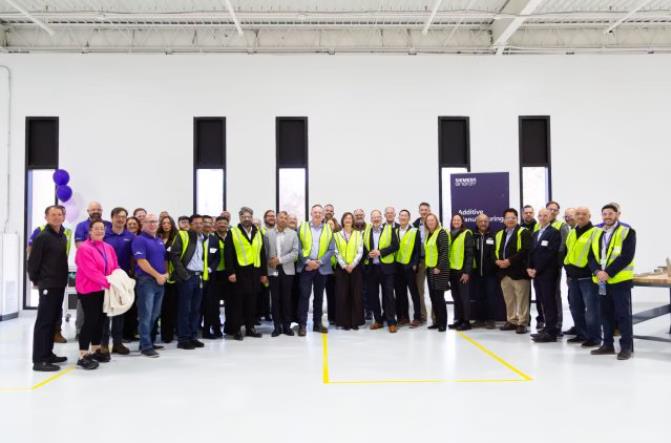
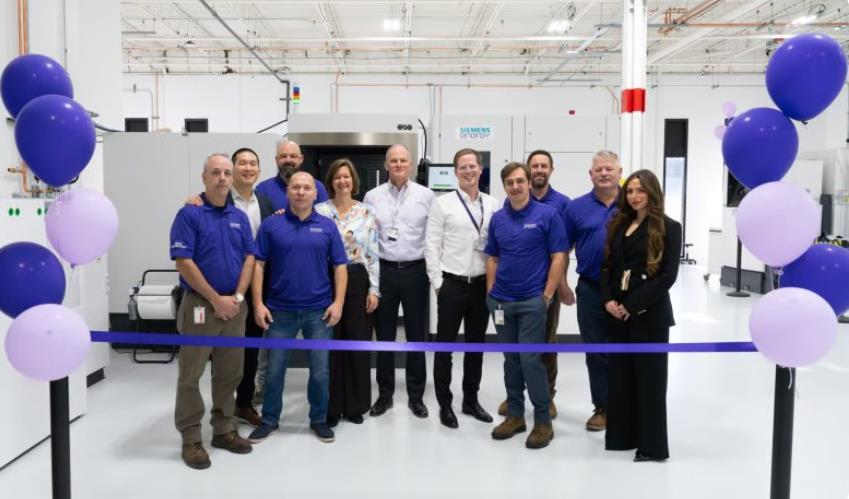
Siemens Energy has consolidated its North American additive manufacturing (AM) activities at a new Technology Center in Winston-Salem, North Carolina. The 500,000-square-foot facility marks a strategic evolution from an application center to a full-scale production site, reflecting rising demand for advanced energy technologies in the United States.
The move represents a significant step from the company’s previous location in Orlando, Florida, which had become inadequate within five years due to rapid growth. The new facility is part of a collaboration with the Winston-Salem Technology Center, known for its strong manufacturing capabilities and advanced industrial infrastructure.
“We’re proud to have officially inaugurated our new Siemens Energy North American Additive Manufacturing Center,” said Quan Lac, Vice President of Additive Manufacturing at Siemens Energy. “In just five years, we outgrew our original location in Orlando. We’ve now consolidated our AM operations into the 500,000-square-foot, state-of-the-art Winston-Salem Technology Center in North Carolina. Partnering with WTC and leveraging their extensive manufacturing capabilities marks a major milestone for our North American AM operations as we transition from an application center to a full-scale production facility. The timing is critical, as additive manufacturing is poised to help meet the unprecedented surge in energy demand we’re seeing across the U.S.”
Technology expansion and support for the U.S. market
The Winston-Salem center builds on Siemens’ existing Charlotte Advanced Technology Collaboration Hub (CATCH), also in North Carolina, which was established in 2013 to serve as an ecosystem platform for AM machine builders, industrial users, and design engineers. Siemens aims to bolster U.S. manufacturing by offering end-to-end solutions spanning automation, digital simulation, and data-driven process optimization.
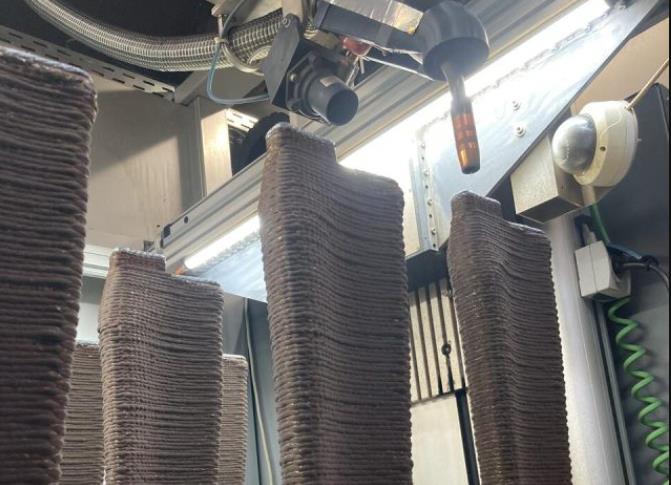
In general, Siemens Energy relies on technologies such as laser powder bed fusion (primarily through EOS DMLS) and wire arc additive manufacturing (WAAM) to develop high-performance parts, facilitate rapid prototyping, and provide on-demand spare parts. The company’s expertise also extends to advanced engineering services, including the design, simulation, and qualification of AM components.
Moving beyond prototyping to serial production
Siemens Energy’s AM efforts are built on more than a decade of experience and millions of operating hours within its own gas turbine fleet. Its technologies include Laser Powder Bed Fusion (LPBF) and Wire Arc Additive Manufacturing (WAAM), used to produce high-performance parts, enable rapid repairs, and deliver on-demand spare components.
In 2017, working with EOS, Siemens successfully tested 3D printed gas turbine blades under full-load conditions. Today, the company is engaged in serial production of complex parts such as burner nozzles and turbine vanes, which have reduced lead times and improved system performance. Siemens also provides design, simulation, and qualification services for AM components.
To support industry-wide adoption, Siemens Energy has established an Additive Manufacturing Advisory Board composed of experts from various sectors, tasked with guiding the company’s AM strategy in response to growing U.S. market needs.