The 15th National Games torch relay commenced on November 2, 2025, across four cities, highlighted by a humanoid robot torchbearer and a 200-leg relay.
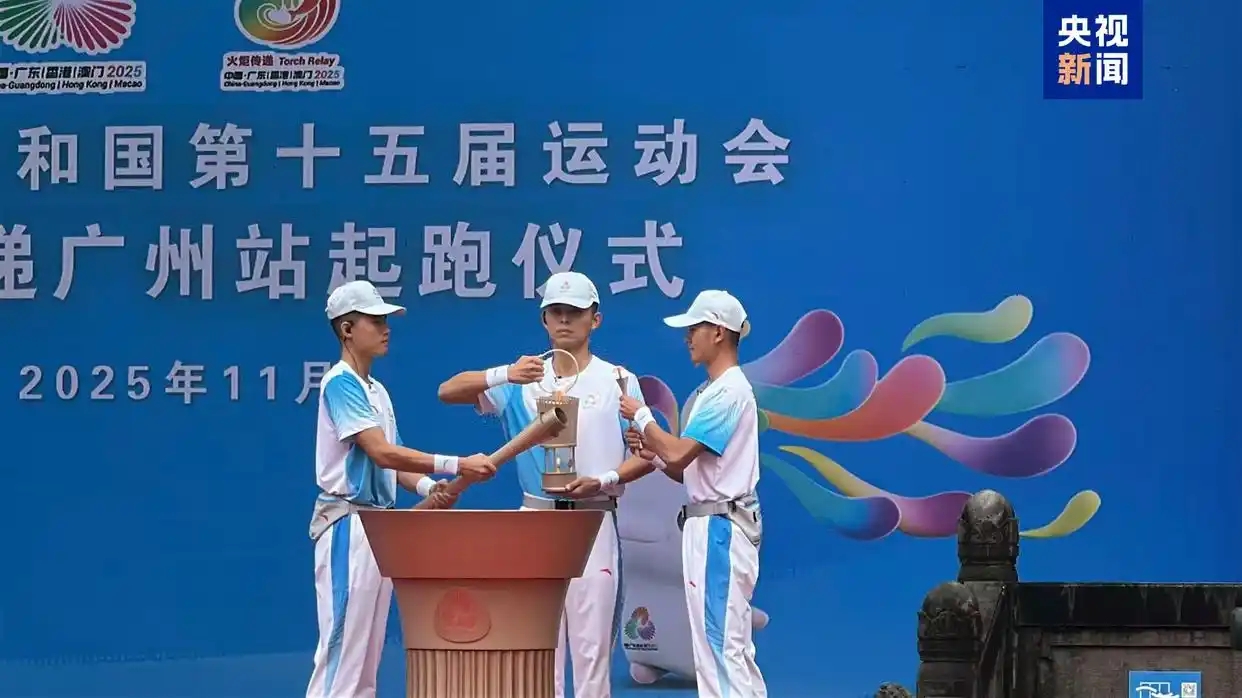
On the morning of November 2, 2025, the torch relay for the 15th National Games was launched simultaneously in Shenzhen, Hong Kong, Macao, and Guangzhou. The first torchbearer, Xue Qikun, set off from Shenzhen's Lianhuashan Park, officially igniting the passion for the national sports event.
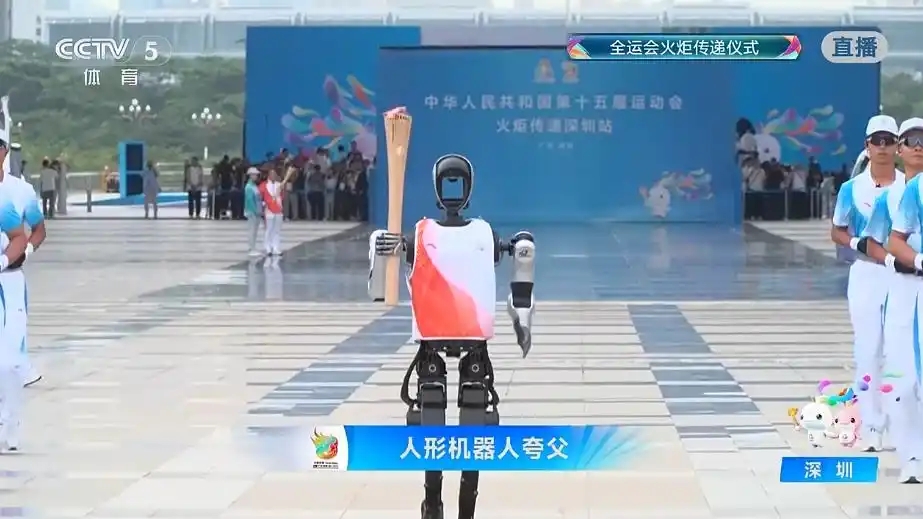
Notably, the "Kuafu" humanoid robot acted as a special "Torchbearer Zero," conducting the relay between the second and third legs, showcasing a perfect integration of technology and sports. The entire relay comprised 200 legs, with each city responsible for 50 legs, and each leg covering a distance of approximately 50 to 100 meters.
The Torch "Blossom": Design Inspired by the "Small Waist"
Inspired by Guangzhou's landmark, the "Canton Tower" (often referred to as the "Small Waist"), the torch "Blossom" for the 15th National Games and the National Para Games features a sleek golden form and uses clean-burning, efficient propane as fuel. The torch stands 760mm tall, has a net weight of 1.6kg, and boasts a refined, technologically advanced appearance.
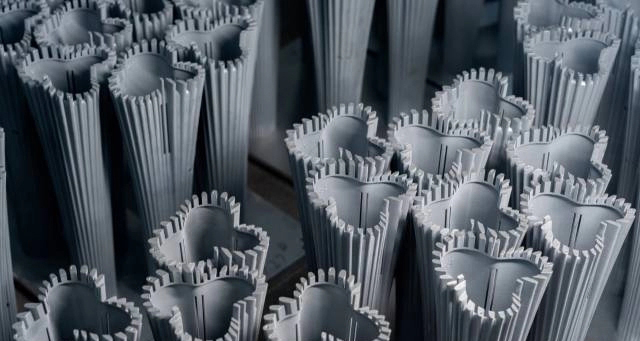
The upper section of the torch incorporates the emblem's design. The midsection utilizes high-transparency, heat-resistant glass and three pillars symbolizing Guangdong, Hong Kong, and Macao, collectively forming the flame display area. The base consists of a three-petal structure, signifying the collaborative progress of the three regions.
Highly Challenging Manufacturing Process: 3D Printing Becomes the Key Breakthrough
It is reported that the torch "Blossom" was designed and manufactured by Guangdong Macro Gas Appliance Co., Ltd. The torch's extremely complex geometry posed significant challenges for traditional manufacturing techniques, which struggled to achieve the fluid contours while maintaining strength and lightweight requirements, and also incurred high processing costs.
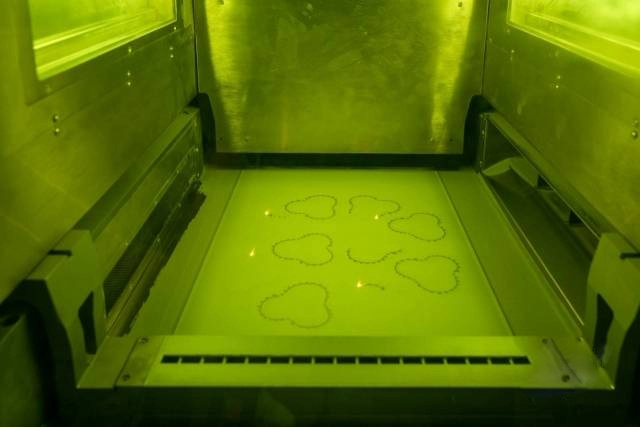
After multiple rounds of design comparison and selection, the team ultimately chose to employ metal 3D printing (Additive Manufacturing) technology, enabling comprehensive breakthroughs from structural optimization to aesthetic design.
To reduce weight, the main body of the torch was manufactured using aluminum alloy. However, aluminum alloy has a relatively low melting point and limited high-temperature resistance. To address this, the R&D team utilized a stainless steel 3D printing process for the torch's top section to ensure thermal stability during combustion. This process offers high precision but involves a longer production cycle and greater technical difficulty.
Furthermore, the torch's exterior was coated with a special heat-resistant layer to prevent carbon buildup and blackening during combustion. This ensures the torch remains bright and pristine even after the relay, allowing torchbearers to keep it as a clean memento.
3D Printing Empowers "Guangdong Manufacturing," Showcasing Industrial Innovation Strength
"The core aspect of this torch's design is that the entire main structure was produced using 3D printing, specifically metal additive manufacturing," said Zhang Liwen, Director of the Torch Relay Department under the Large-Scale Activities and Volunteer Service Unit of the Guangdong Division Executive Committee for the Games. "This not only reflects the caliber of Guangdong manufacturing but also demonstrates the masterful craftsmanship present in China's industrial development."
In fact, utilizing 3D printing technology to create torches has become a new trend for major domestic sporting events.
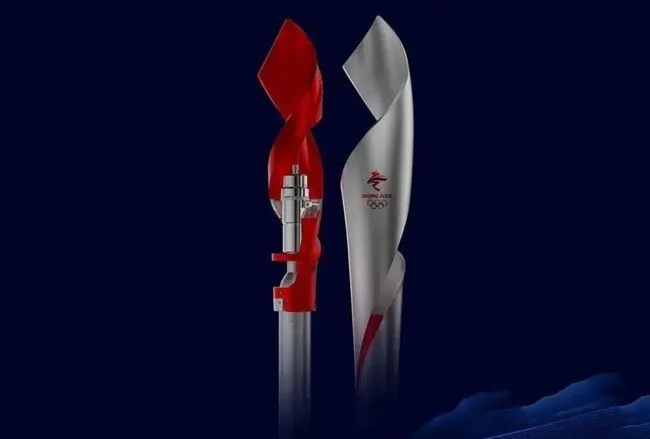
From the metal 3D-printed spiral form of the 2022 Beijing Winter Olympics torch "Flying," to the titanium alloy printing process of the 2023 Chengdu Universiade torch "Rong Fire," and the use of metal additive manufacturing in the 2025 Chengdu World Games torch "Bamboo Dream" to achieve a balance between lightweight and high strength, 3D printing is continually granting torches greater design freedom and manufacturing precision.
Now, the debut of the 15th National Games torch "Blossom" once again highlights the brilliance of 3D printing in the realm of torch design. It not only showcases the innovative capabilities of Guangdong manufacturing but also sets a new application benchmark for China's 3D printing industry.