October 30, 2025      Applications      8537

PIX Moving Huzhou Digital Manufacturing Factory Officially Commences Operation

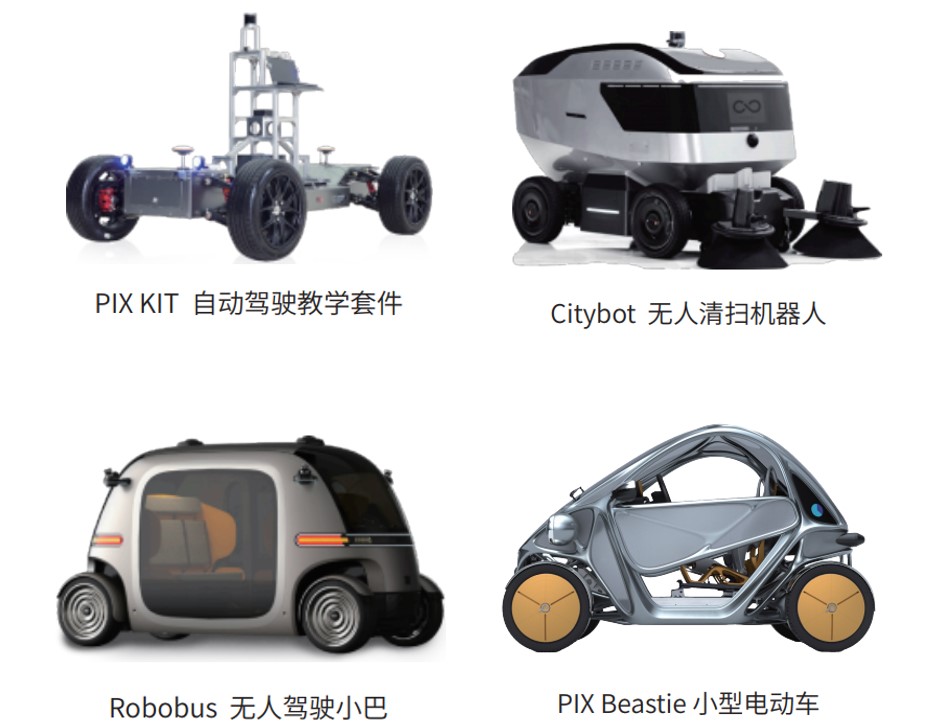
PIX Moving's Huzhou Digital Manufacturing Factory officially commenced operations on the 28th of this month. As PIX's first mass production base in China, the Huzhou factory is the third intelligent manufacturing facility in its global network, following the Guiyang pilot plant and the Chigasaki robotics factory in Japan. The Huzhou factory is primarily responsible for mass-producing core product modules such as the RoboBus and Beastie.

Unlike traditional automobile assembly plants, PIX has integrated extensive AI algorithm design and manufacturing processes into this factory. It has established metal 3D printing workstations, composite material 3D printing workstations, and RTM real-time molding workstations, enabling flexible, real-time, and self-learning manufacturing capabilities. Coordinated through the intelligent PAM algorithm platform and the RTM real-time manufacturing system, these workstations reduce the number of parts by 70% and mold costs by 90%, marking a critical step from proof-of-concept to scaled mass production in autonomous vehicle manufacturing.

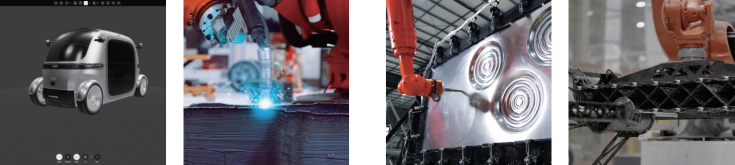
PIX's workstation

Digital Manufacturing Factory: The Intelligent Production Line Integrating AI Algorithms and 3D Printing

Founded in 2017 and headquartered in Silicon Valley, PIX Moving is a global pioneer in third-generation automotive and toolchain development and application. The company's self-developed PAM algorithm modeling platform and RTM real-time manufacturing system form a complete digital manufacturing toolchain, creating a closed-loop ecosystem that integrates the entire process from design to engineering to manufacturing.

The Huzhou Digital Manufacturing Factory is the physical realization of this toolchain concept. The factory is equipped with various self-developed 3D printing systems, with the WAAM metal 3D printing workstation and the composite material weaving workstation serving as the core production units. Leveraging the AI algorithm-driven modeling and simulation platform, PIX can rapidly design and iterate complex structures, completing structural optimization and manufacturing verification for unmanned vehicles in an extremely short time.

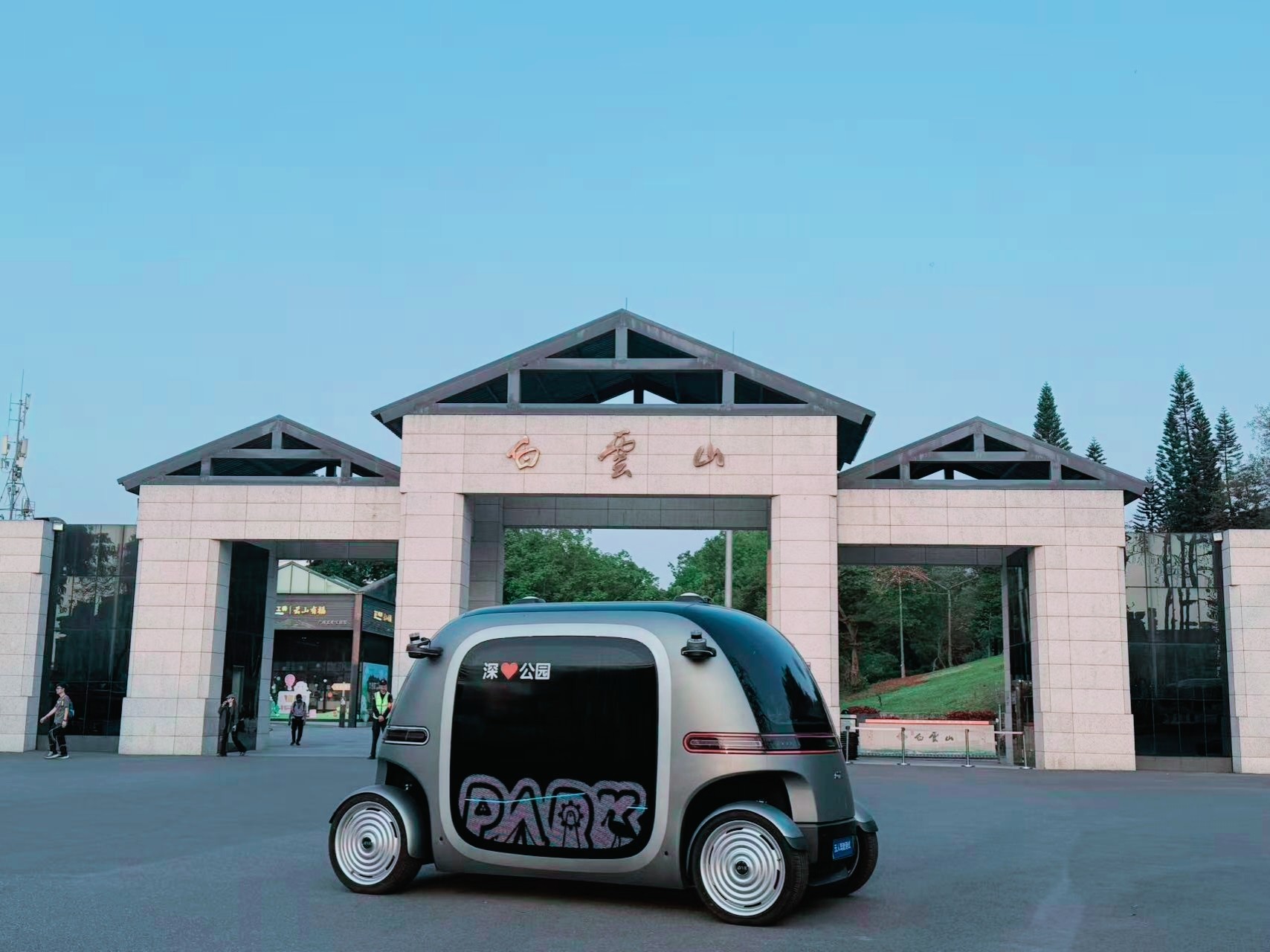
Unmanned minibus (RoboBus)
PIX describes this digital factory as an "intelligent manufacturing testing ground for future mobility," capable of flexible production to meet fragmented and customized market demands. Through the synergistic use of WAAM and composite material printing, PIX has achieved breakthroughs in vehicle lightweighting, structural integration, and cost control.

WAAM Metal 3D Printing: A Powerful Tool for Large-Size, Low-Cost Industrial Manufacturing

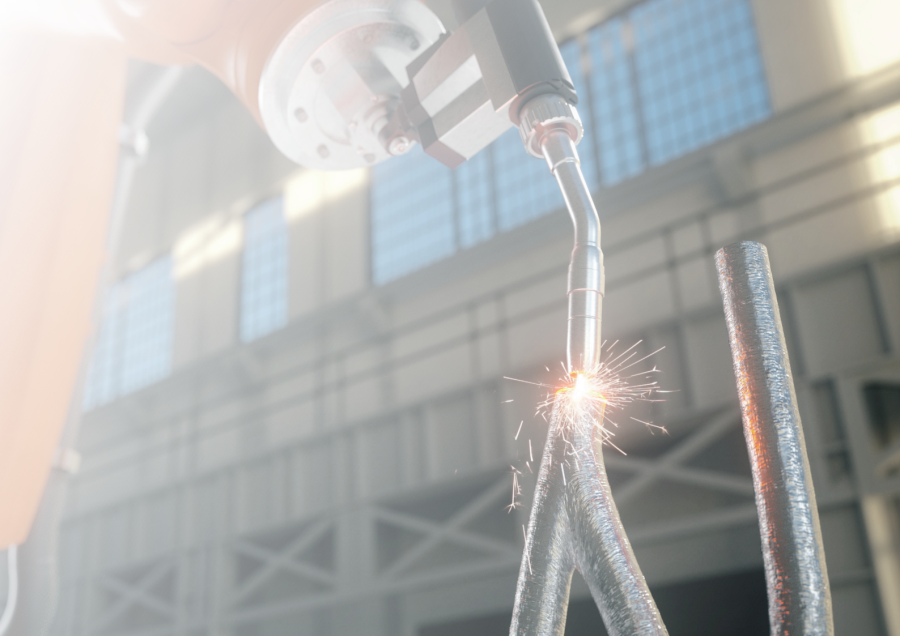
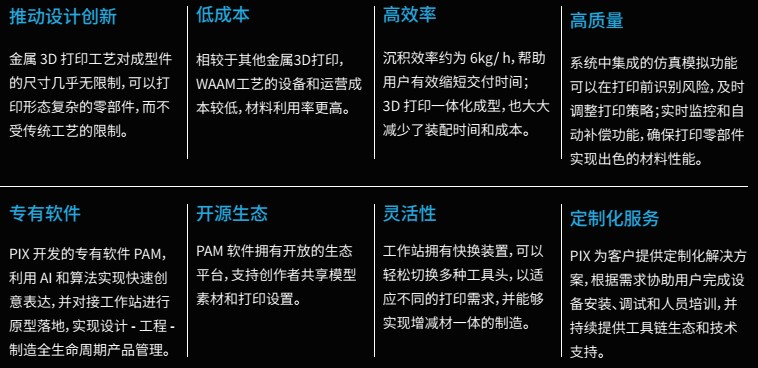
WAAM is a directed energy deposition technology that uses metal wire as the feedstock and an electric arc as the heat source. Compared to traditional Laser Powder Bed Fusion processes, WAAM offers significant advantages in low cost, high efficiency, and large build size, making it particularly suitable for manufacturing large metal structural components and complex frame structures.

PIX's self-developed LIGHTSABER hybrid metal additive-subtractive manufacturing workstation is an intelligent manufacturing platform based on WAAM technology. This system is equipped with a KUKA six-axis industrial robot, a CMT welding system, an integrated milling module, and the PAM algorithm software platform. It enables simultaneous simulation analysis, path optimization, and real-time monitoring during the 3D printing process, achieving a deposition rate of 6kg/h and repeatable positioning accuracy at the 0.1mm level.
Notably, PIX's WAAM system supports various materials including steel, stainless steel, aluminum alloy, and titanium alloy, and utilizes AI algorithms for structural topology optimization and automatic print path compensation. The entire manufacturing process, from design modeling to forming and machining, achieves a digital closed-loop, significantly shortening the part delivery cycle.

Algorithm-Driven Manufacturing System: Integrated Innovation from Design to Manufacturing

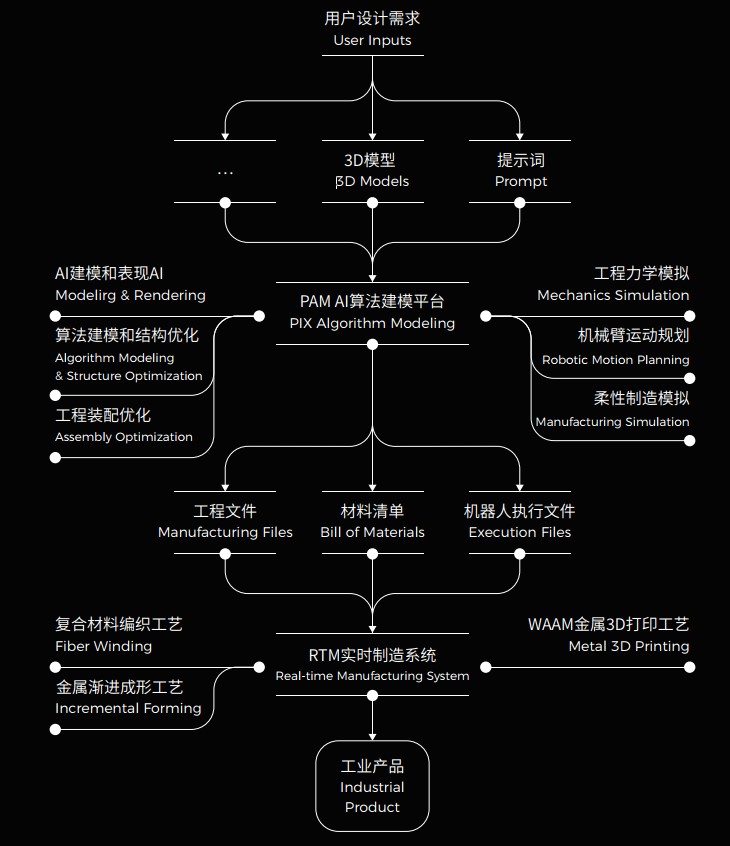
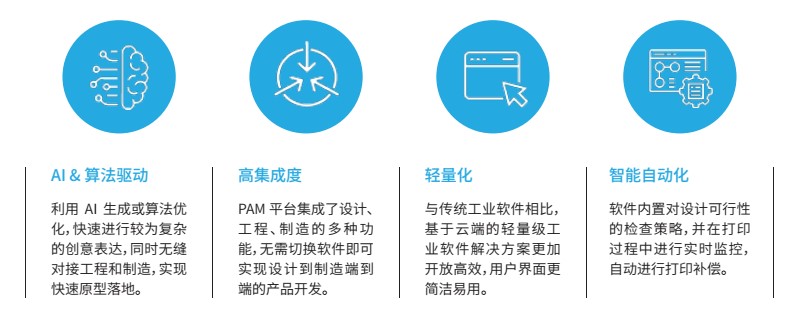
Unlike traditional CAD/CAM workflows, PIX's PAM platform is an AI and algorithm-driven integrated industrial design and manufacturing platform. Designers can use PAM to generate models with AI, perform mechanical simulations and assembly optimization, and enable multi-user collaboration through cloud-based co-working functions. The system automatically evaluates the manufacturability of models, performs printing simulations and error analysis, and then directly transmits the execution files to the RTM system and robot controllers.

During the online manufacturing process, PAM monitors the printing process in real-time using visual recognition and point cloud data acquisition. When deviations are detected, the system automatically performs path compensation and parameter adjustments, enabling a highly intelligent and unmanned manufacturing workflow. This integration of AI and manufacturing allows PIX Moving to truly build a self-consistent closed loop of "data-algorithm-manufacturing."

Rapid Manufacturing and Structural Innovation for Unmanned Vehicles

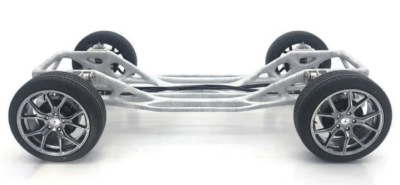
Within PIX's Huzhou factory, WAAM and composite material 3D printing technologies are already being used to manufacture autonomous vehicle display cars, chassis structures, body frames, and functional modules. The lightweight structures generated by the PAM algorithm minimize material usage while ensuring strength and enable the rapid integration of various sensors, power systems, and control systems through algorithmic adjustments.

For example, in PIX's self-developed Robobus unmanned minibus project, the WAAM-printed integrated body frame achieves both lightweighting and modularization, while also significantly simplifying the assembly process. A framework that previously required hundreds of welded parts can now be obtained as a single integrated structure through one printing process. Combined with the composite material weaving process, PIX achieves synergistic optimization of metal and non-metal structures, greatly enhancing the vehicle's overall strength, stiffness, and fatigue resistance.

This digital manufacturing approach has reduced PIX's vehicle development cycle by over 60% and cut production mold costs by 90%, truly enabling a transition from a "design for manufacturing" agile development model to a new industrial paradigm of "algorithm-driven manufacturing."
PIX Moving's digital manufacturing system, by combining AI modeling and 3D printing, enables moldless, small-batch flexible production, thereby avoiding the reliance on traditional supply chains for molds, tooling, and outsourced processing. The factory's production lines have reconfigurable capability, allowing the same equipment to quickly switch between producing different products based on algorithmic commands, realizing truly distributed manufacturing. This model not only enhances the company's global response capability but also aligns with sustainable industrial trends. PIX's WAAM process boasts extremely high material utilization with almost no waste; simultaneously, the combination of digital design and localized production reduces carbon emissions associated with transportation, providing a practical path for low-carbon manufacturing.
With the commissioning of the Huzhou Digital Manufacturing Factory, PIX Moving is not only providing a replicable template for intelligent manufacturing within the unmanned vehicle industry but also demonstrating the potential of the third-generation manufacturing model that integrates AI and 3D printing. The combination of WAAM metal 3D printing and the PAM algorithm platform drastically compresses the development cycle for complex products from design to realization, steering industrial manufacturing towards true intelligence, adaptability, and sustainability.

Looking ahead, PIX plans to continue improving its global distributed manufacturing network, deploying WAAM workstations and composite material 3D printing systems to overseas factories, realizing a new ecosystem of "digital design, global manufacturing." It is foreseeable that as PIX's manufacturing model matures, 3D printing technology will transition from experimental applications to mass production within the automotive industry, becoming a significant force driving the global transformation of intelligent manufacturing.


©2025 3dptimes.com All Rights Reserved