A team from Southern University of Science and Technology (SUSTech), China, has proposed a novel “3D printing + expansion forming” method.
For the first time, it enables the controllable arrangement of continuous fibers at any in-plane angle within a composite honeycomb structure, greatly improving mechanical performance. The relevant findings were published in Composites Part B.
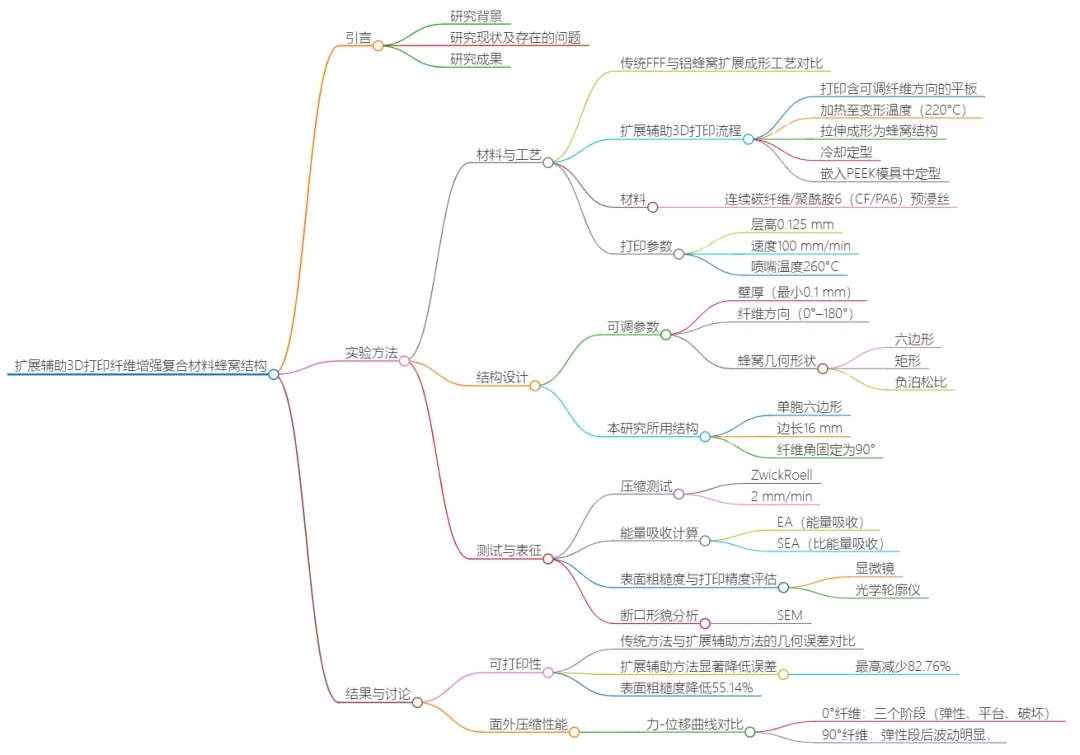
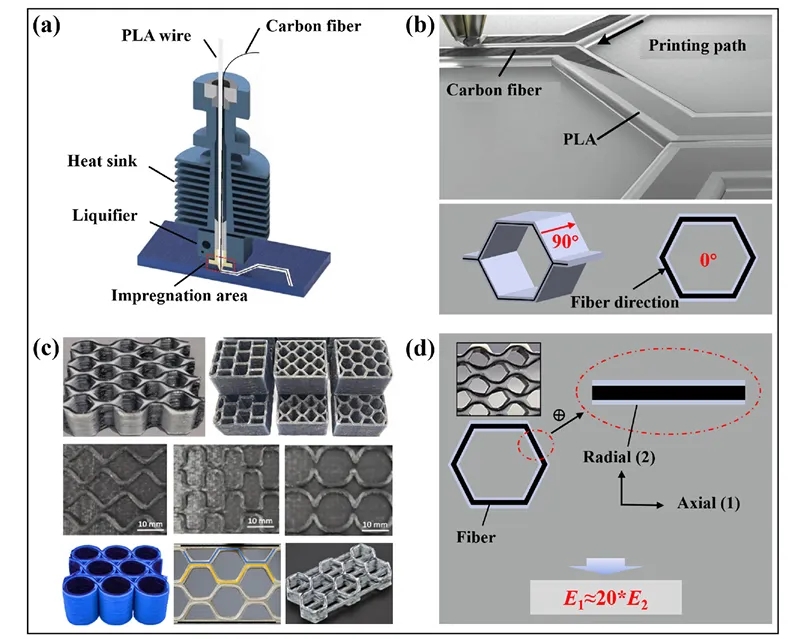
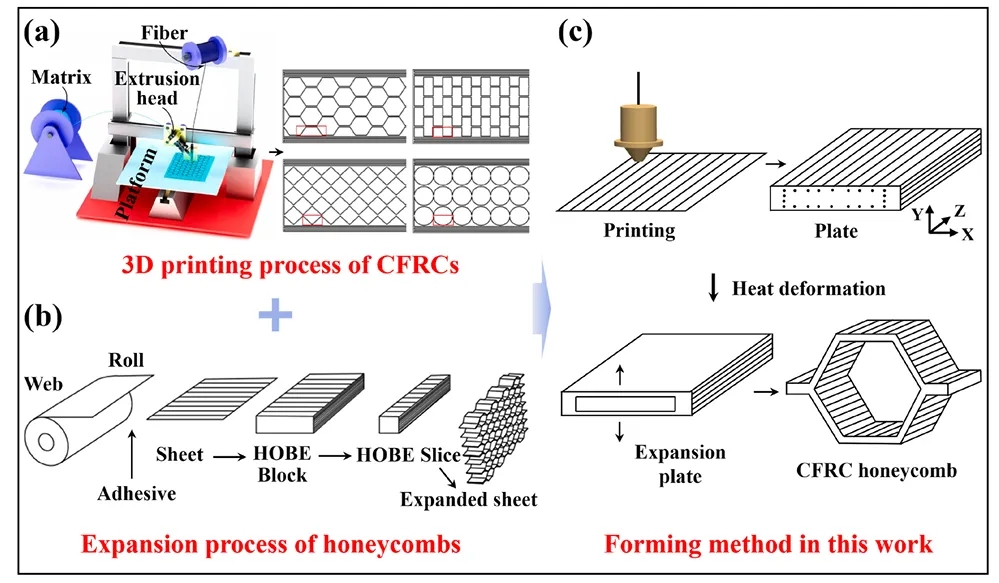
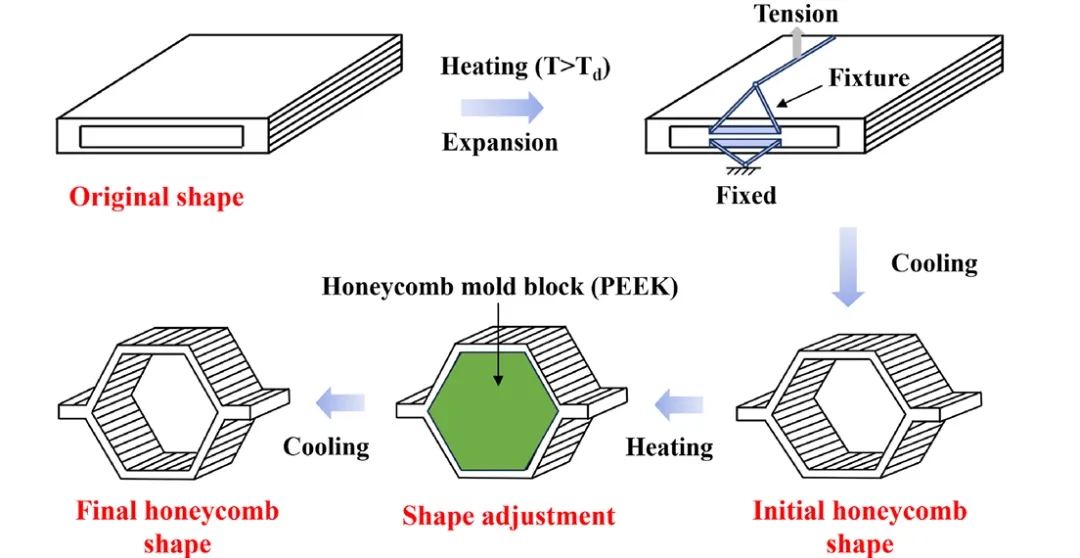
Conventional 3D-printed honeycombs, limited by layer-by-layer fabrication, can only align continuous fibers along the out-of-plane direction, failing to utilize the fibers’ high strength and stiffness in the in-plane direction. The research team took inspiration from the expansion process used for aluminum honeycombs. First, they used FFF 3D printing to produce a flat composite panel with a preset fiber angle (set to 90° in this study). Then, they applied a hot expansion process (220°C, 2 mm/min stretching) to transform the panel into a honeycomb structure, finally shaping it with a 3D-printed PEEK mold. This method simplifies complex 3D path planning into 2D planar design, achieving decoupling between fiber orientation and honeycomb geometry.
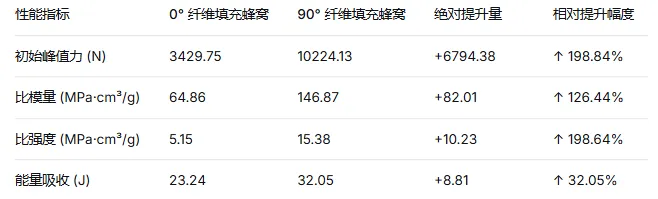
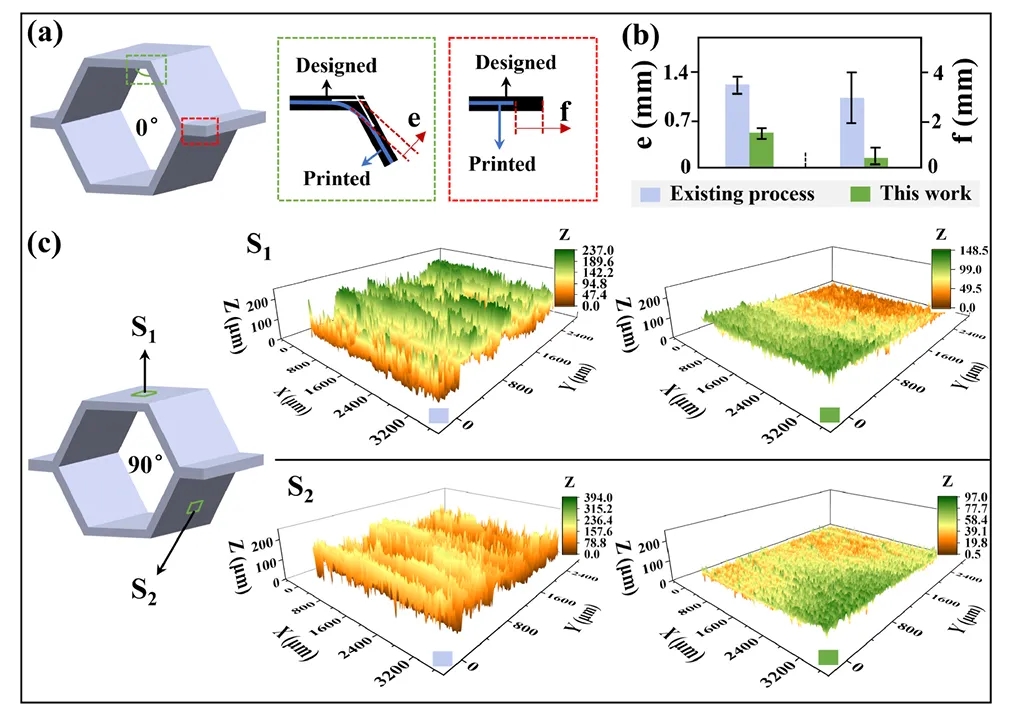
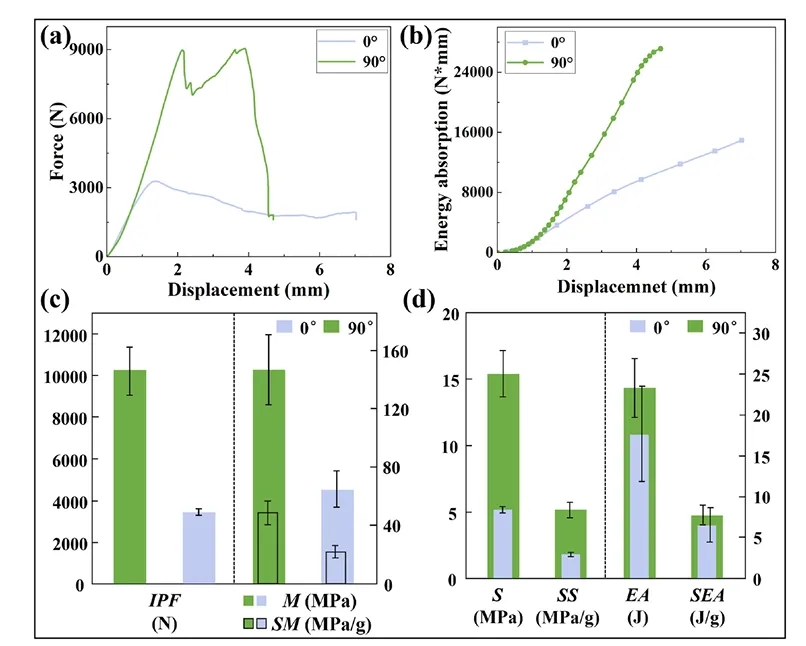
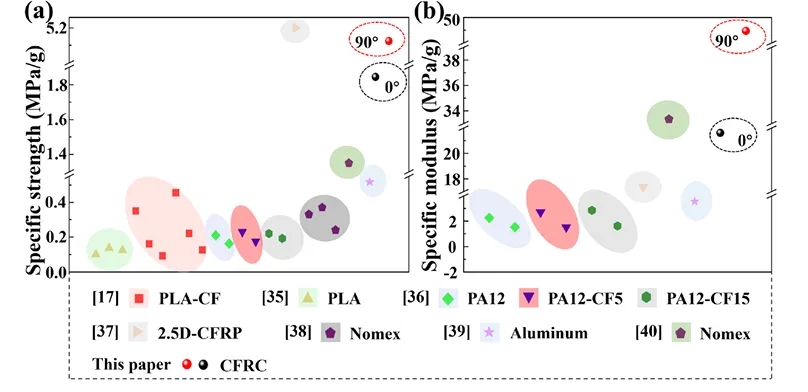
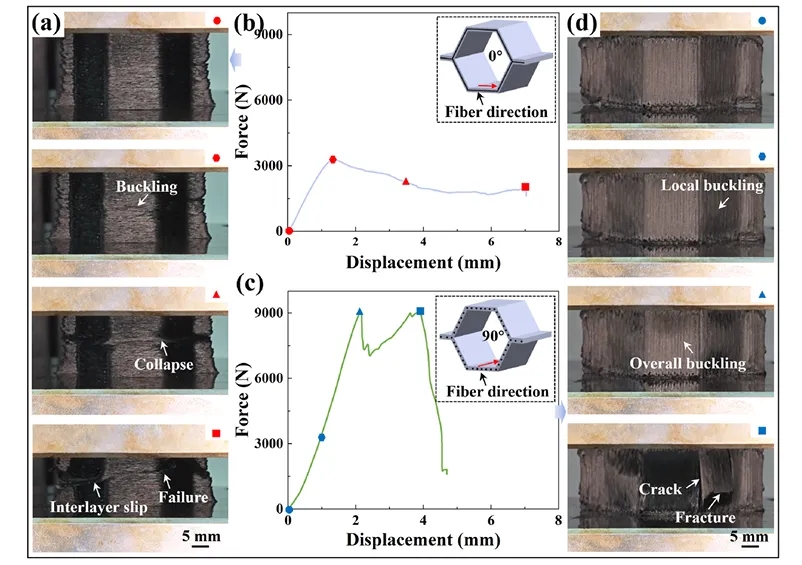
Experimental results show that compared to a conventional 0° fiber-filled honeycomb, the 90° fiber-filled honeycomb reduced dimensional errors by 82.76% and decreased surface roughness by up to 55.14%. Mechanical performance also saw significant improvements: initial peak force increased by 198.84%, specific modulus by 126.44%, specific strength by 198.64%, and energy absorption by 32.05%. Furthermore, the 90° fiber honeycomb outperformed other competitive structures reported in the literature, such as PLA honeycombs and Nomex honeycombs, in terms of specific out-of-plane compressive strength and specific modulus.
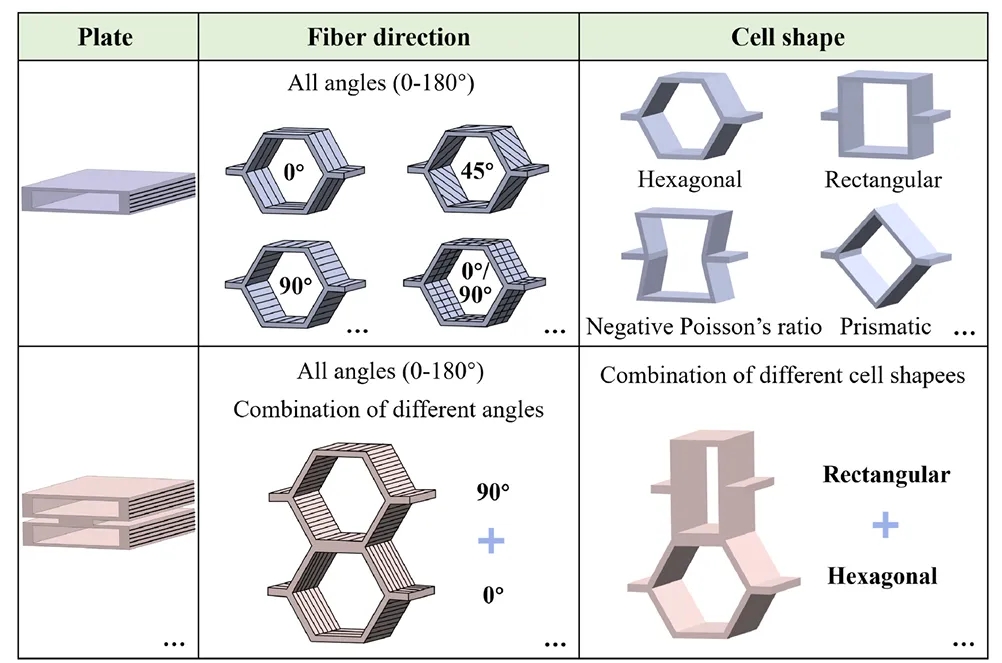
This method offers engineers unprecedented design freedom, enabling different fiber angles (0°–180°), hybrid layups, and combinations of various cell geometries. It opens a new path for applying lightweight, high-strength composite honeycomb structures in fields such as aerospace, rail transportation, and protective equipment. In addition, the out-of-plane compressive strength prediction model developed in the study agrees well with experimental results, providing a reliable theoretical tool for engineering design.