Home  >  News

March 5, 2026      News      9348

MIT Turns Plastic Waste Into Lightweight, Durable Housing Frames

Faced with the dual global challenges of housing shortages and plastic pollution, researchers at the Massachusetts Institute of Technology (MIT) have proposed an innovative solution: using recycled "dirty plastics" for large-scale 3D printing of lightweight, high-strength building structural components, aiming to replace traditional wooden frames.
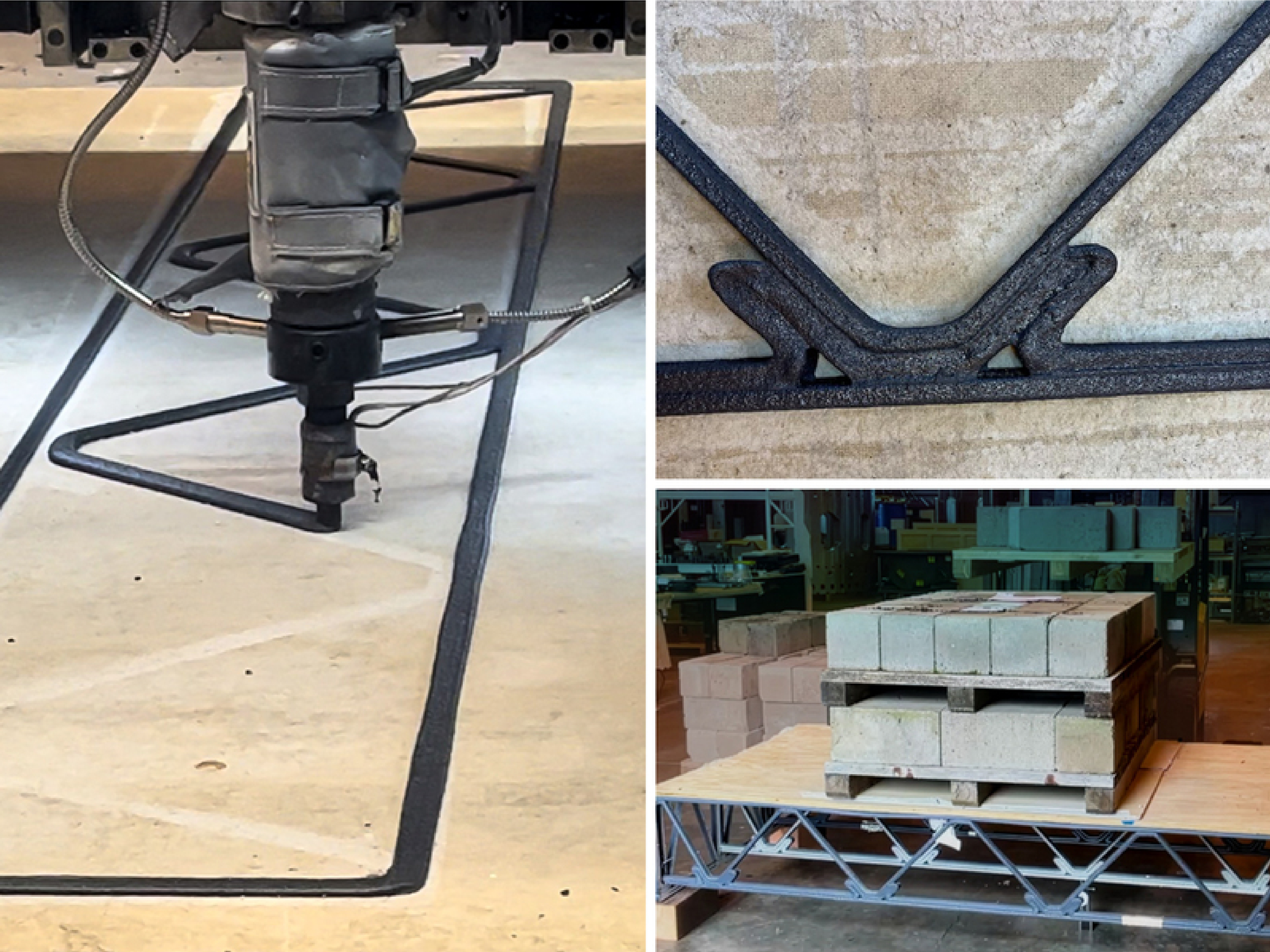
The breakthrough of MIT's HAUS project lies in its ability to process unwashed "dirty plastics" with residues (such as beverage bottles). After shredding and pelletizing, these materials can be directly used in industrial-grade 3D printing. This eliminates the need for costly preprocessing and provides a high-value outlet for plastic waste.
The team printed floor trusses using a composite of recycled PET and glass fibers. In tests, these trusses, weighing only about 6 kilograms each, withstood over 1.8 tons of weight before bending, far exceeding U.S. housing standards. Compared to wooden trusses, they are lighter, more corrosion-resistant, and can be printed in just 13 minutes per unit.
This technology aims to produce a full set of house frames, including wall studs and roof trusses. Its advantages include:
Environmental Protection: Reduces plastic landfill and decreases the need for deforestation.
High Efficiency: Modular components are easy to transport (even via pickup trucks) and can be produced and assembled locally at a rapid pace.
Sustainability: Offers a potential circular economy model to help meet the global demand for 1 billion new homes.


©2025 3dptimes.com All Rights Reserved