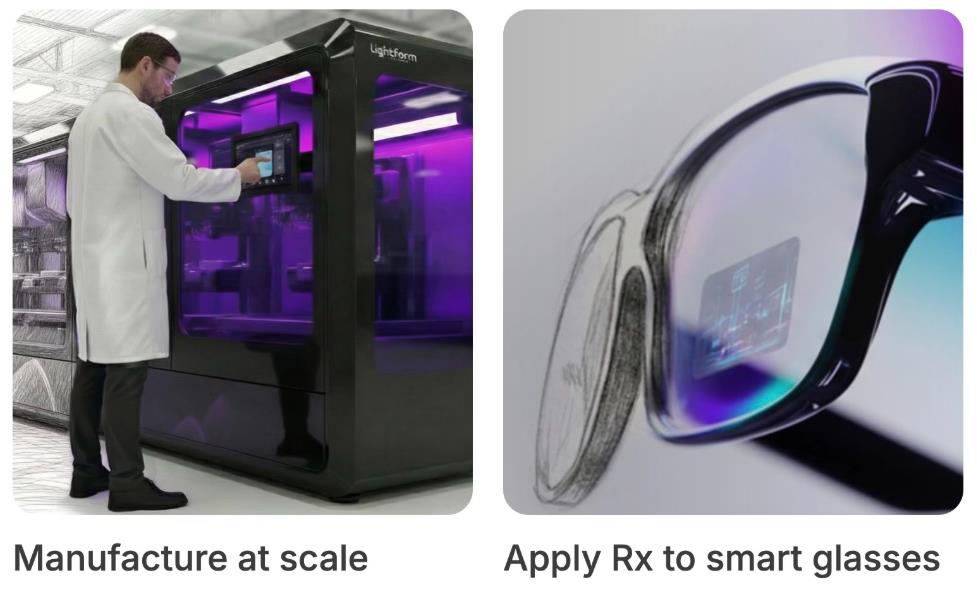
IOT is introducing Light-Form, a digital additive manufacturing approach for ophthalmic lenses that could produce fully customized prescriptions in seconds using a single flash of light. The process uses stabilized frontal photopolymerization, which hardens a liquid resin all at once instead of making lenses layer by layer and aims to remove the need for voxelization, surface polishing, and a lot of extra finishing. The first manufacturing site using the method is operating in Madrid, within one of the company’s R&D hubs.
Light-Form uses a controlled photopolymerization front to harden a lens blank directly to its final geometry, according to the company. In concept, the approach differs from subtractive surfacing and conventional 3D printing by forming optical-grade surfaces during curing, followed by surface hardening and lens mapping for verification. The company describes integrated resin recovery to reduce waste and envisions multi-head systems for higher throughput with a smaller footprint.
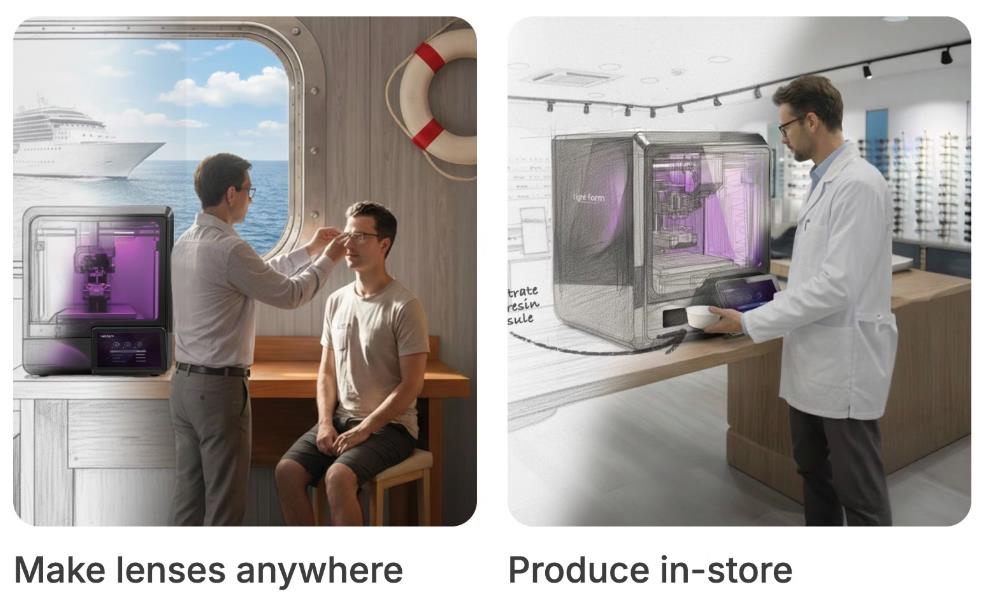
Other than using a photocurable material, the Light-Form process differs significantly from the process developed by Luxexcel, one of the first companies to target 3D printing of ophthalmic lenses (later acquired by Meta). According to IOT, Light-Form could be used to produce lenses at scale in large laboratories with larger machines, as well as to distribute lens manufacturing across smaller studios with more compact systems.
In fact, the company positions Light-Form as a pathway to distributed and in-store production, with compact equipment and sealed material capsules for faster turnaround and lower inventory. The process also offers sustainability benefits, including reduced material use (up to 70% less), reduced energy use (up to 90% less), and waste recovery.
In addition, the ability to digitally control the lens production process could enable integration of electronics to help drive the smart glass segment. This potential capability—which remains difficult to implement in practice—is conceptually similar to Luxexcel’s approach, which originally attracted Meta’s interest.
The first laboratory dedicated to innovation and manufacturing fully customized lenses using Light‑Form Technology is located in Madrid, within one of IOT’s innovative hubs.
If the Madrid site continues to validate speed and repeatability, the technology could enable more distributed manufacturing models—bringing custom lenses closer to the point of care while supporting higher-mix production. Early momentum will likely come from labs seeking faster cycle times and retailers exploring on-site fulfillment, with smart-glasses manufacturers evaluating the platform for thinner, lighter prescription integration.