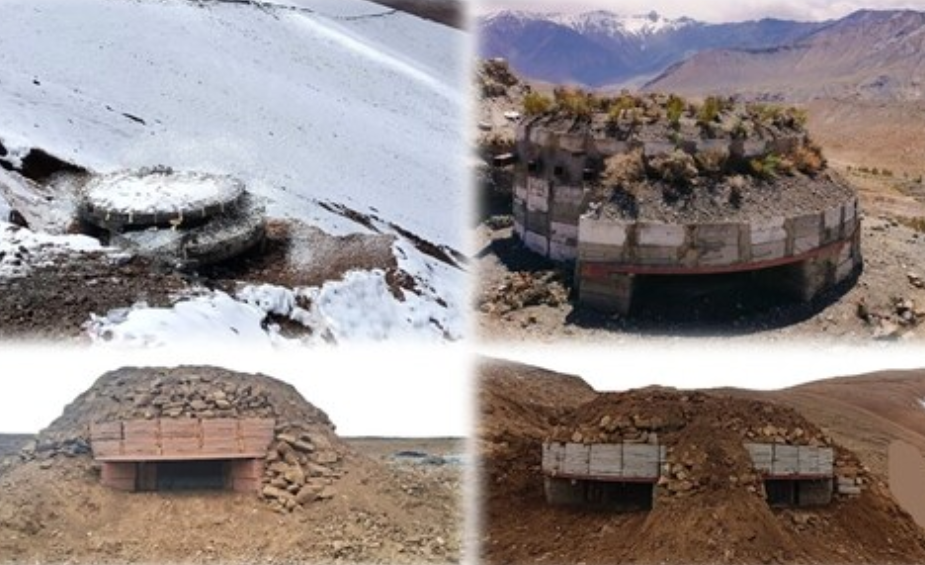
In a press release about MiCoB’s delivery of over 500 bunkers to the Indian Army, the company’s co-founder and CEO, Dr. Shashank Shekhar, said, “Delivering 500+ 3D Printed Bunkers to the Indian Army is more than an achievement, it’s a powerful demonstration of how innovation meets purpose to strengthen and protect our nation. Each structure has been thoughtfully designed with a deep understanding of the Army’s on-ground realities, ensuring every feature enhances safety, comfort, and operational readiness, even in the most challenging terrains.
“In the projects delivered by us, we saved over 20,000 tons of construction material compared to conventional methodology, aligning with our motto of building sustainably with speed. This is a proud moment for India as we are leading the innovation and adoption of 3D concrete printing technology, and the active support from various government and private stakeholders will position India as a leader in the sustainable construction practices.”
Just like in the rest of the world, India suffers from an increasingly severe lack of affordability in its housing market, with higher costs of inputs a major factor behind the crisis. The problem is obviously exacerbated by the fact that India contains almost 18% of the global population, and even more stratified disparities between rich and poor than prevail across the world at-large.
There are many conflicting claims about the benefits of 3D printed construction, but it seems beyond dispute that the technology is steadily improving all the time, and that it’s continuing to scale as it progresses. MiCoB, for one, has tested its technology for a number of different verticals beyond the military, including residential housing and resorts. And there are other startups in India achieving similar results.
AC stakeholders in India have an excellent opportunity to pitch themselves as a genuine Make in India success story. If India doubles down on AC, it would solve multiple problems simultaneously: above all, creating middle-class jobs as well as the infrastructure to house middle-class families (not to mention more impoverished demographics).
One problem with Make in India is likely that it has simply cast too wide a net to make as much of a dent in any one area as was initially hoped for. By narrowing the focus down to the handful of areas where Indian startups have been most productive, the endeavor may increase its chances for success.