October 28, 2026      Applications      3DPtimes | Translated from a supplied Chinese manuscript      10

Seven examples span runway dresses, racing apparel, insoles, printable footwear, custom sports protection, titanium eyewear and a composite watch case.

From color-shifting runway dresses to customized footwear and lightweight accessories, 3D printing is opening up new approaches to what we wear. These seven examples explore its role in appearance, fit, protection and performance.

1. Skin 3D-Printed Dresses

At Paris Fashion Week, Anrealage's Spring/Summer 2027 collection, Skin, put 3D-printed dresses in the spotlight. Rigid corset-like bodices use Effective Skin technology: printed scales appear to change color with the viewing angle, creating shifting tones as the models move.

Tokyo-based Sekisai Design developed a custom printhead that extrudes three colored filaments at a temperature intended to prevent them from mixing. Proprietary toolpath software controls how colors are distributed across different faces. The material is Kexcelled's K5 PETG, offered in more than 50 fashion-oriented colors, including translucent and metallic finishes.

The technique had not yet been commercialized when the source article was prepared. Its appearance on an official Paris Fashion Week runway nevertheless illustrates how fused deposition modeling can turn plastic filament into expressive fashion structures.

2. Nike's 3D-Printed Racing Suit

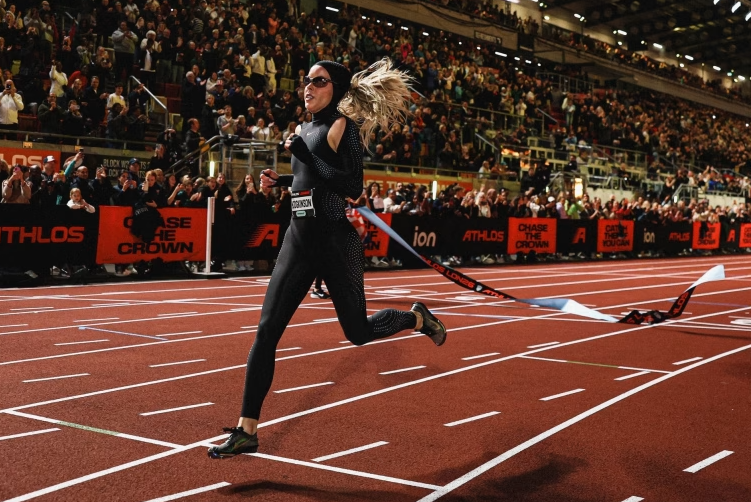
Nike created a one-of-a-kind speed suit for 800-meter runner Keely Hodgkinson. Its distinguishing feature is a set of 3D-printed, color-shifting delta-shaped vortex generators. Their dimensions and orientations are tailored to different areas of her body.

The generators are designed to create small vortices that draw faster air toward the slower airflow near the body. The aim is to reduce the low-pressure wake behind the runner and lower aerodynamic drag.

Handcrafted at Nike's LeBron James Innovation Center, the suit also combines different fabrics, minimal seams and no closures to limit drag. It incorporates articulated rear knees and a patented 4D motion gusset.

Nike had not disclosed the printing process, material or commercial availability in the information cited by the source article. Related approaches include Vorteq's use of 3D scanning for Olympic cyclists' aerodynamic suits and CRP Technology's printed vortex generators for supercars, showing how airflow management can inform both wearable and vehicle design.

3. DRIVE Pickleball Insoles

HeelBase introduced DRIVE as what it calls the world's first 3D-printed insole designed specifically for pickleball. The source article listed a preorder price of $59 per pair, against a stated regular price of $99.

Cushioning and arch support are printed together as a single lattice, without glued layers. The geometry is designed around the forces generated by pickleball's abrupt stops, changes of direction and lateral movement.

Specifications cited in the source include an 11.3 mm heel cup, 16 mm arch support and 4.3 mm lateral flange. The open lattice allows ventilation, while each insole weighs 54.9 g.

According to the development figures reported in the source, the project involved more than two years of work, 24 prototype iterations and over 3,000 hours of testing by 144 people. DRIVE is positioned as a general wellness product and is not a substitute for medical advice.

4. ShoeFactory Custom Printable Footwear

Munich-based Sneakprint launched ShoeFactory to sell STL files for customized shoes. Users scan both feet through a smartphone browser, without installing an app. The platform claims millimeter-level accuracy and generates parametric models separately for the left and right foot.

Browser-based 3D customization includes embossed text on straps, sole firmness, width, height and internal lattice density. Each adjustment recalculates the design around the user's foot shape. The source describes a ZIP download generated in one or two minutes, containing separate left and right shoe meshes with the complete lattice already included.

The recommended materials are 95A/96A TPU or flexible polyurethane. The source lists Bambu Lab X1/P1, Prusa MK4, Creality K1 and Anycubic Kobra printers, with a minimum build volume of 220 × 220 × 250 mm, a 0.4 mm nozzle, a heated bed and direct-drive extrusion. Profiles for three major slicers are included. Users should check the requirements for their particular printer and material before printing.

At the time described in the source, the only available design was the Easy Slide sandal, priced at €64.99, with unlimited printing after purchase. A loafer was in development. The platform was also seeking designers and suppliers of filament and accessories. Users had 90 days to complete their designs, with scan data scheduled for automatic deletion after the retention period.

Website: https://shoefactory.ai/

5. Custom Breast Protection for Combat Sports

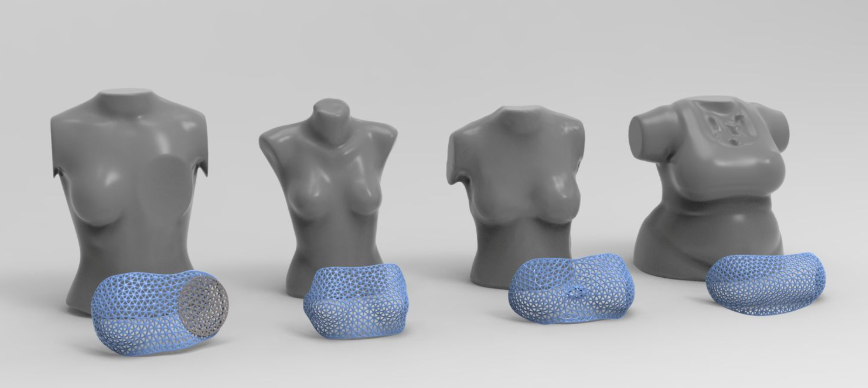
Beatriz Jerez Arnau, a graduate of OTH Regensburg, developed customized breast protection for female boxers and martial artists. The source article reports that the project was a national runner-up in the 2026 James Dyson Award.

Conventional protectors are often sold with sports bras in fixed sizes. Chest circumference alone does not describe breast shape; a shifting cup can cause rubbing and may increase injury risk.

Jerez Arnau's approach starts with a smartphone scan of the upper torso. Software she developed generates a custom protective shell with parametrically adjustable dimensions for sports such as boxing and taekwondo. The design also accommodates anatomical asymmetry.

The shells are 3D-printed in flexible TPU. The source gives a printing time of approximately 14 hours and a material cost of about €8.50 per shell. Instead of being permanently attached to a bra, the shells fit into dedicated internal pockets, allowing athletes more freedom in choosing their underwear.

Her supervising professor also highlighted the project's feminist and inclusive critique of shortcomings in existing products. Research on sports-related breast injuries remains limited; the source cites a 2018 U.S. study of 194 female college athletes indicating that such injuries are often underreported. It listed October 14 as the date for the international award selection. Commercialization remained uncertain.

6. 3D-Printed Titanium Eyewear Temples

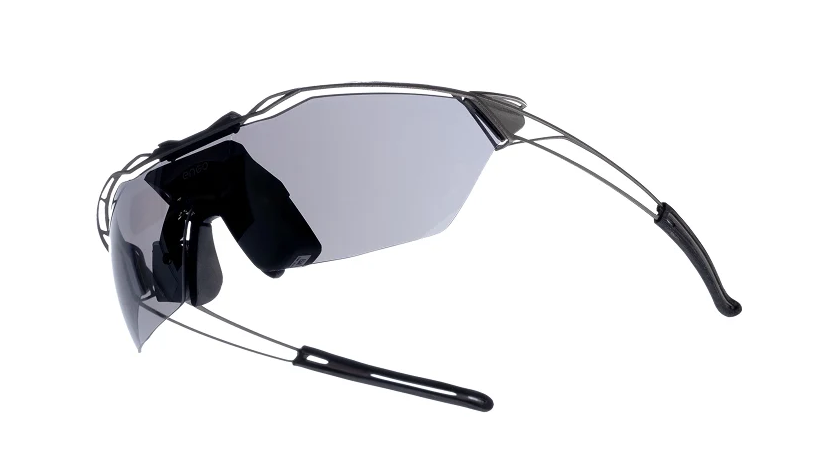
ENGO's Engo Titanium sports glasses use metal 3D-printed titanium-alloy temples inspired by aircraft manufacturing. The complete device is reported to weigh 28.9 g, comparable to many conventional sports glasses without electronics.

Additive manufacturing enables complex geometries and targeted material placement, helping balance weight and structural strength. This is particularly relevant to a wearable device that must carry electronics while remaining comfortable.

The glasses focus on a color heads-up display, battery endurance and sports data. They omit cameras, audio and AI features. More than 40 metrics can be configured in the app, and interval-training information can be shown directly in the wearer's field of view.

The design illustrates a practical use for printed titanium structures in integrating lightweight frames with electronic sports eyewear.

7. Apiar Carbon1.0 OG Watch

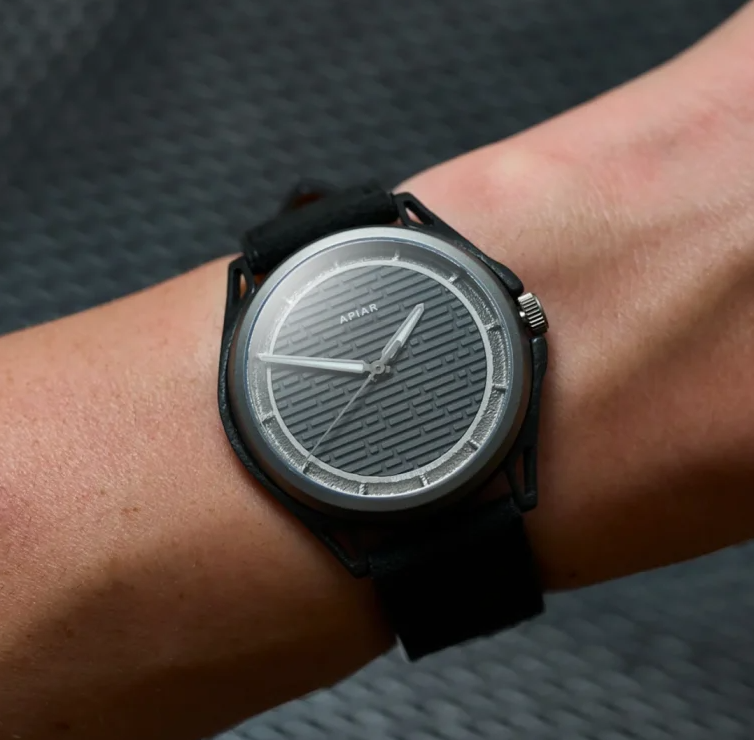
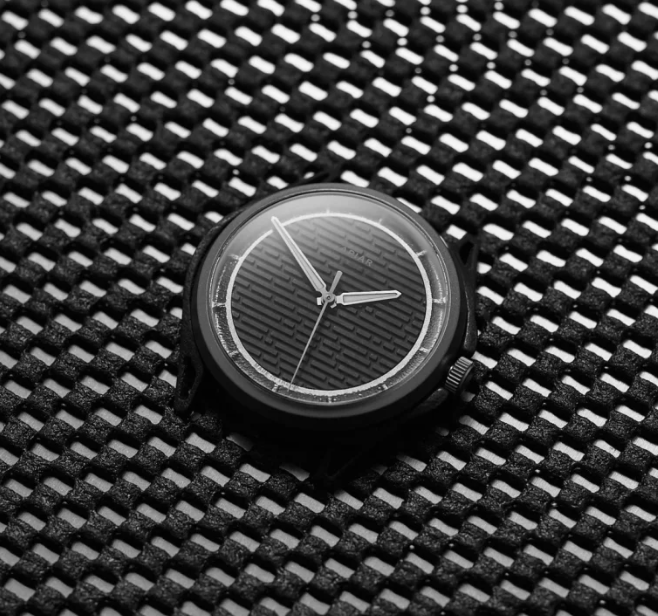
British watch brand Apiar introduced the Carbon1.0 OG as what it describes as the first commercially available watch with a CBAM 3D-printed case.

Composite-based additive manufacturing builds components from very thin carbon-fiber sheets that are stacked and consolidated using heat and pressure. The source describes a mold-free process with a high strength-to-weight ratio, visible layer orientation and geometric possibilities that differ from forged carbon.

The case combines an open carbon-fiber outer frame with a Grade 23 titanium middle case made by laser powder bed fusion. The complete watch weighs approximately 38 g. It uses a La Joux-Perret G101 automatic movement with a 68-hour power reserve, a 40.5 mm case diameter and a stated water resistance of 50 meters.

The source quoted prices of $1,800–$2,080, an order window running through the end of October and an expected delivery time of four to six months. Most production steps were described as taking place in the United Kingdom.

Editorial note: This feature is translated from a supplied Chinese manuscript. Prices, ordering windows, delivery estimates, specifications and development claims reflect the information in that manuscript and may change. Brand claims have not been independently tested by 3DPtimes.


©2026 3dptimes.com All Rights Reserved