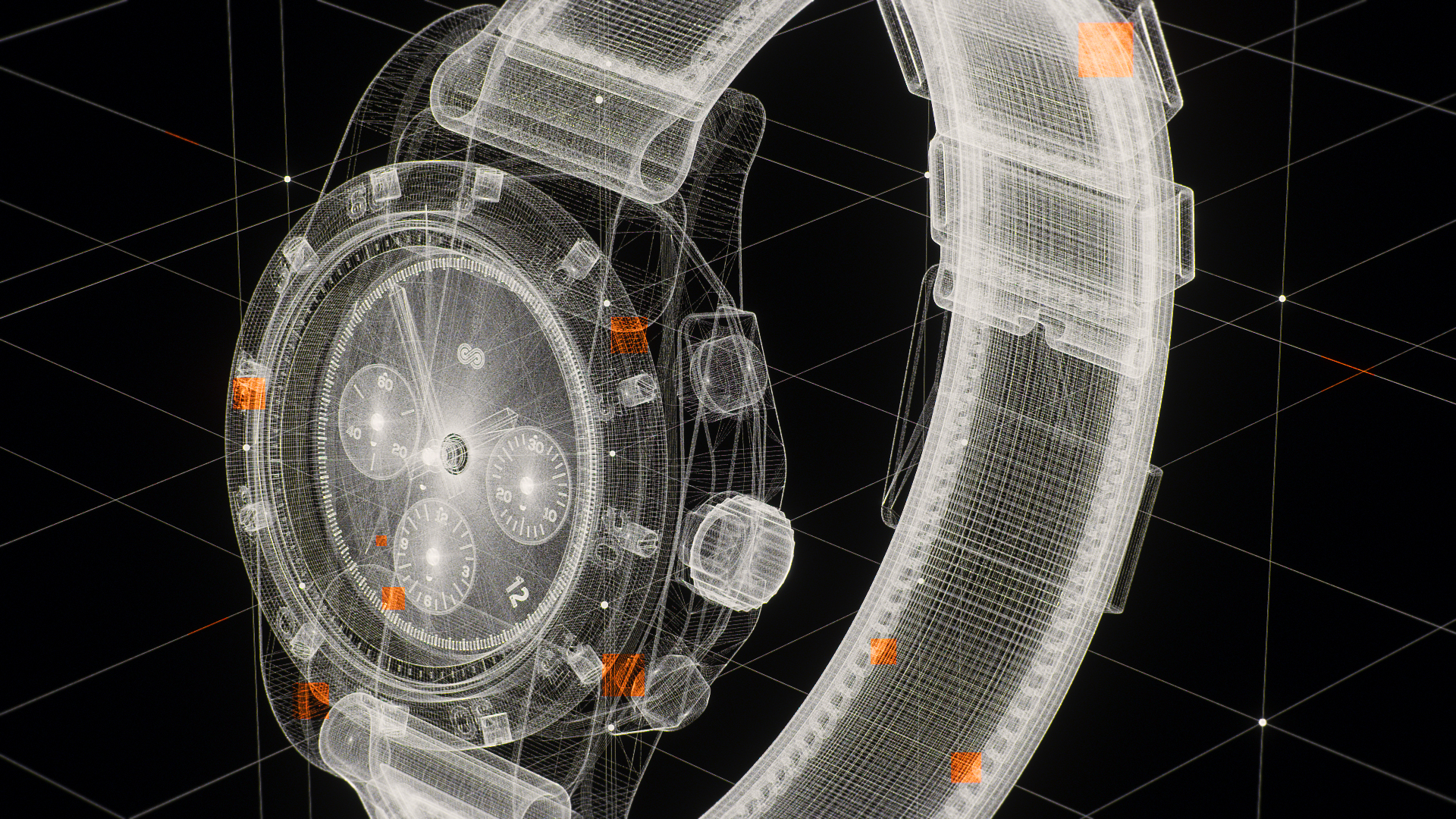
Professional 3D software company Maxon recently unveiled a standalone application (in development) called "Digital Twin," designed to help brands and marketing teams easily create and manage photorealistic digital versions of products, fundamentally changing how product marketing content is produced.
Core Function: From CAD Models to Omnichannel Assets
The core workflow of this tool begins with a ready-to-use CAD or 3D model, which can be quickly transformed into a high-fidelity digital prototype. Marketing teams gain precise control over textures, lighting, and environments, generating a production-ready "single source of truth" digital asset. This asset can be directly adapted for various marketing scenarios—such as advertising, video, print, packaging, and e-commerce—without the need for reshoots or remodeling for different platforms. This greatly enhances efficiency while rigorously maintaining brand visual consistency.
Flexible Integration, Empowering Existing Workflows
As a standalone application, "Digital Twin" seamlessly complements Maxon's existing tool suite. It does not mandatorily rely on AI but allows users to integrate AI-assisted design tools as needed, offering high flexibility for workflows. This enables marketers to iterate creative concepts more freely and rapidly.
Digital Twin Technology Penetrates 3D Printing and Manufacturing Ecosystems
Maxon's move reflects how digital twin technology is deeply integrating into the design and manufacturing chain. Previously, Meta established the world's largest 3D object dataset, containing over 2,400 millimeter-accurate models for AI and VR research. The domestic startup Second Life also successfully transformed people and pets into digital twin statues using its AI 3D scanning and printing technology, securing tens of millions in USD funding.
These cases collectively demonstrate that high-fidelity digital models are not just marketing tools but are reshaping the entire product lifecycle—from design and marketing to personalized manufacturing (such as 3D printing). As technology advances, the boundary between the digital and physical worlds is becoming increasingly blurred.