Home  >  News

July 22, 2026      News      9908

For years, prototype development for conventional fuel tanks has been weighed down by high costs and long lead times.

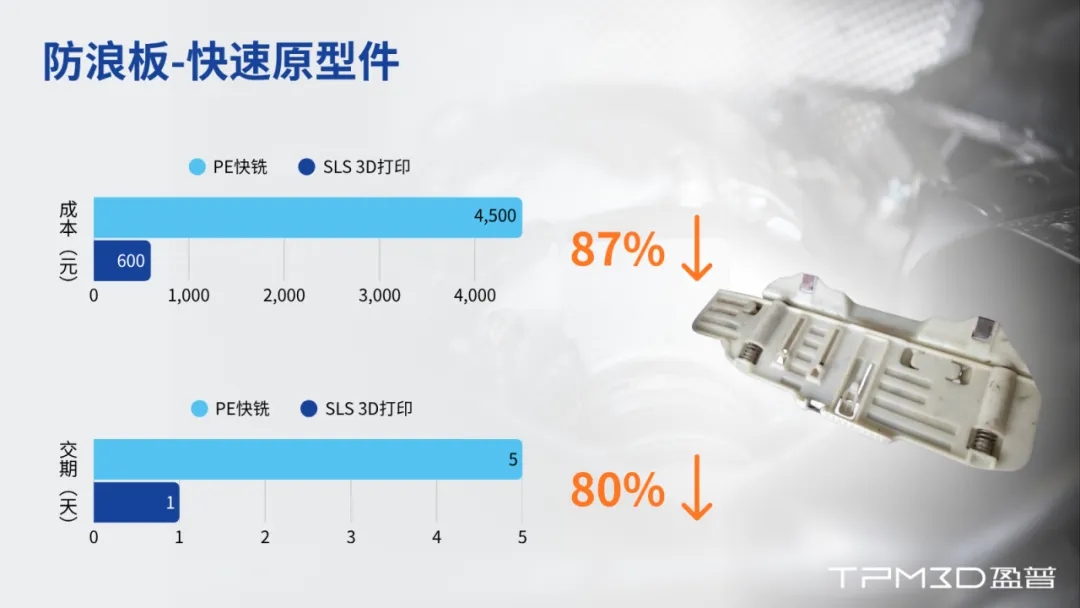
A set of rapid‑tooling vacuum‑formed molds costs between 40,000 and 50,000 CNY (about $5,556–$6,944) and takes 12–14 days to deliver. A single anti‑slosh baffle machined by CNC runs 3,000–6,000 CNY ($417–$833) and needs 4–7 days. Any design change forces almost the entire process to restart, doubling both time and expense.
Yapu Automotive Parts Co. introduced the TPM3D P360 industrial SLS printer, along with the PPS360 powder handling station, to directly print anti‑slosh baffle prototypes using glass‑reinforced nylon 12. From 3D data to finished part takes just one day – compared to the previous five days, that’s an 80% cut in delivery time. Per‑part cost drops from about 4,500 CNY ($625) to 600 CNY ($83), a reduction of 87%. The printed parts have good dimensional accuracy, can be assembled and functionally tested after simple sandblasting, and even better: you can modify the model, print it, and validate it the next day – dramatically accelerating the entire development rhythm.
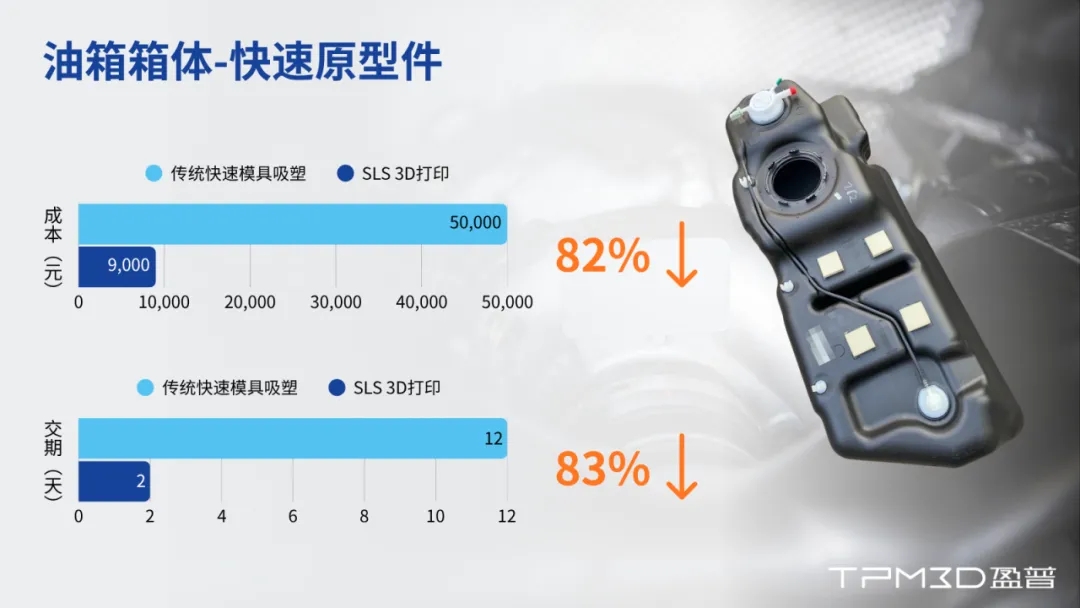
Large‑size tank bodies are no problem either. TPM3D’s dual‑laser models P550DL and S600DL, with a meter‑class machine on the horizon, can print the entire tank body in one piece. While traditional rapid tooling would cost 50,000 CNY ($6,944) and take 12 days, SLS printing does it for about 9,000 CNY ($1,250) and just 2 days – an 82% cost saving and 83% shorter delivery.
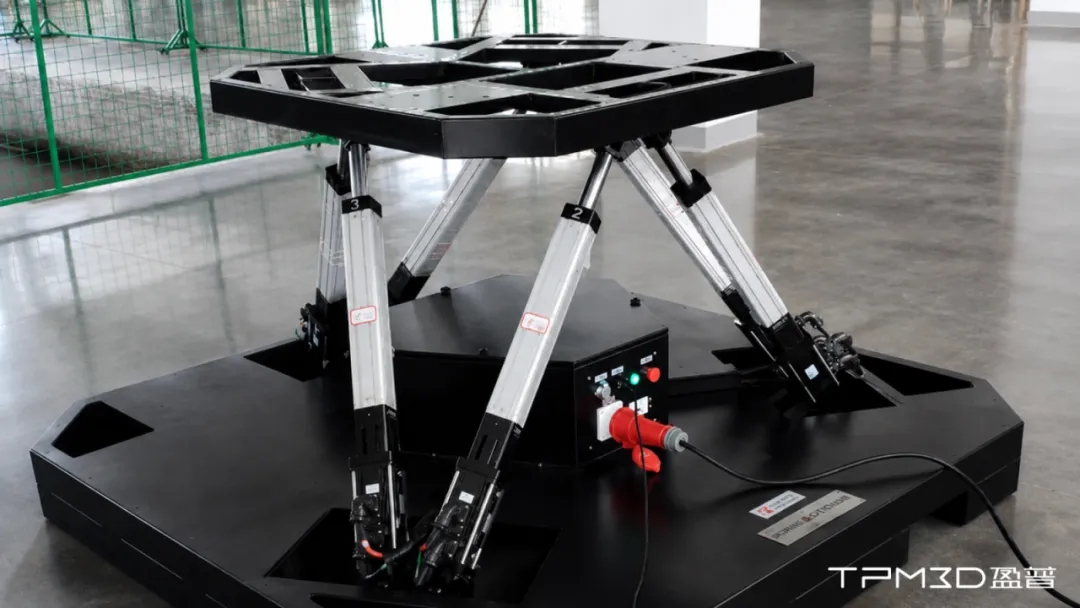
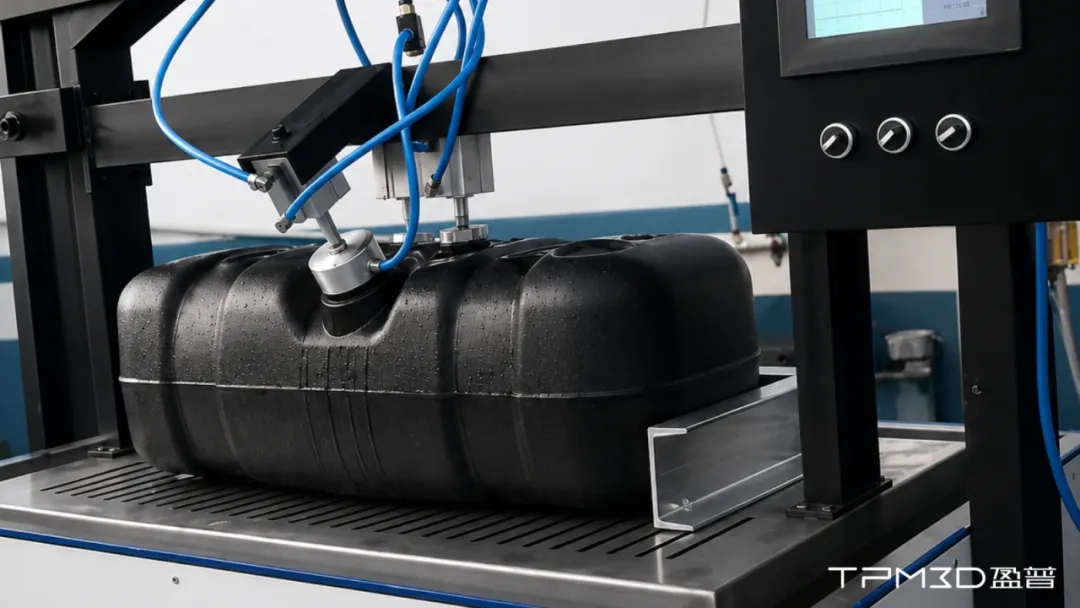
Don’t think these are just showpieces. The printed parts can embed sensors to capture real‑time stress and strain data during six‑axis vibration simulations. After fume‑sealing and surface treatment, they pass air‑tightness, water‑tightness, and temperature‑resistance tests. The baffles are also used for acoustic optimization, enabling rapid iteration of noise‑reduction solutions and helping engineers find the best design. SLS is moving beyond mere prototype verification toward functional validation – and even small‑batch production of end‑use parts.
When mold costs and delivery schedules are no longer bottlenecks, every design improvement can be tested at the lowest possible cost and in the shortest possible time. That is the flexible manufacturing power that SLS brings to automotive R&D – and the real accelerator for digital upgrading of fuel‑system development.


©2025 3dptimes.com All Rights Reserved