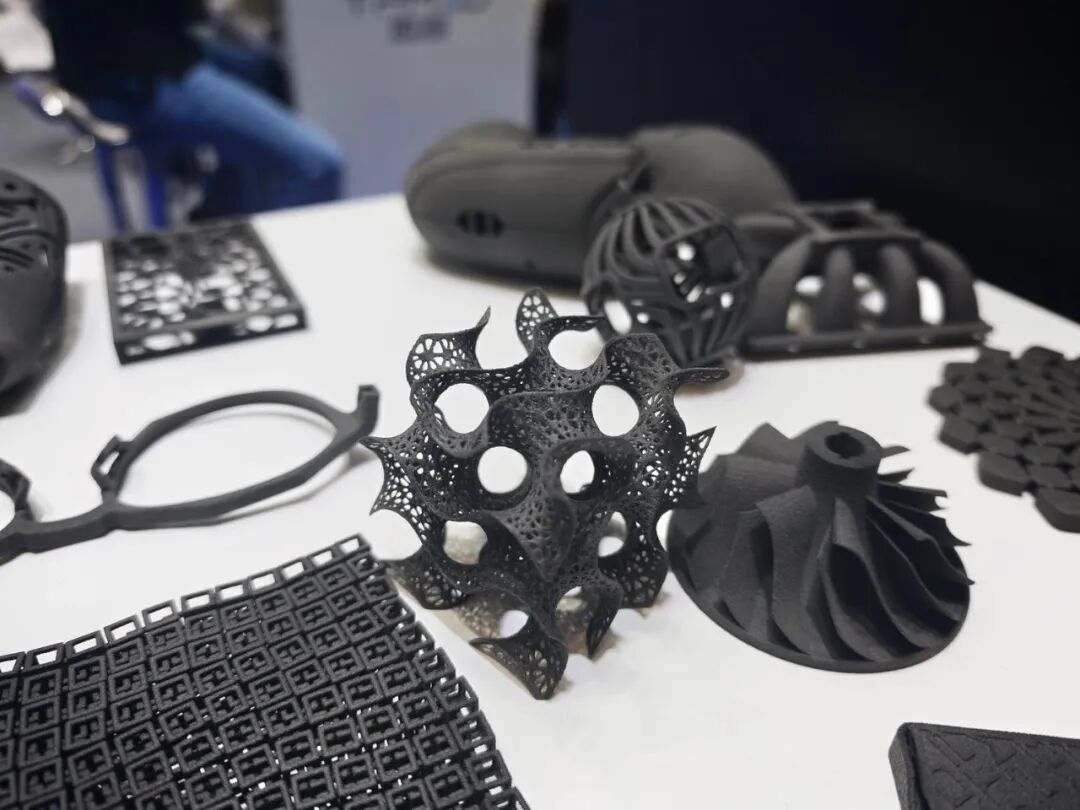
The professional-grade SLS market has been heating up noticeably over the past few years.
More and more comparable models are being launched, and SLS technology is moving out of large industrial workshops and into labs, offices, and small studios.
On August 26, 2026, at Formnext Asia in Shenzhen, TPM3D released its second‑generation professional SLS complete system – the CF250+PPS250. As the successor to the CF200, the new system pushes both build volume and throughput significantly higher while keeping the same modest footprint.
The build chamber has been expanded to 250×250×320 mm, a 67% increase in volume, and single‑batch output can rise by as much as 133%. The machine’s overall footprint is only 20% larger than its predecessor, staying true to the “desktop‑sized footprint, industrial‑grade quality” philosophy. Real‑world test data tell a clear story: coil winding brackets per batch jump from 240 to 420 pieces; eyewear frames go from 42 to 98 pairs; power tool housings increase from 12 to 27 sets. Some parts see production gains of over 120%. The larger build envelope reduces the cost per part, and most jobs can go from printing to delivery within 24 hours.
On the power side, the system runs on standard 220V mains electricity – no industrial three‑phase power required. A regular 16A socket is all you need, which removes the hassle of infrastructure retrofits and makes deployment in labs and offices straightforward.
Powder handling is a common pain point in professional‑grade SLS. Many competing systems still rely heavily on manual intervention for cleaning, sieving, and refilling, with dust control depending largely on the operator’s skill and habits. TPM3D’s PPS250 powder station integrates four automated modules – roller‑based automatic cleaning, automatic sieving, automatic mixing/ratio blending, and pneumatic powder feeding – into a closed‑loop workflow. To be fair, this setup does greatly reduce manual work, but it’s not yet fully unattended – periodic maintenance, material checks, and part removal still require human attention.
On the hardware side, the CF250 features a 30W fibre laser with an F‑θ lens, a layer thickness of 0.1 mm, a print speed of 0.9–1.0 L/h, and a full‑build cycle time of about 22 hours. It is compatible with mainstream SLS materials including PA12, PA12GF, PA11, and TPU, covering applications from prototype verification to functional parts and flexible components.
Competition in the professional SLS space is no longer just about laser power. Build volume, powder automation, power requirements, material ecosystem, and after‑sales service together determine the total cost of ownership. The CF250+PPS250 targets a clear set of users: small to medium‑sized manufacturing companies, university and research labs, design studios, small printing service bureaus, and product startups that need fast iterative prototyping.
The core logic behind this upgrade is practical: get as many qualified SLS functional parts out of your existing office or lab space as possible. This system isn’t a one‑size‑fits‑all solution, but it addresses the real needs of a large number of users in China. The system is on display at booth C81 at Formnext Asia – if you’re interested, it’s worth seeing the hardware and printed samples in person.