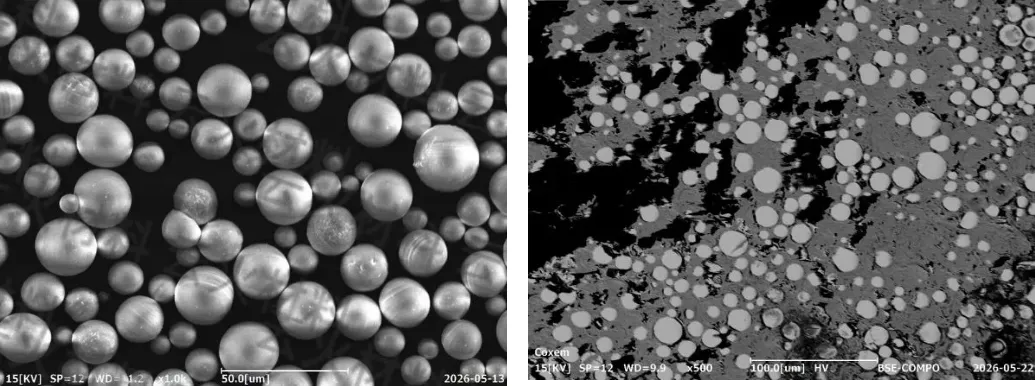
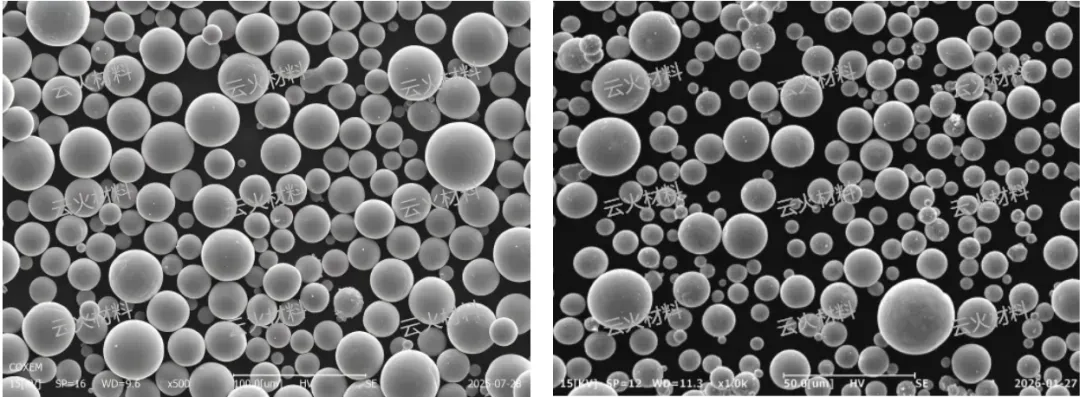
From technological catch-up to achieving "direct replacement" and even "surpassing" in some metrics, the rise of Chinese refractory metal powders—fueled by cost competitiveness and scalable production—is reshaping the global supply chain landscape.
On August 3, 2026, the Plasma Frontier Materials Research Institute, a subsidiary of the National Advanced Materials Regional Technology Transfer Center for Chinese Universities, announced its technological breakthroughs in spherical refractory metal powders. Backed by Suzhou Yunhuo Material Technology Co., Ltd., the institute is challenging the long-standing monopoly of overseas suppliers with its core technology—Plasma Droplet Refining (PDR).
This breakthrough carries significant weight for the additive manufacturing industry. Refractory metal powders such as tungsten, molybdenum, tantalum, and niobium, along with ceramic powders like yttria, are critical raw materials for high-end applications in aerospace, nuclear energy, and semiconductor equipment coatings. Whoever can achieve scalable, low-cost, and highly consistent supply of these powders holds a key to the next generation of industrial manufacturing.
"Micron-Sized Molten Pools" in a 7000°C Plasma Flame
The core of PDR technology lies in using thermal plasma at 3000–10000 K to refine powder particles. Unlike conventional crucible-based melting routes, PDR adopts a "powder-to-powder" approach—each particle (ranging from 1 μm to 500 μm) becomes an independent micron-sized molten pool within the plasma flame, undergoing complete refinement. This mechanism delivers three critical capabilities: first, ultra-high purity, reaching semiconductor-grade levels above 99.999%—essential for sputtering targets and other high-end uses; second, in-situ alloying, achieving atomic-level homogeneous distribution of multi-alloy elements via compositional gradient diffusion and electromagnetic stirring, bypassing the traditional ingot casting and forging steps; and third, surface modification, where plasma etching removes surface asperities and fine particle adhesion, while also eliminating surface hydroxyl groups and adsorbed moisture—significantly improving powder flowability and apparent density, exactly what 3D printing powder-bed processes demand. Currently, the powders produced by this technology have achieved world-leading performance in key metrics such as sphericity, hollowness ratio, and satellite defect control.
Full Product Portfolio, Significant Cost Advantage
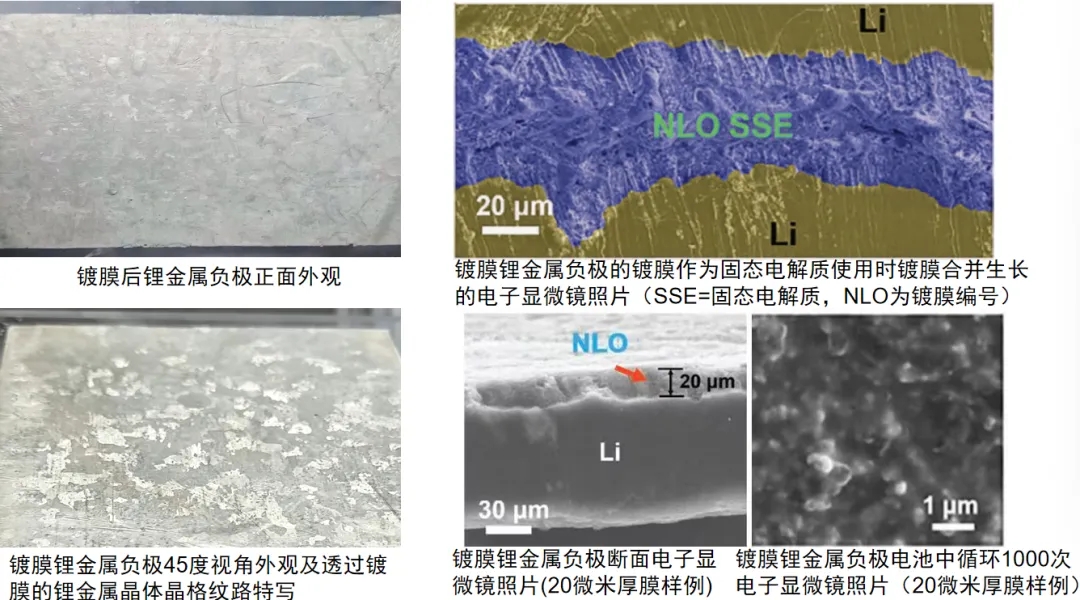
The institute has realized large-scale production of high-purity W, Mo, Ta, Nb, and Re powders, with production costs 30%–40% lower than imported counterparts. Its product range covers four major areas: spherical refractory metal and alloy powders (e.g., Nb521, Ta10W) for extreme high-temperature environments; "rice-grain" powders for plasma spraying and heat-sink materials; high-flowability ceramic powders (yttria, yttrium fluoride) for semiconductor chamber coatings; and surface-modified lithium-metal anode materials for next-generation batteries.
Two Decades of Know‑How, Accelerating Commercialization
The R&D team—composed of overseas-returnee PhDs and industry veterans from Fortune 500 companies—brings over 20 years of cumulative experience in plasma materials. They have been granted 38 patents in the US, Japan, Europe, and other regions, and have filed 24 domestic patents in China. Their achievements have moved well beyond the lab: spherical Nb521 alloy powder is already in batch use for commercial spaceflight; rice-grain tungsten powder and solid yttria powder for the semiconductor sector have replaced imported materials; and key materials for AI optical communications and controlled nuclear fusion have gained recognition from leading corporations and national key institutions.
Two Decades of Know‑How, Accelerating Commercialization
The R&D team—composed of overseas-returnee PhDs and industry veterans from Fortune 500 companies—brings over 20 years of cumulative experience in plasma materials. They have been granted 38 patents in the US, Japan, Europe, and other regions, and have filed 24 domestic patents in China. Their achievements have moved well beyond the lab: spherical Nb521 alloy powder is already in batch use for commercial spaceflight; rice-grain tungsten powder and solid yttria powder for the semiconductor sector have replaced imported materials; and key materials for AI optical communications and controlled nuclear fusion have gained recognition from leading corporations and national key institutions.