November 16, 2026      Applications      3DPTimes | Source: Hisham et al., Advanced Composites and Hybrid Materials, November 4, 2026      21      Share to X.com

Iron oxide nanoparticles gave printed hydrogels catalytic activity. The study reports laboratory and cell-culture results, with no patient outcomes.

Khalifa University researchers have printed hydrogel contact lenses and incorporated iron oxide nanoparticles to investigate oxidative-stress reduction. Published on November 4 in Advanced Composites and Hybrid Materials, the work explores a materials approach rather than a clinically established treatment.

Cover: illustrative contact-lens image supplied with the source report; not an image identified as the tested device.

Composition affects catalytic performance

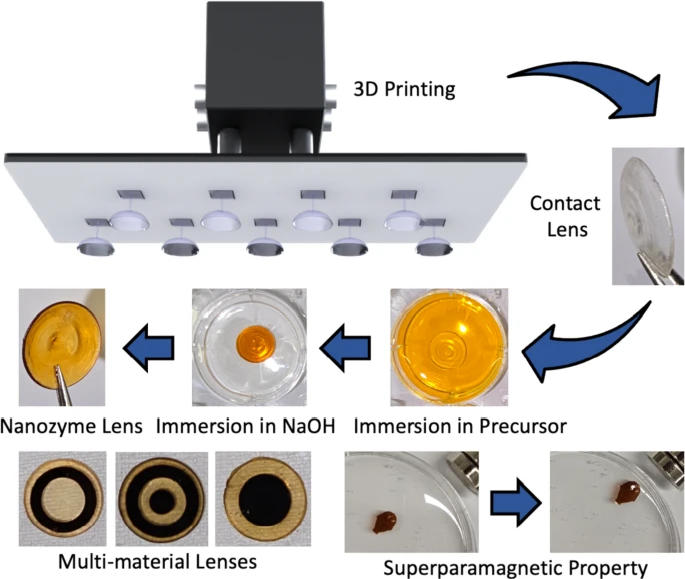
The team printed HEMA/PEGDA hydrogels, then formed nanoparticles within them by in situ precipitation. Pure HEMA held the most nanoparticles, but the 75:25 HEMA:PEGDA formulation performed best in catalytic activity and methylene-blue removal.

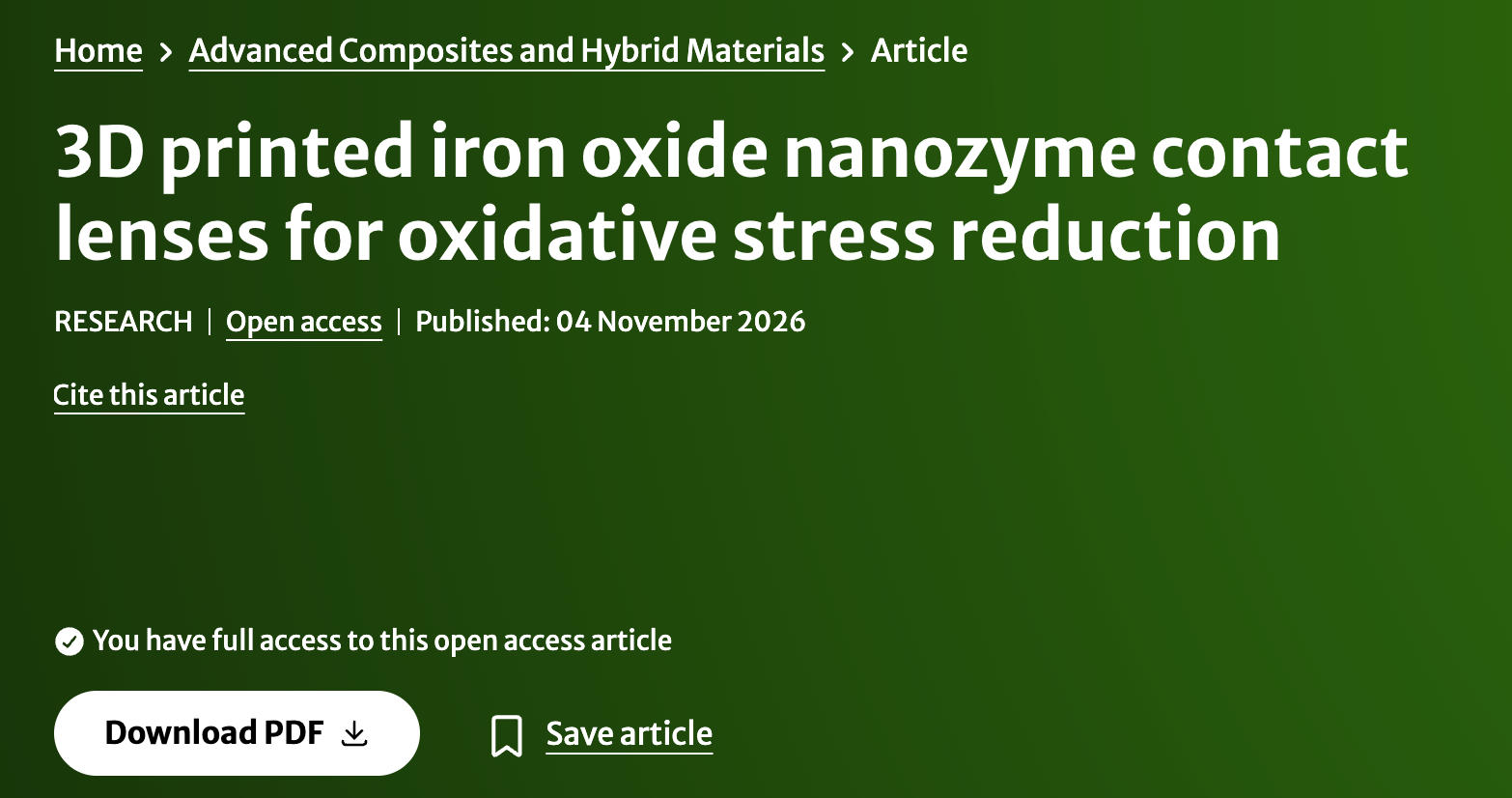
Image: the paper’s publication page, identifying the research and publication date.

Cell tests leave clinical questions open

The lenses showed viability in human dermal fibroblast cultures; the 75:25 formulation also suppressed cytokines. The particle-containing hydrogels responded to external magnetic fields. These experiments do not establish safety or efficacy in human eyes.

Image: lens fabrication and nanoparticle incorporation, reproduced unchanged from the source report. Credit: Hisham et al.

Research: https://doi.org/10.1007/s42114-026-02164-0


©2026 3dptimes.com All Rights Reserved