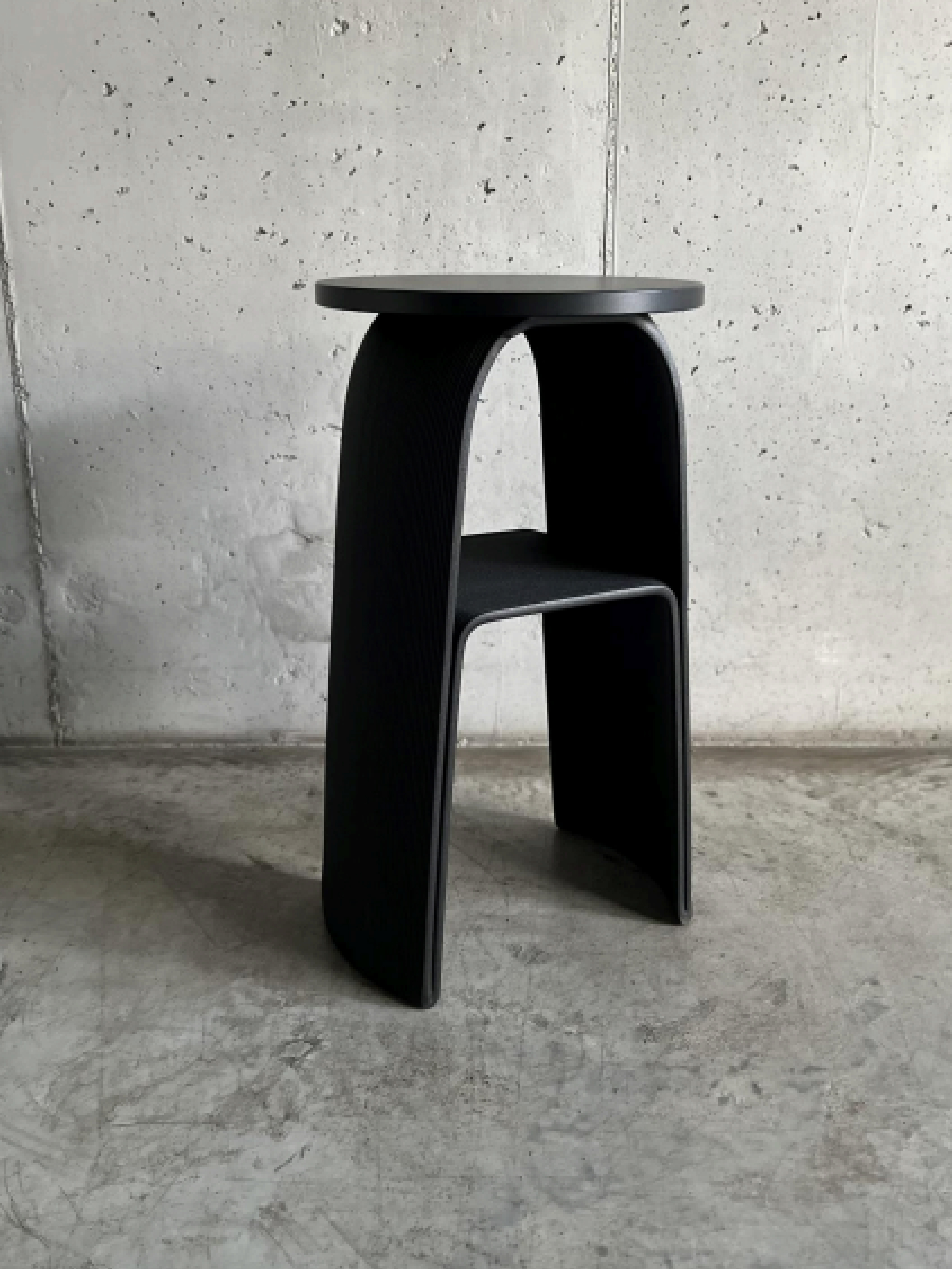
Large-format 3D printing is accelerating its entry into the consumer goods sector. Recently, IVE LABS partnered with Hyfer Objects to complete a significant project—designing and manufacturing 358 tables for 180 hotel rooms in Sweden, demonstrating the potential of 3D printing in batch furniture production.
A 10-Week Challenge: Non-Stop Production
The entire project took 10 weeks, maintaining a very tight production schedule. The team's first major challenge was material adaptation—they needed to calibrate their machines for a new material they hadn't used before and develop stable, repeatable printing code. In large-format printing, balancing parameters is critical: printing too slowly causes layers to cool excessively, leading to poor adhesion; too quickly risks deformation. Once the optimal settings were found, the printers switched to a round-the-clock, three-shift continuous production mode.
Post-processing was carried out in parallel, with drilling and tabletop installation happening concurrently, ensuring a smooth workflow without downtime. All printing tasks were completed on IVE LABS' self-developed large-format printers. The company controls the entire technological chain—from frames and extruders to automatic feeding systems—providing a solid foundation for stable, batch production.
Eco-Friendly Materials with Unique Texture, Design Embraces "Print Traces"
The tables were made using Sulapac FLOW 1.7 material, specified by Hyfer Objects. This material contains wood fibers, giving it strong eco-friendly credentials. To achieve the desired dark color, the team added a dedicated color concentrate. Although the material is demanding to print with and requires thorough drying, after optimized processing, the finished surfaces displayed a high-quality satin texture with fine grain, meeting client expectations.
Design-wise, the team intentionally preserved the layer lines characteristic of 3D printing—with a 3 mm layer height and 10 mm width—creating an unapologetically industrial aesthetic. Combined with wooden or laminate tabletops, the overall result is both distinctive and practical, truly merging technological aesthetics with furniture functionality.
New Possibilities for Small-Batch Customization
Filip Turzyński, CTO of IVE LABS, noted that moving from printing a few samples to mass-producing hundreds of units under a tight deadline was indeed a challenge. But seeing trucks loaded with finished products heading for Sweden brought a great sense of accomplishment.
This project proves that 3D printing is steadily becoming a viable option for the furniture industry. While it cannot replace all traditional manufacturing methods, it is demonstrating increasingly clear value in areas like small-to-medium batch production, rapid delivery, and design customization.