
November 5, 2026      Applications      3DPTimes Editors | Research analysis | Fashion and Textiles, November 2, 2026      18      Share to X.com

A whole-shoe FDM comparison found a weight saving over dense TPU. A two-person walking pilot observed lower peak pressure in some regions versus barefoot and sock conditions.

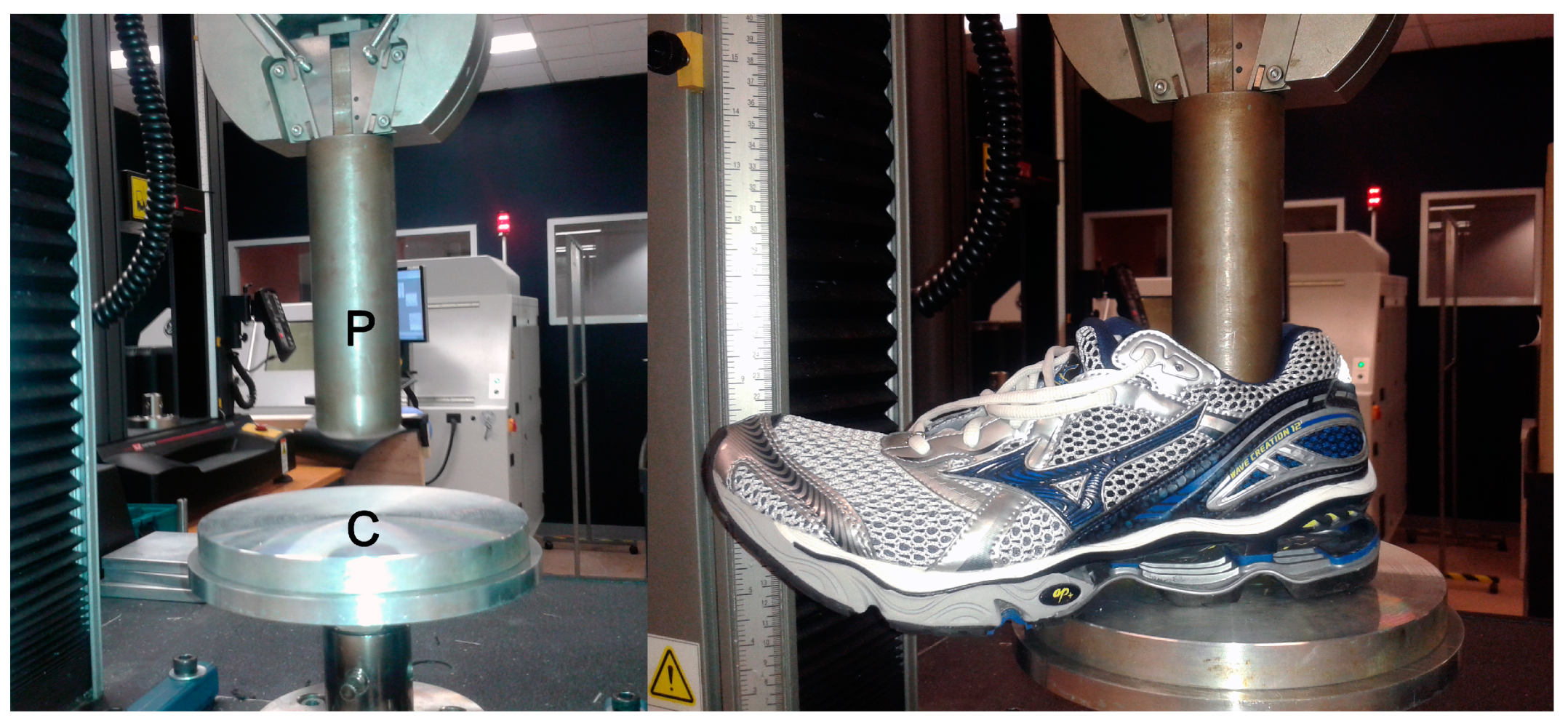
A lattice midsole and assembled running shoe from a separate cushioning study. Figure 4, Bioengineering (2025), https://doi.org/10.3390/bioengineering12050467 . CC BY 4.0 https://creativecommons.org/licenses/by/4.0/ . Unmodified.
A whole shoe changes the test

Dong-A University researchers Imjoo Jung and Sunhee Lee used a dual-nozzle Ultimaker S5 to compare complete printed shoe bodies made from dense TPU, lightweight foaming TPU and lightweight foaming PLA. The second nozzle deposited temporary support material, which the researchers removed before testing.

The foamed TPU shoe averaged 133.38 g after support removal, versus 142.04 g for dense TPU, a 6.1% reduction. The respective print times were up to 73 hours and about 45 hours. Those figures describe this geometry and process, so a production team should track machine time and support removal alongside part mass.

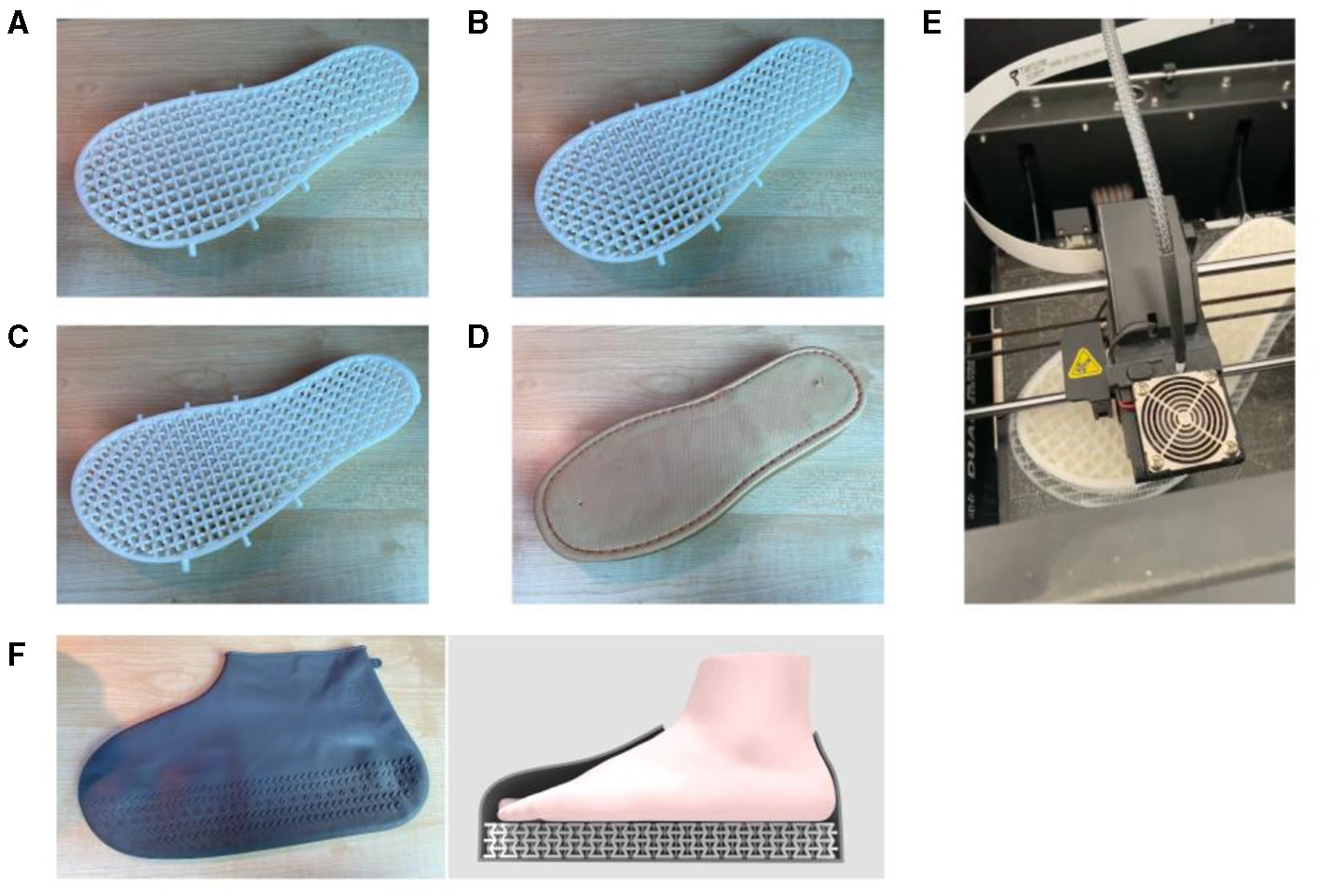
Image: TPU lattice soles and an FDM setup from a separate 2024 study. Zhang et al., Frontiers in Public Health, Figure 2, https://doi.org/10.3389/fpubh.2024.1412518 . CC BY 4.0 https://creativecommons.org/licenses/by/4.0/ . Unmodified.

Impact response and walking pressure measure different things

Dense TPU recorded the lowest peak load and greatest displacement in the bench impact test. Foamed TPU combined lower mass with a more moderate impact response. The stiff foamed PLA shoe was excluded from the walking trial after wearability screening.

In that trial, two participants walked barefoot, in socks and in the two TPU shoes. Both printed shoes tended to reduce peak pressure in selected forefoot and heel regions compared with the barefoot and sock conditions. The foamed TPU shoe also showed greater midfoot and heel contact area. The study used descriptive comparisons and included no commercial shoe control.

Image: Heel compression equipment and a running shoe from a separate cushioning study. Figure 5, Bioengineering (2025), https://doi.org/10.3390/bioengineering12050467 . CC BY 4.0 https://creativecommons.org/licenses/by/4.0/ . Unmodified.

Design the bead and the lattice together

Foaming changes the density and compliance of the deposited bead. Lattice geometry changes how those beads share load across the shoe. A useful next experiment would vary those two factors independently while holding size and fit constant, then measure regional stiffness, mass and actual build time. Repeat the measurements after cyclic flexing and abrasion, and test grip under the conditions the shoe is designed for. This would show whether the weight advantage survives wear and whether any pressure changes translate into a better fit across a larger group.

Primary source: Imjoo Jung and Sunhee Lee, Fashion and Textiles, November 2, 2026. https://doi.org/10.1186/s40691-026-00492-9

Image credits. Franz Konstantin Fuss, Tizian Scharl and Niko Nagengast, Bioengineering, Figures 4 and 5. https://doi.org/10.3390/bioengineering12050467 . Zhang, Lu, Yang, Liu, Guo and Wang, Frontiers in Public Health, Figure 2. https://doi.org/10.3389/fpubh.2024.1412518 . All three figures are reproduced unmodified under CC BY 4.0. https://creativecommons.org/licenses/by/4.0/


©2026 3dptimes.com All Rights Reserved