Home  >  News

February 11, 2026      News      9241

To power AI, data centers need $7T, doubling energy use—cooling systems are a major factor.

To meet the explosive demand of AI, nearly $7 trillion is projected to be invested globally in data centers over the next five years. Their energy consumption is expected to double, with cooling systems accounting for a significant portion of that massive power draw.
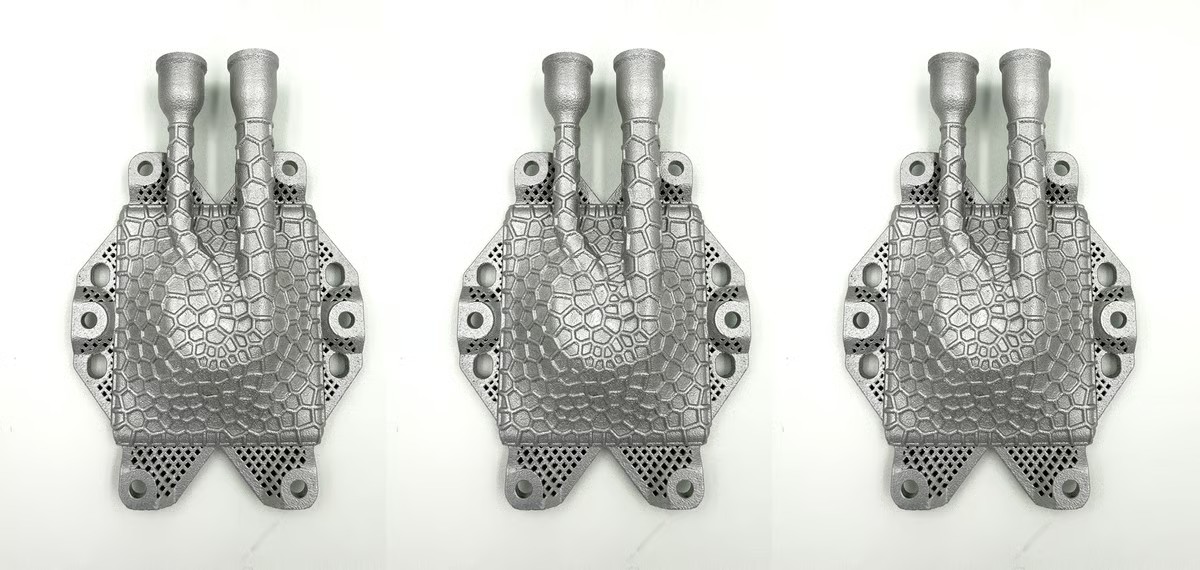
Recently, an innovative cooling solution promises to change this landscape. A 3D printed heat exchanger prototype, developed jointly by the Danish Technological Institute, startup Heatflow, and others, operates without traditional pumps or fans. It works on the principle of "thermosiphon"-based passive two-phase cooling: the coolant evaporates upon heating, rises naturally, condenses, and returns via gravity—requiring no additional energy input for circulation. In tests, it achieved a cooling capacity of 600W, surpassing its initial 400W target by 50%.
The core advantage of this technology lies in metal 3D printing. It enables the integration of complex internal flow channels into a single, monolithic aluminum component, reducing interfaces and leakage risks while enhancing recyclability. More crucially, it can extract "high-quality waste heat" at 60°C to 80°C from the chips, which is sufficiently hot to be fed directly into district heating networks, turning waste into a valuable resource.
Compared to conventional solutions, this design reduces material usage. Life cycle analysis indicates the potential to lower carbon emissions by 25%-30%. The project has now successfully completed its demonstration phase, offering an efficient, low-carbon cooling pathway for data centers and high-performance computing.


©2025 3dptimes.com All Rights Reserved