December 30, 2025      Applications      10693

Surfing harms oceans it relies on: foam boards emit 270kg CO2.

Few people consider the environmental impact when thinking about surfing. Yet the reality is harsh: a traditional foam surfboard emits at least 270 kg of CO2 over its lifetime, and professional surfers need to replace their boards 2-3 times a year. This sport, which depends on the ocean, is quietly harming the very seas it celebrates.

Weaving the Frame with 3D Printing

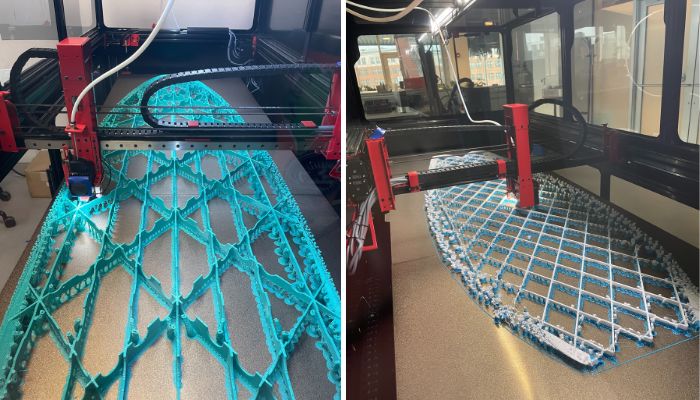
Maine-based startup Blueprint Surf offers an innovative solution. They custom-design a 3D-printed "skeletal" frame for each surfer—sturdier structures for powerful riders, more flexible designs for lighter ones. This customized core is printed using recycled PETG plastic, and even glass fiber-reinforced polypropylene sourced from discarded fishing nets.

Why Choose Additive Manufacturing?

Compared to traditional foam cutting, 3D printing generates almost no waste, and most scraps can be recycled. More importantly, traditional foam blanks are often shipped long distances from Southeast Asia, resulting in a high carbon footprint. Blueprint Surf envisions deploying 3D printers in surf communities worldwide to enable truly local production.

A Green Bond Connecting to the Ocean

The printed frame then undergoes multiple finishing steps: hand-lamination with composite materials, layering with bio-epoxy resin, and more. Notably, their use of fiber-reinforced material made from recycled fishing nets is not only a technical choice for lighter, stronger boards but also a symbolic link between the surfboard and the ocean it rides.
From the waves of the North Atlantic to the nozzle of a 3D printer, a quiet ocean revolution is underway. When technology becomes a lever for sustainability, every ride on the waves can be a gentler tribute to the sea.


©2025 3dptimes.com All Rights Reserved