Home  >  News

November 16, 2026      News      3DPTimes Editorial | English translation and editing of the supplied Chinese report, November 15, 2026      15      Share to X.com

At Bambu Lab’s Beijing China World store, Tsinghua design students demonstrated three projects that combined 3D printing with CyberBrick programming: a food-themed deduction game, an interactive musical cat and remote-controlled bipedal combat robots.

From a digital model to a working prototype

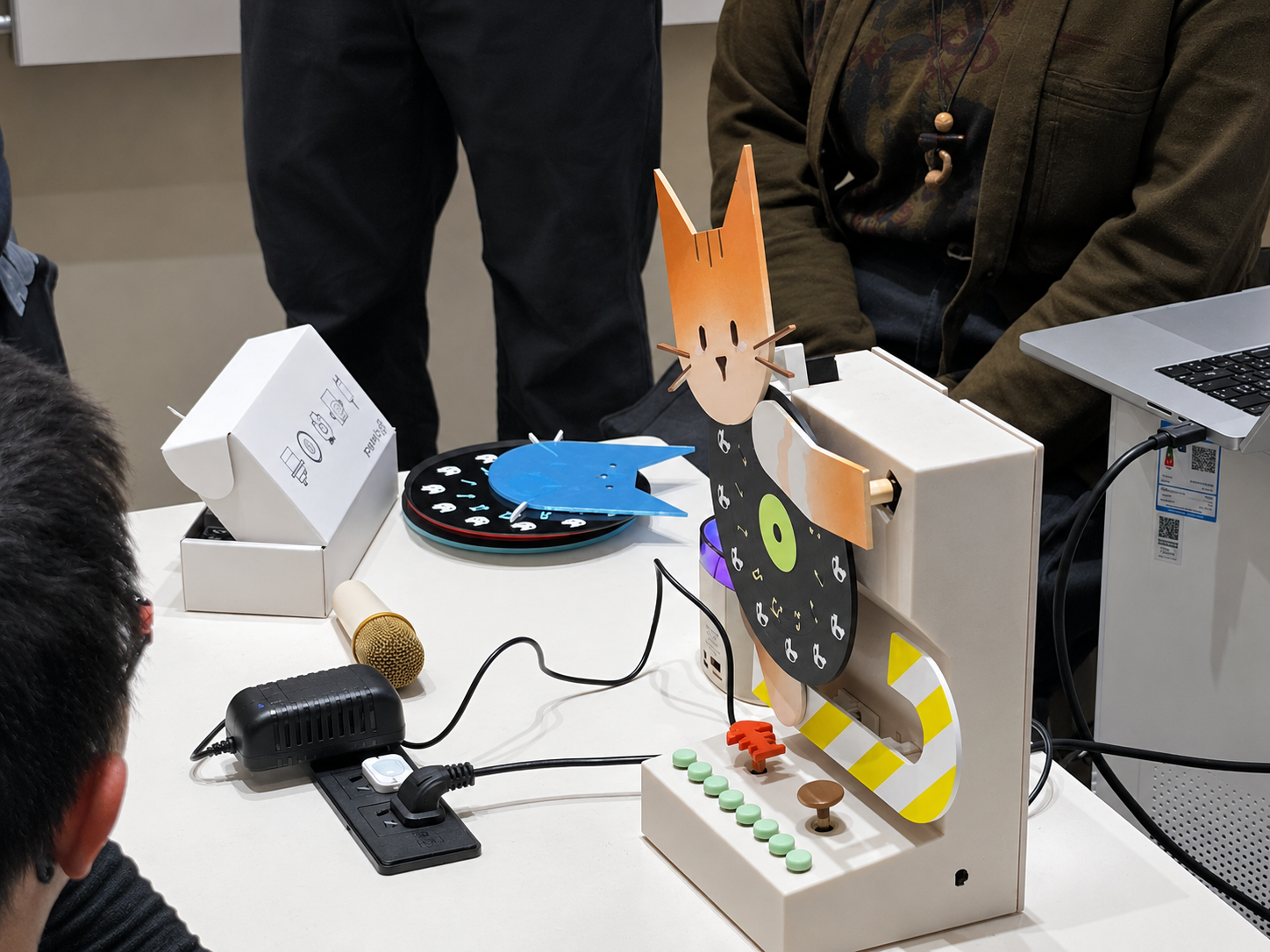
Bambu Lab and the Department of Information Art & Design at Tsinghua University’s Academy of Arts & Design hosted a CyberBrick showcase at the company’s Beijing China World store on November 14, 2026. Students presented three interactive projects developed in class: *Guess Who I Am*, a food-themed assembly and deduction game, *DJ Cat*, an interactive musical desktop companion, and *milk ARENA*, a desktop game featuring remote-controlled bipedal combat robots.

AI and digital tools helped students explore ideas early in the course. Building physical prototypes allowed them to answer questions that a screen alone could leave open. Would a part break? Would a mechanism jam? Would the controls feel natural in use? Students printed the parts, assembled the mechanisms and programmed them with Bambu Lab’s CyberBrick system.

Associate Professor Zhang Mangmang guided the course. Students tested different materials, refined how the printed parts fit together and tuned the control logic and interaction algorithms alongside the mechanical design. Each team ended up with a working prototype it could demonstrate and test.

How CyberBrick fits into the workflow

CyberBrick combines modular electronics, 3D-printed structures and a two-level programming environment. Its wireless controller and plug-in connections let students add motion and interactivity without soldering. That left them free to work on the appearance and structural behavior of their designs while using CyberBrick to control the mechanisms.

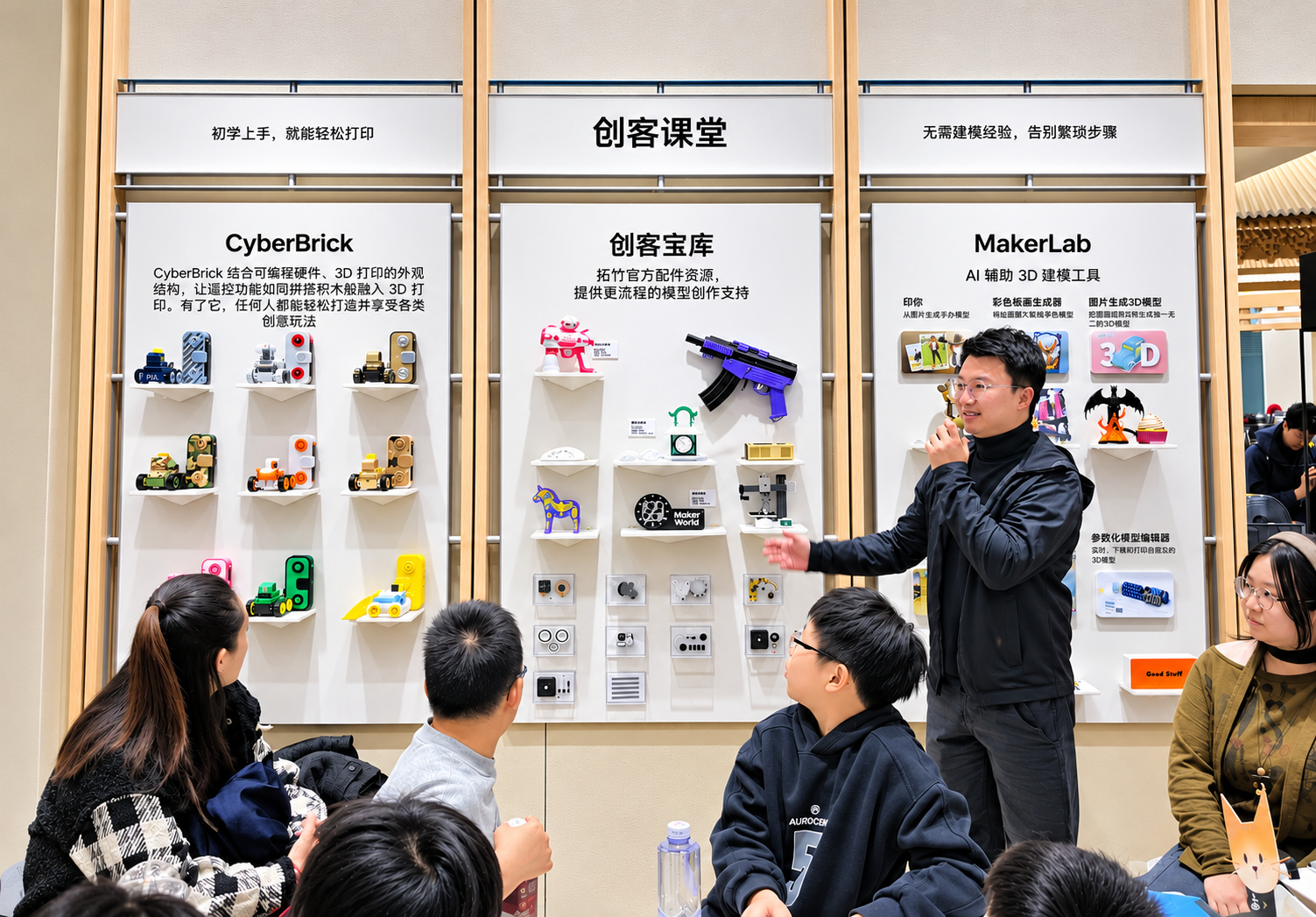
Caption and credit — A speaker addresses attendees beside the CyberBrick and MakerLab displays at Bambu Lab’s Beijing China World store. Photo supplied with the original report.
Alt text — A speaker holding a microphone in front of shelves of printed models and a CyberBrick display.

Speaking to the original report’s publication, Bambu Lab product manager Mamba said CyberBrick was designed to add motion and interactivity to static 3D prints. Creators can fit its modules into their own structures and set up control logic with the programming tools, including when they have limited coding experience. At the time of the interview, Mamba said nearly 1,000 CyberBrick creators had shared nearly 1,000 related models on MakerWorld, where users can download them, print the parts and assemble the projects themselves.

Mamba said the Tsinghua students brought together backgrounds in art and information technology. Bambu Lab previously ran a similar workshop at Tongji University and has worked with other universities, including Nanjing University of Aeronautics and Astronautics. The Tsinghua collaboration brought the work into the curriculum. According to Mamba, issues students and instructors encountered during the course also gave Bambu Lab ideas for refining the product. The company hopes to test similar collaborations across more universities and disciplines.

Three projects, three ways to play

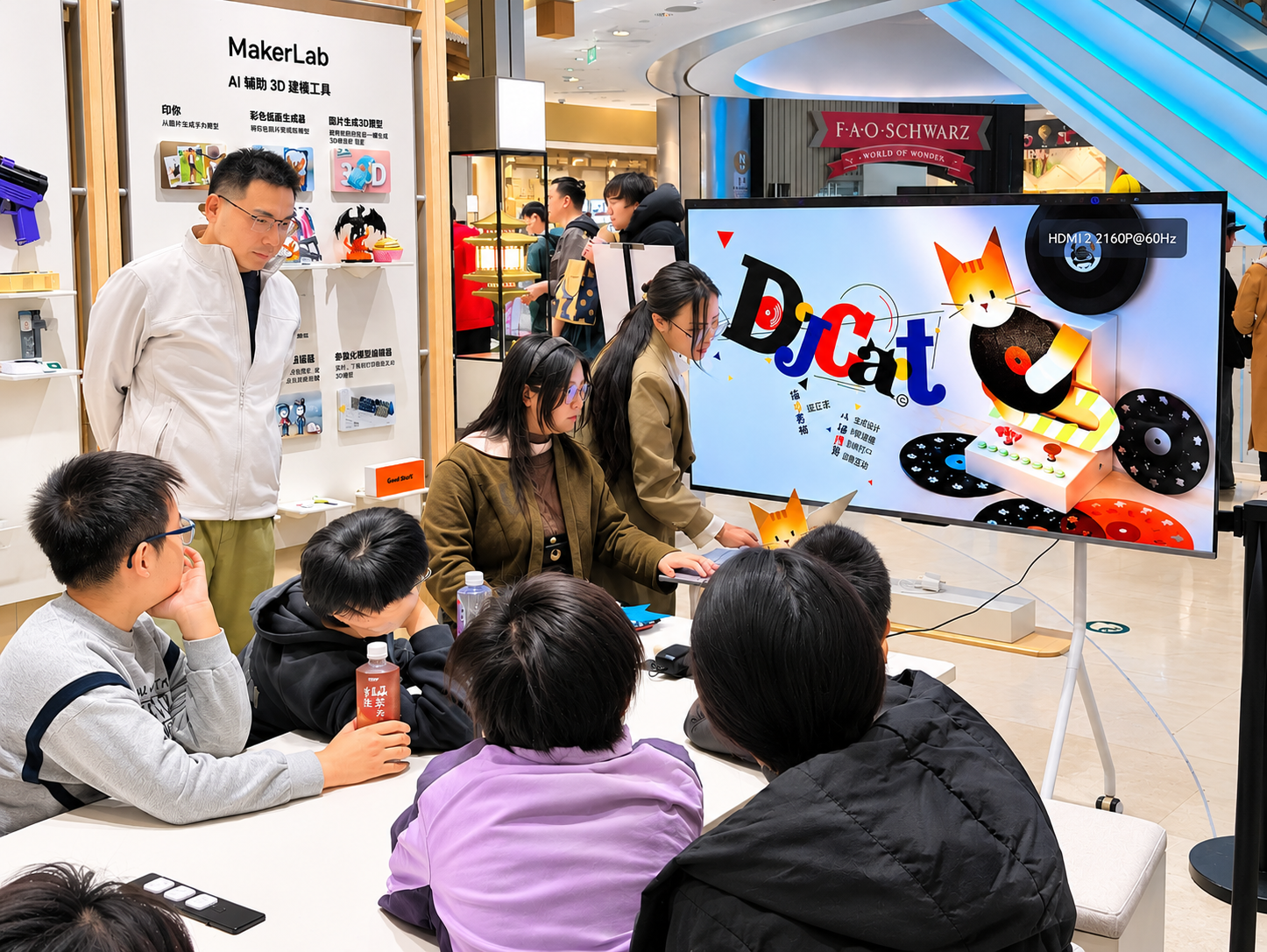
*Guess Who I Am* uses pieces modeled on food in an assembly and deduction game. *DJ Cat* combines algorithms for musical interaction with physical movement. In *milk ARENA*, players use handheld controllers to guide bipedal robots around a tabletop, position them strategically and take on opponents. All three teams used 3D-printed housings and internal mechanisms, with CyberBrick handling motion and interaction.

Caption and credit — Attendees watch the DJ Cat presentation, with the physical prototype and a project slide on display. Photo supplied with the original report.
Alt text — Visitors watch a DJ Cat presentation beside a screen showing the cat-shaped device and its controls.

Zhang said the department began exploring industry collaborations several years ago to give students more ways to learn through experimentation. “In the end, what matters most is their own perspectives, their creativity and their ideas,” he told the original report’s publication. He said CyberBrick helped students turn ideas into prototypes they could adjust and test, and he hopes to use 3D printing for hands-on projects in more courses.

One participating student said the team moved from an integrated design to a modular one during prototyping. It separated the mechanical functions from the exterior so users could customize the appearance around a common mechanical structure. The course made models, dimensions and related design files available on Bambu Lab’s platform so other makers could reproduce or modify the projects.

What hands-on testing adds to design education

Founded in 2005, the Department of Information Art & Design was among China’s early programs to bring art and science together. Its research includes interaction design, emotional design, user experience, creative coding and physical computing. This course brought together human–computer interaction, materials, mechanical design, control logic and interaction algorithms. The collaboration offers an example for future courses that use AI as part of the design process. It also reflects the emphasis China’s *Outline for Building a Leading Country in Education (2024–2035)* places on linking technology and humanities education and developing practical skills.

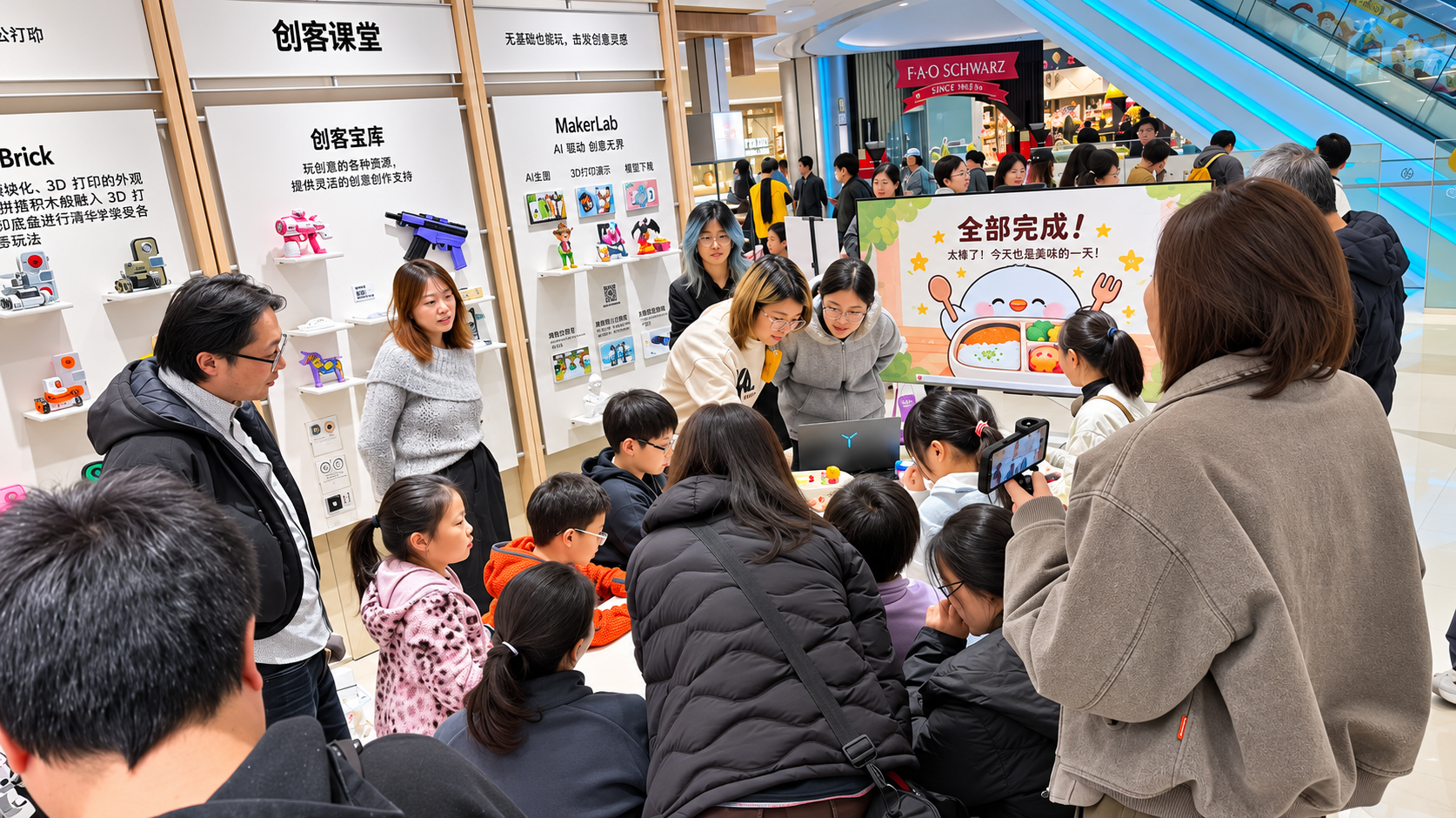
Caption and credit — Visitors gather around the food-themed project during the showcase at Bambu Lab’s Beijing China World store. Photo supplied with the original report.
Alt text — Children and adults gather at a demonstration table in front of an illustrated lunchbox on a large screen.

AI can help students generate ideas quickly. Building and testing give them a way to find out which ones work. Combining 3D printing with modular electronics also gives families a way to assemble a toy, change its structure and program its behavior. For young visitors and their families, the showcase offered a hands-on look at how mechanical motion and electronic feedback work. For Tsinghua and Bambu Lab, it connected university teaching and digital fabrication with an experience open to the public.

Sources

Original Chinese report and scene photographs supplied for English publication. The report covers the November 14, 2026 showcase and includes interviews with Bambu Lab product manager Mamba, Associate Professor Zhang Mangmang and a participating student.

- [Academy of Arts & Design, Tsinghua University — Zhang Mangmang faculty profile]
(https://www.enad.tsinghua.edu.cn/info/1229/1365.htm)
- [Academy of Arts & Design, Tsinghua University — Department of Information Art & Design](https://www.enad.tsinghua.edu.cn/Academics/Faculty/Department/DEPARTMENTOFINFORMATIONARTDESIGN.htm)


©2026 3dptimes.com All Rights Reserved