Home  >  Hardware

October 16, 2025      Hardware      395

Beijing Tianbing Technology secures 2.5B yuan to boost rocket production and R&D through metal 3D printing.

Beijing Tianbing Technology Co., Ltd. (hereinafter referred to as "Tianbing Technology") has announced the completion of nearly 2.5 billion yuan in Pre-D and D-round financing. This round of funding was jointly completed by several prominent institutions including Guoyu Gaohua, Jigang Group, Oriental Asset Management, Shenwan Investment, BOC Asset Management, and Guiyang Industrial Development Fund. The capital will primarily be used for batch production preparation and material procurement of rockets and engines, as well as the development of next-generation engines and rockets.
Tianbing Technology's independently developed reusable liquid launch vehicle can provide satellite users with low-cost, highly reliable customized launch services, along with a complete service system that includes satellite-rocket compatibility coordination, launch site coordination, launch tracking and control, and insurance technical support. The company can also supply various types of power system products to users. Its independently developed small, medium, and large-thrust general-purpose engines can be widely applied in satellite propulsion systems, supersonic aircraft propulsion systems, and rocket main propulsion and attitude control propulsion systems.

Industry insiders indicate that through this round of financing, Tianbing Technology will further consolidate its leading position in the development, mass production, and reusable technology of liquid launch vehicles. This will advance China's commercial aerospace sector from single-point technological breakthroughs to a new developmental stage characterized by systematization, scale, and industrialization, providing strong momentum for building a leading aerospace nation and seizing the strategic high ground in low-orbit satellite internet.

3D Printing Technology: Application in Tianbing Technology's Engine Manufacturing

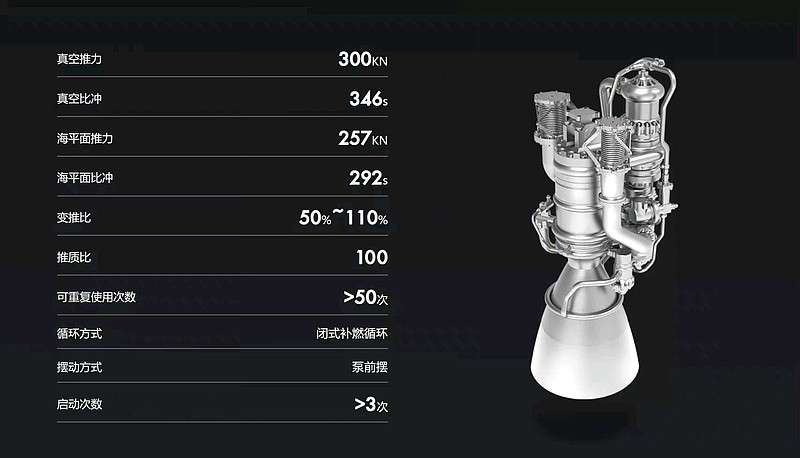
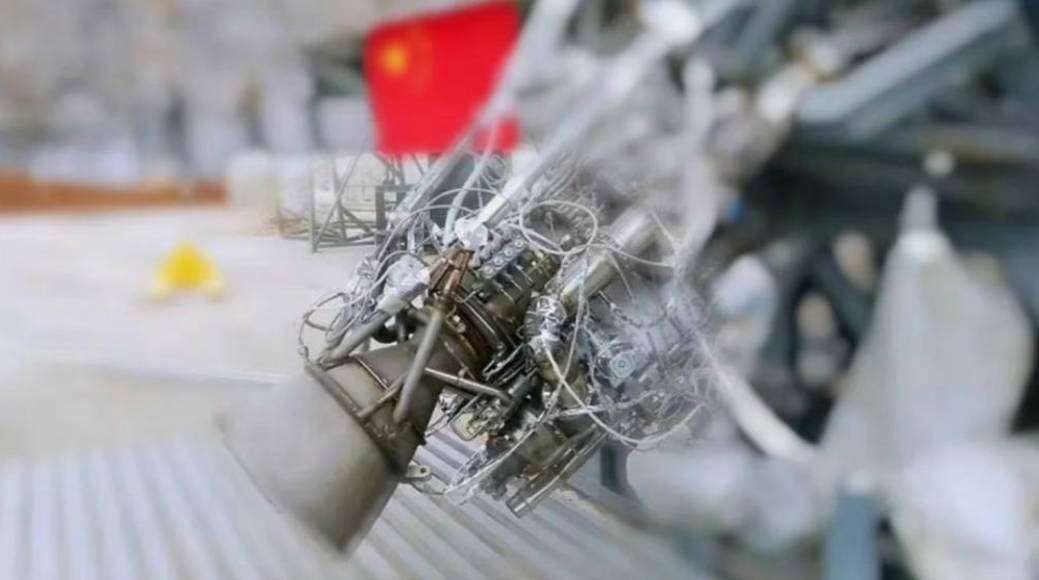
• In April 2023, Tianbing Technology achieved a major breakthrough in rocket engine manufacturing. Its independently developed liquid oxygen kerosene engine, the TH-11V, became the world's first closed-cycle staged combustion engine to utilize 3D printing technology.

As the core power system of launch vehicles, rocket engine manufacturing processes directly determine rocket performance and cost. To address the urgent demands for lightweight design, cost reduction, and rapid development, Tianbing Technology innovatively established an engine design optimization scheme adapted to 3D printing manufacturing technology and low-cost material systems during the initial R&D phase of the TH-11 engine. By optimizing engine parameters, Tianbing Technology successfully implemented 3D printing technology across core components including thrust chambers, preburners, turbopumps, valves, and structural assembly parts - all while ensuring key performance indicators such as specific impulse, thrust-to-weight ratio, reusability, and recoverability meet international advanced standards.
Facing the specific challenges of 3D-printed components operating in an oxygen-rich staged combustion cycle environment—including surface flow dynamics, heat transfer, high-temperature resistance, oxidation resistance, erosion resistance, and vibration impact tolerance—the R&D team established a comprehensive design, process, and manufacturing system deeply integrated with 3D printing technology through extensive simulation and experimental validation. This innovation not only reduced the number of engine components by 80%, shortened the manufacturing cycle by 70%–80%, and lowered both cost and weight by 40%–50%, but also significantly increased the engine’s thrust-to-weight ratio to over 100, achieving a leading position among engines of comparable class worldwide.

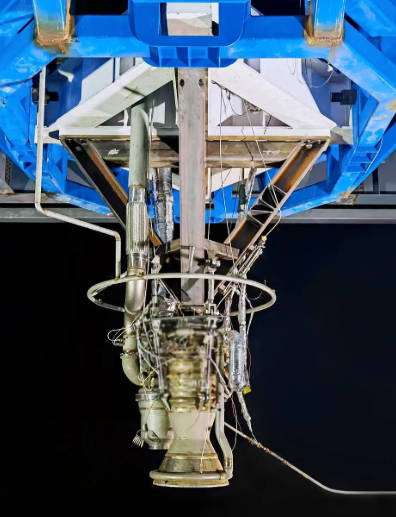
• In November 2022, Tianbing Technology successfully completed a full-system hot-fire test of its 110-ton thrust liquid oxygen kerosene rocket engine, the "Tianhuo-12" (TH-12). Among its key technological solutions was the "3D printing of large thrust chambers and pump casings." Development of this engine began in December 2020, with a ground design thrust of 110 tons, a specific impulse of 285 seconds, and a thrust-to-weight ratio of 163. It features six-channel control, real-time health monitoring throughout operation, and supports multiple ignition modes, repeated starts, pump-end bidirectional gimbaling, and thrust vector control.

Domestic commercial aerospace manufacturers are rapidly advancing in the application of 3D printing technology, which has become one of their core strategies for enhancing R&D efficiency and reducing manufacturing costs. Several leading companies have achieved rapid iteration of critical components, such as liquid rocket engines and satellites, by adopting metal additive manufacturing technology.

• LandSpace: Liquid Oxygen Methane Rocket Engine Utilizes 3D Printing Technology
On April 15, 2025, the 100th Tianque series liquid oxygen methane rocket engine, independently developed by LandSpace, successfully rolled off the production line. This milestone signifies that China's commercial aerospace propulsion industry has entered the phase of large-scale application, demonstrating that the domestic aerospace manufacturing sector is undergoing a technological transformation. 3D printing technology has been a key driver in achieving this accomplishment.

The Tianque series engines have achieved a self-developed component ratio exceeding 60%, with the majority of critical core components in both subsystems and full systems being manufactured in-house. To accomplish this, LandSpace has extensively adopted metal 3D printing technology. Specifically, the gas generators and combustion chamber components of the Tianque series engines were produced using Bright Laser Technologies' laser metal 3D printing equipment. According to LandSpace engineers, traditional engine manufacturing resembles hand-carving ivory—requiring cutting, welding, and polishing hundreds of components, which increases failure risks. By implementing 3D printing, the company has enhanced manufacturing reliability, reduced material waste, and significantly shortened production cycles.

• Galaxy Space: 3D Printing Revolutionizes Satellite Manufacturing, Pioneering Mass Production Pathways
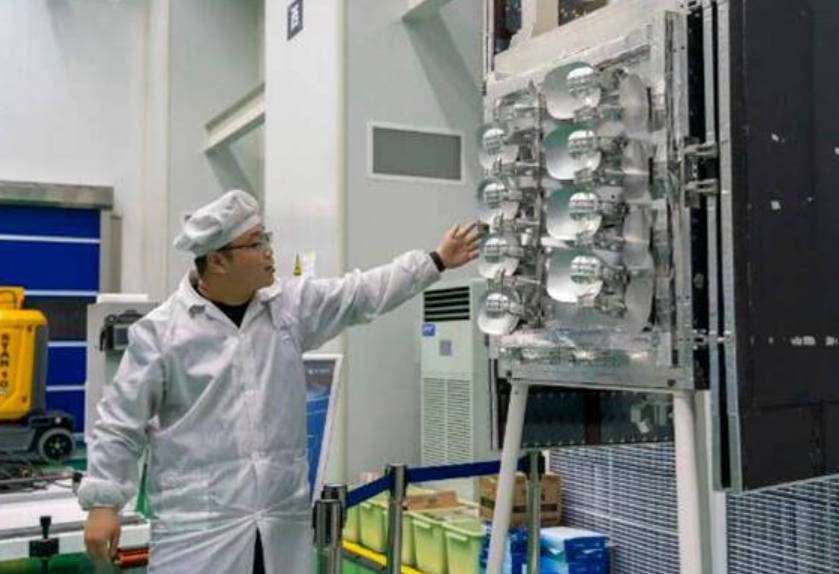
Amid the accelerated development of commercial aerospace, Galaxy Space is leveraging advanced technologies like 3D printing to transform satellite manufacturing from a "handicraft workshop" model into an intelligent, mass-producible system—ushering in a new era of low-cost, high-efficiency satellite production. As early as 2022, Zhu Zhengxian, Chief Technology Officer of Galaxy Space, highlighted that technicians were already widely applying 3D printing technology to manufacture critical satellite components. This approach has successfully enabled precision processing of key payloads such as high-frequency micro-distance waveguides and high-performance antennas.

This technological breakthrough has not only significantly enhanced manufacturing efficiency but also achieved a dual leap in space utilization and performance optimization. Through 3D printing, the interconnection space for certain payloads has been reduced to one-third of that in conventional designs, while simultaneously improving electrical performance. This provides robust support for satellite miniaturization and high-performance advancement.
The staff introduces the technical features of Galaxy Space's inaugural satellite.

This technological breakthrough has not only significantly boosted manufacturing efficiency but also achieved a dual leap in both space utilization and performance optimization. Through 3D printing, the interconnection space for certain payloads has been reduced to one-third of that in traditional designs, while electrical performance has been simultaneously improved. This provides robust support for satellite miniaturization and high-performance advancement.

3D-Printed S Helical Antenna

Nanjixiong noted that Galaxy Space showcased on its official website a self-developed S helical antenna. Utilizing a biconical helical design, it achieves full upper-space coverage and is used for transmitting or receiving telemetry and command signals on satellites. The antenna is integrally formed via 3D printing technology, eliminating welding processes, resulting in light weight and high reliability.

• Galactic Energy: 3D Printing Technology Enables "Lightweight" Rocket Engines

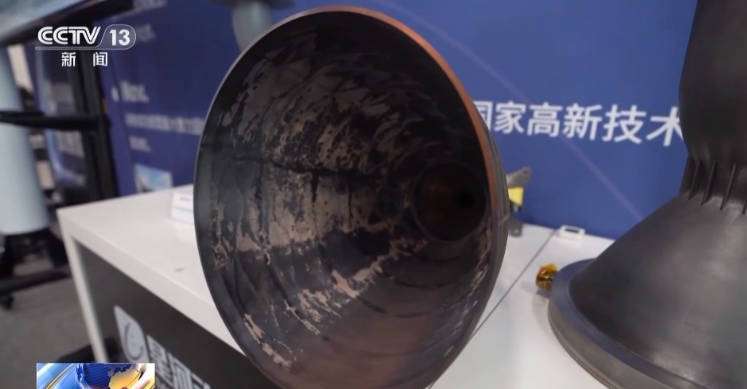
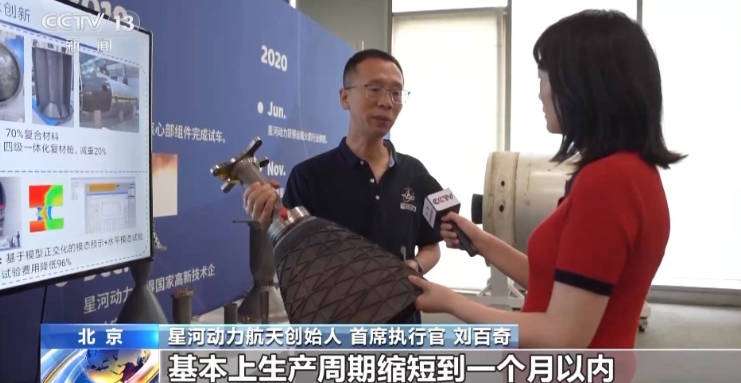
Private aerospace company Galactic Energy is revolutionizing rocket manufacturing through 3D printing technology, achieving breakthroughs in cost, cycle time, and performance. Traditional rocket engine manufacturing involves long cycles and high costs, typically taking about six months. By adopting 3D printing for integrated engine forming, Galactic Energy has shortened the production cycle to less than one month, reduced manufacturing costs to one-tenth of the original, and decreased engine weight by 50%, significantly improving launch efficiency and economic viability. The company's founder, Liu Baiqi, stated that they are pushing material performance to the limit. 3D printing not only enhances design freedom but also unifies lightweight design with high performance, providing key technological support for "slimming down and boosting efficiency" in rockets.


©2025 3dptimes.com All Rights Reserved