October 26, 2025      Applications      249

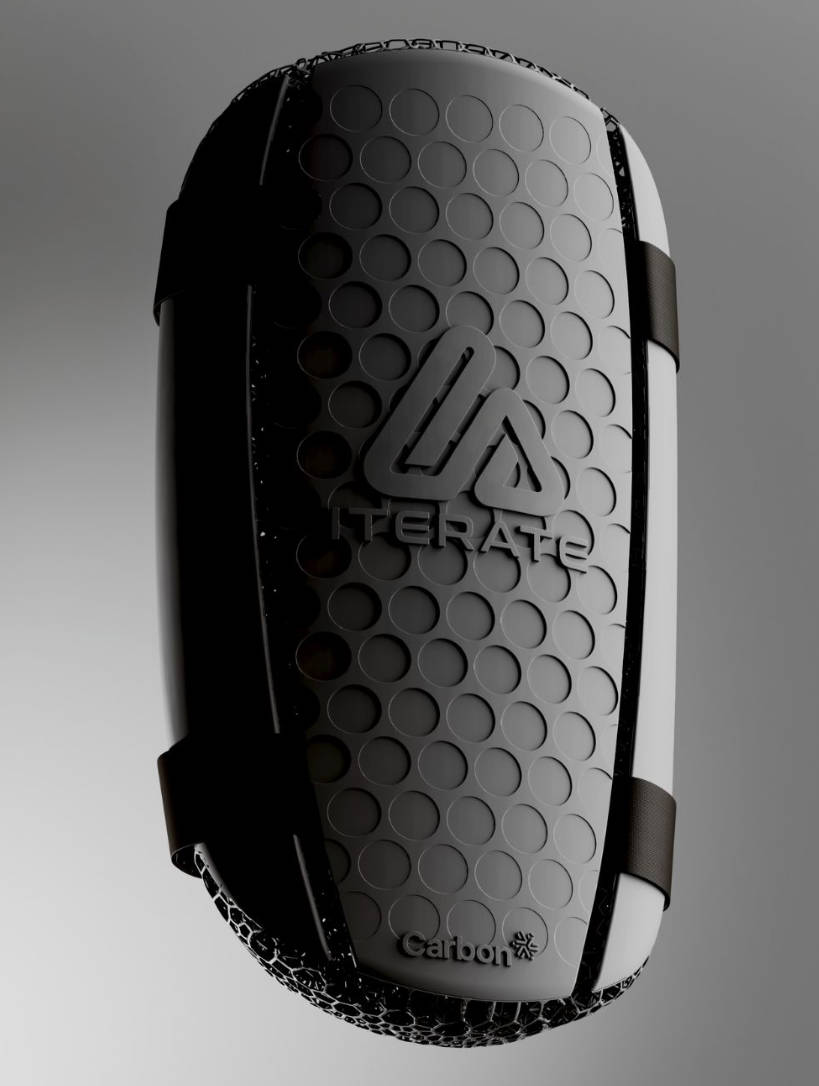
London-based product design company ITERATE has partnered with American 3D printing equipment manufacturer Carbon to advance the personalization of high-performance sports equipment to a new stage. By integrating ITERATE's human-centric design philosophy with Carbon's Digital Light Synthesis (DLS) technology, the two companies have developed products that can be customized for athletes while supporting sustainable, on-demand production models.

Human-Centric Design Combined with Advanced Manufacturing Processes

Carbon's DLS technology utilizes light and oxygen to produce high-resolution components capable of forming flexible lattice structures. These structures absorb impact, adapt to body movements, and naturally conform to the human form. ITERATE emphasizes that every athlete is unique, with distinct body shapes, movement patterns, and performance needs. Designers and engineers aim to create products that accommodate individual differences. This goal is being realized through advanced materials, digital prototyping, and additive manufacturing technologies.

Cricket Arm Guard: Combining Safety and Flexibility

One outcome of this collaboration is an energy-absorbing arm guard specifically designed for cricket. This protective gear incorporates structures that dissipate impact energy, focusing on high-risk areas while ensuring athletes retain full freedom of movement. The combination of ergonomic design and advanced materials demonstrates how additive manufacturing can deliver customized solutions that enhance both safety and performance.

Beyond personalization, additive manufacturing facilitates more sustainable production methods. Traditional mass manufacturing relies on forecasting, inventory stockpiling, and complex tooling, often leading to waste. Carbon and ITERATE’s collaborative model supports on-demand production, enabling manufacturing closer to end-users, utilizing more sustainable materials, reducing overproduction, and extending product lifespans.

Expanding Applications of 3D Printing in Sports

3D printing technology is increasingly being adopted across various sports:

In cycling, Fizik’s One-to-One customized bicycle saddle program, developed in collaboration with bike fitting specialists gebioMized and supported by Carbon’s 3D printing technology, won the Gold Award in the Components category at the 2025 EUROBIKE Awards. This project integrates dynamic cycling data, automated design, and additive manufacturing, setting a benchmark for scalable personalization in high-performance cycling.

American sportswear brand Nike has also introduced its first sports bra utilizing 3D printing technology, made from a material called FlyWeb. This marks Nike’s first application of additive manufacturing in high-performance apparel. FlyWeb is made from thermoplastic polyurethane (TPU), a soft and stretchable material formed through 3D printing rather than traditional knitting or weaving processes. The entire garment is constructed from a single layer of seamless material, leveraging computational design for precise customization. Designers adjust the density in different areas to control stretch, breathability, and support.

The collaboration between ITERATE and Carbon signifies the deepening application of 3D printing in the sports equipment field. By combining human-centric design with DLS technology, the two companies have achieved truly tailored high-performance products that meet the needs of individual athletes, such as cricket arm guards. The on-demand production model reduces waste and enhances sustainability. This trend is expanding—from cycling to apparel—as additive manufacturing breaks the limitations of traditional manufacturing, driving the sports industry toward high-precision, personalized, and functionally integrated development.


©2025 3dptimes.com All Rights Reserved