Italian company is foregoing the open lattice structure in favor of a a smooth, covered finish
When you think of a 3D printed bike saddle, the first thing that comes to mind is probably a finely structured product with a distinctive hollow lattice geometry. This style, which puts 3D printing front and center, is likely not to become ubiquitous, however. At least not if Italian bike saddle company Repente has anything to say about it.
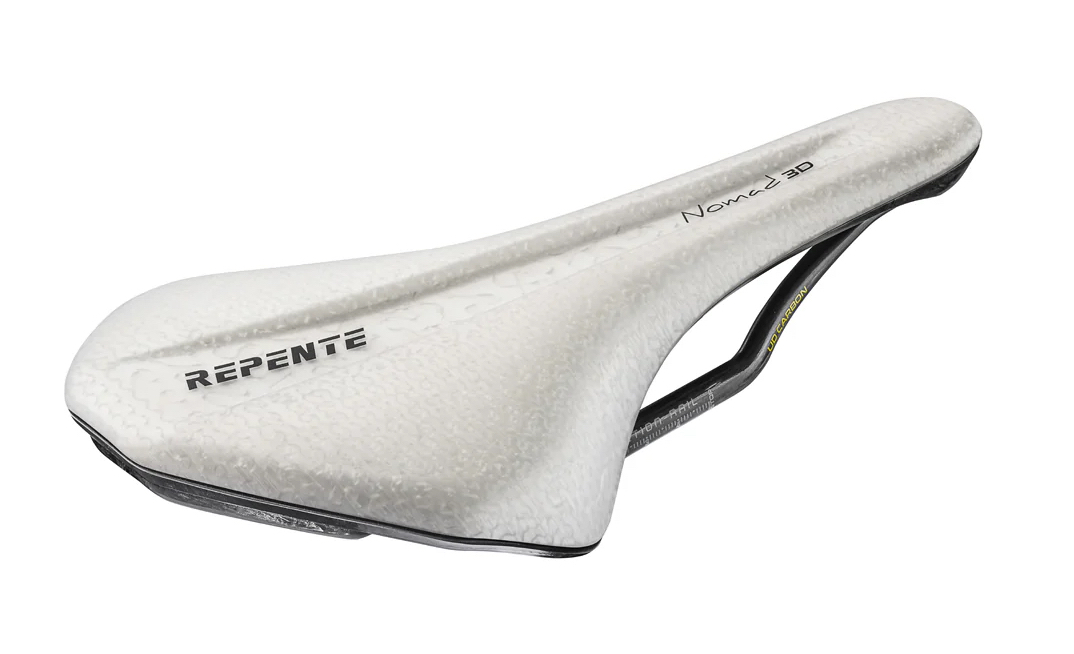
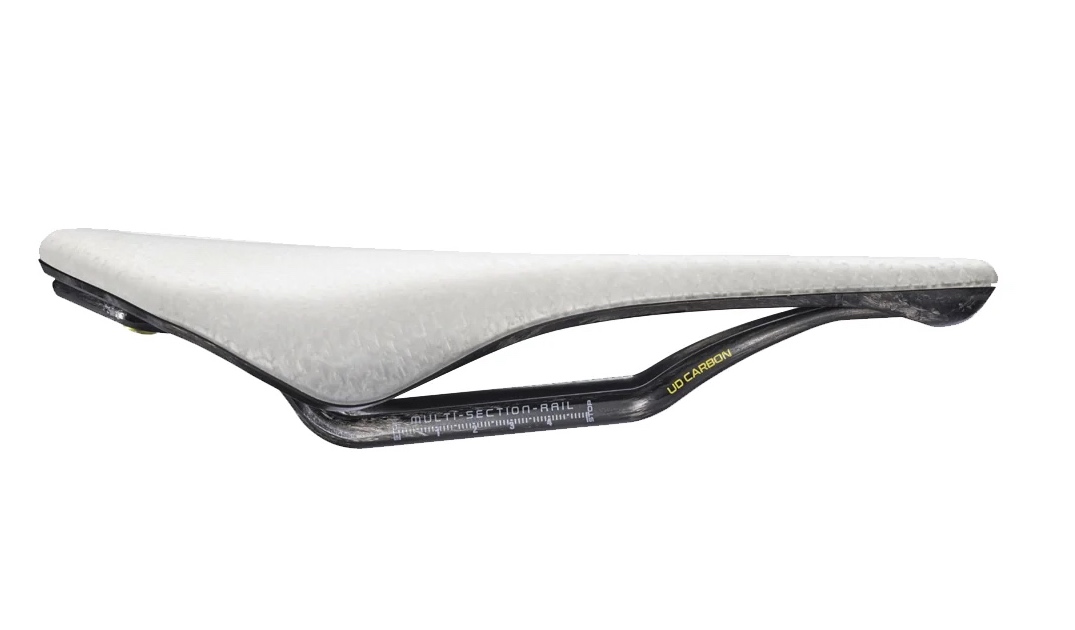
With its latest saddle, Nomad 3D, Repente has taken the aesthetics for 3D printed bike saddles in a new direction, foregoing the typical exposed-lattice look for a more standard, covered finish. The company is hoping to fill a gap in the market for cyclists looking to benefit from the comfort and performance benefits of a 3D printed saddle but that may be partial to the style of more conventional foam saddles.
The Nomad 3D is a saddle that integrates the tunable support of a 3D printed lattice structure, which has varying densities depending on the sit area (i.e. a denser, firmer lattice is placed under the sit bones, while less dense lattices are placed at soft tissue points of contact). However, unlike other 3D printed saddles, the Nomad 3D covers up this structure with a thin layer of TPU. It’s worth mentioning that the cover layer does have a degree of translucency to it, so you can still make out the printed honeycomb structure underneath in certain lights.
According to the company, the homogenous surface of the bike saddle does more than offer a more traditional look: it is also designed to protect the lattice structure from wear, dirt, chafing and accidental tears. Moreover, as Singletracks Mountain Bike News points out, the cover may minimize grip compared to the 3D printed lattice, which could solve an issue some riders have with the very-grippy exposed saddles. Perhaps one of the downsides of this new style of 3D printed saddle might be that there is less air flow than an uncovered 3D printed seat.
In making the Nomad 3D, Repente has relied on flexible TPU for the padding and cover and has integrated a UD carbon structure and rail, bringing the saddle’s overall weight to 180 g. The new saddle is retailing for €350.
The market for 3D printed saddles has really taken off in recent years, with brands like Posedla, Fizik, Specialized, Trek, and Selle SMP taking part. For some, such as Posedla, using 3D printing unlocks the potential for mass customization, leveraging a rider’s unique anatomy and riding style as the basis for designing the saddle. For all, 3D printing has opened the doors to more functional and comfortable saddles, which can provide tuned support and cushioning, often while minimizing weight.