Home  >  News

May 2, 2026      News      9882

The speed of desktop 3D printing seems to have hit a plateau.

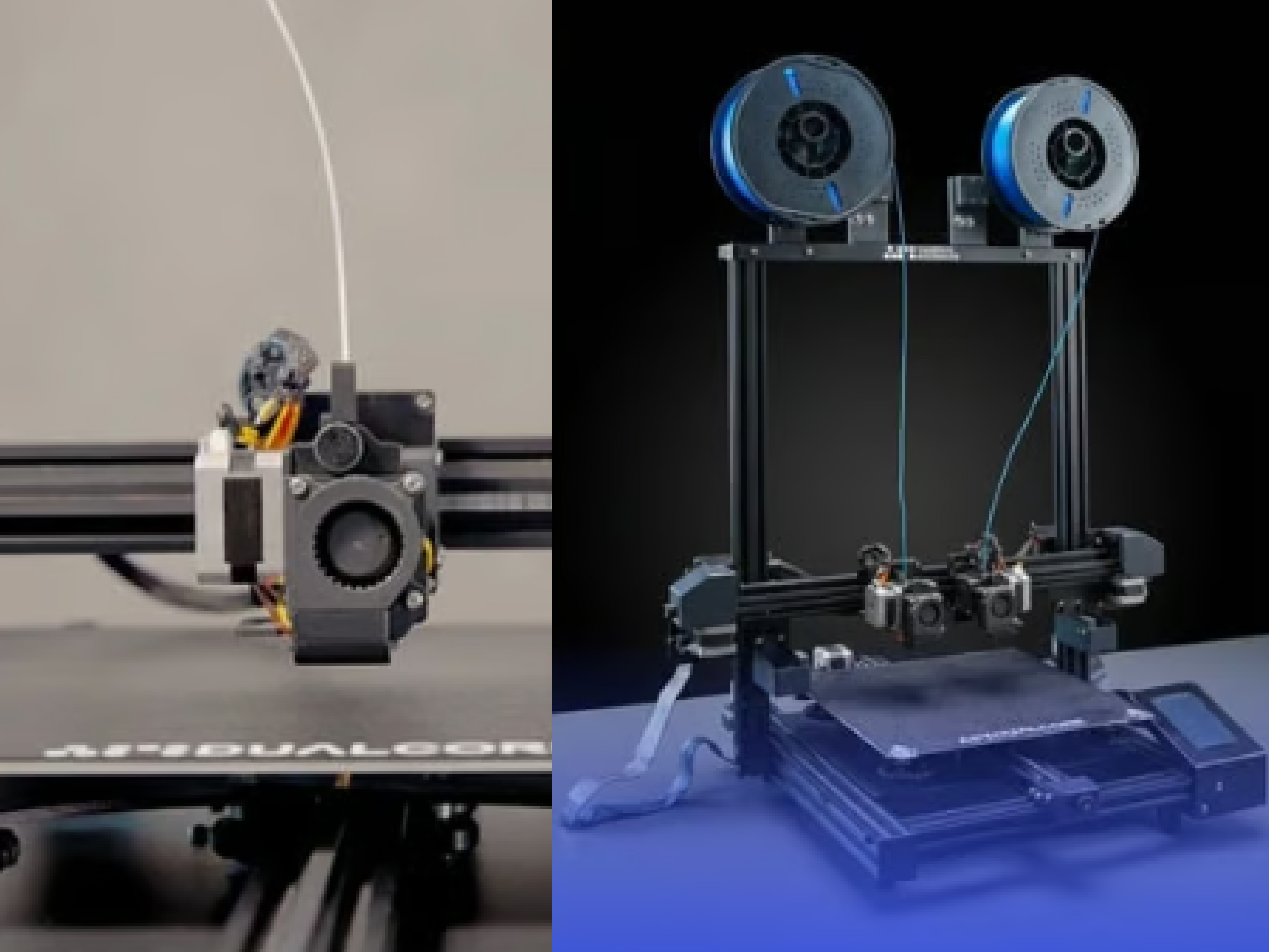
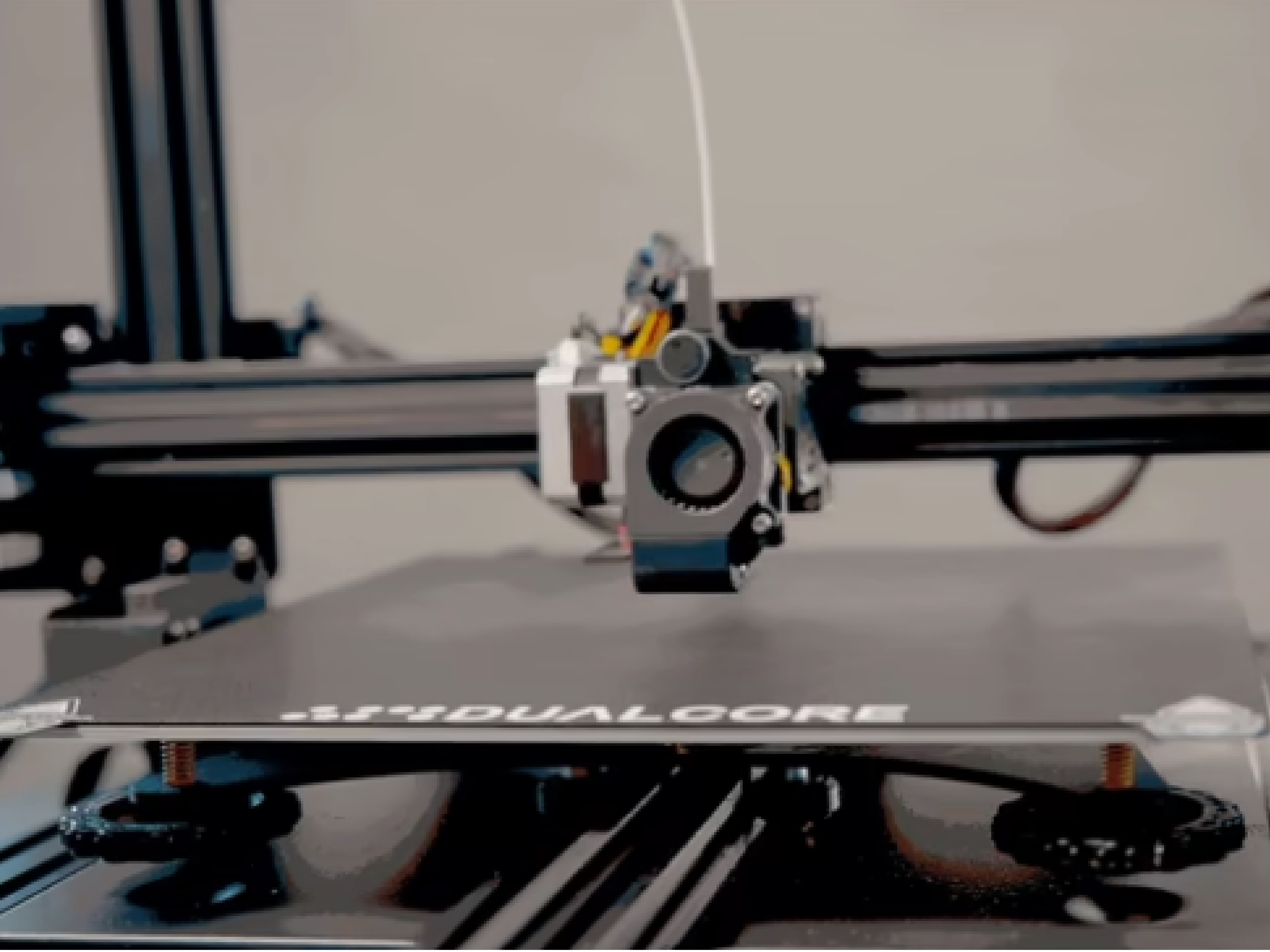
However, the DualCore system launched on Kickstarter by startup Anabolic Mechanics aims to break through this bottleneck by using two independent print heads simultaneously on the same part, claiming to achieve a tenfold increase in speed without sacrificing surface detail.
The DualCore is claimed to reach peak speeds of up to 1850 mm/s. The secret lies in two innovations: ① a proprietary slicing software that orchestrates "dual-engine printing" by coordinating both heads; and ② dynamically adjusting layer height depending on whether the layer is infill or outer wall — using fast, coarse internal layers while preserving fine details on exterior surfaces. However, the "1850 mm/s" figure is a conditional "equivalent speed." It factors out acceleration, vibration, extrusion pressure, and other real-world constraints, applying only to large, wide-bodied parts where the two print heads don't interfere with each other. On a standard 300mm build platform, the two heads frequently risk colliding ("elbowing"); when printing small parts, the company more pragmatically quotes a more industry-expected speed of 485 mm/s.
The real innovation lies in the software: within the same layer, fine and coarse regions are joined via "transition merge loops"; internally, an "overflow anchor" technique creates solid anchor points to enhance part strength without affecting the external appearance. This slicing algorithm was developed by the MIT founders and has the potential to be acquired by major printer manufacturers.
The DualCore is currently in crowdfunding, with early bird pricing at approximately 5759 Chinese yuan (originally around 8229 Chinese yuan). Shipping is projected for July/August 2026.
In summary: dual-head coordination plus intelligent slicing is genuinely exciting, but the 10x speed claim at this stage is more of a lab ideal. If you frequently print large, single-material mechanical parts, it can save you hundreds of hours; but for the average hobbyist, a more established high-speed single-head or tool-changer may be the more pragmatic choice.


©2025 3dptimes.com All Rights Reserved