Ever thought about 3D printing your own shoes? I tried it, and actually made it happen.
Bambu Lab has been heavily promoting the TPU (flexible material) capabilities of its H2C printer, claiming you could easily print your own footwear. As someone who habitually changes into comfortable shoes at the office, I decided to give it a shot.
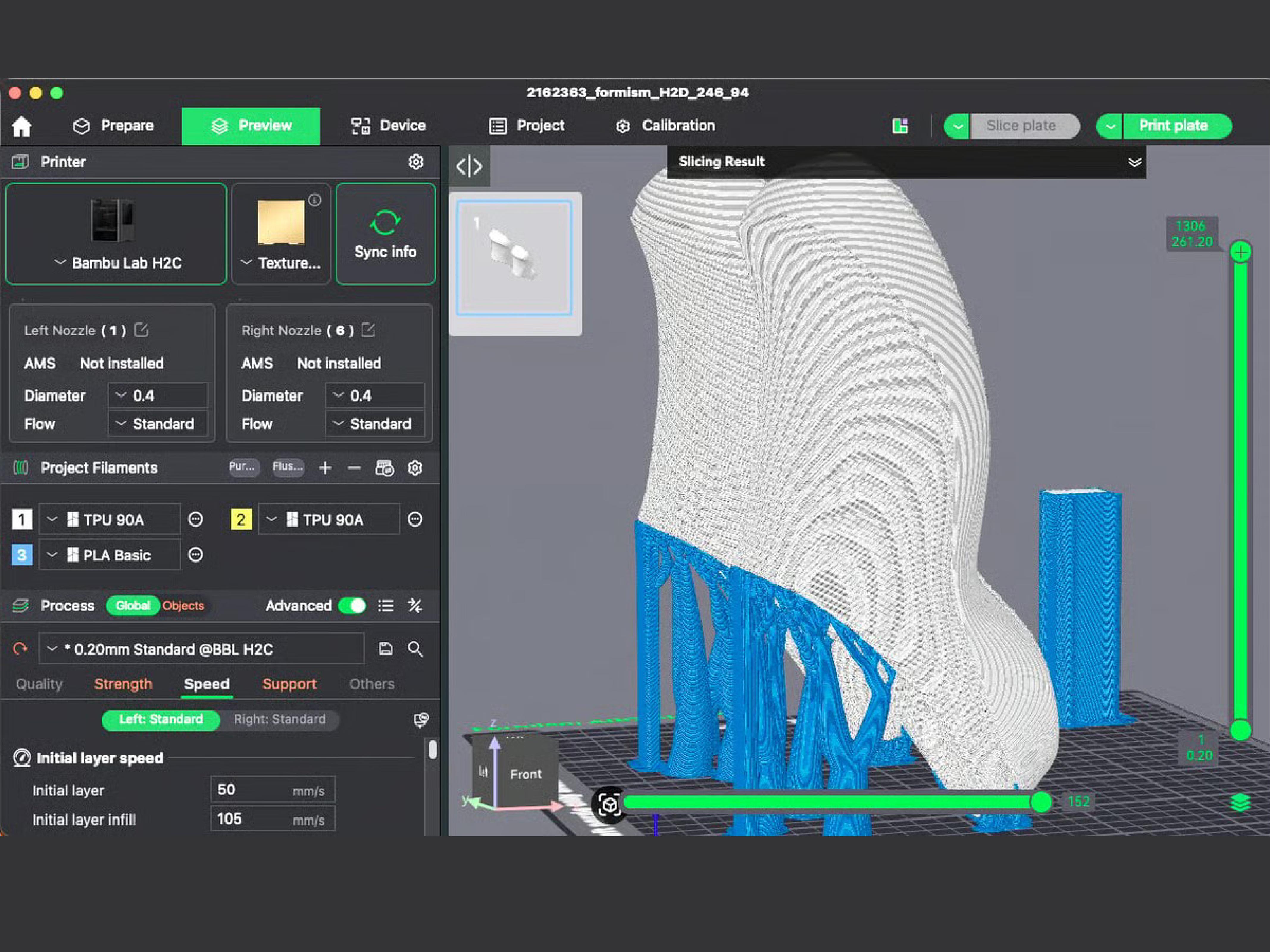
I didn't have the skills to design shoes from scratch, so I used the Arc Clog model, a collaboration between Formism and Bambu Lab. Its standout feature is "one-click sizing" — just enter your shoe size, and the system automatically scales all critical dimensions, not just length and width. Download your customized 3MF file, drag it into the slicer, and you're ready to print.
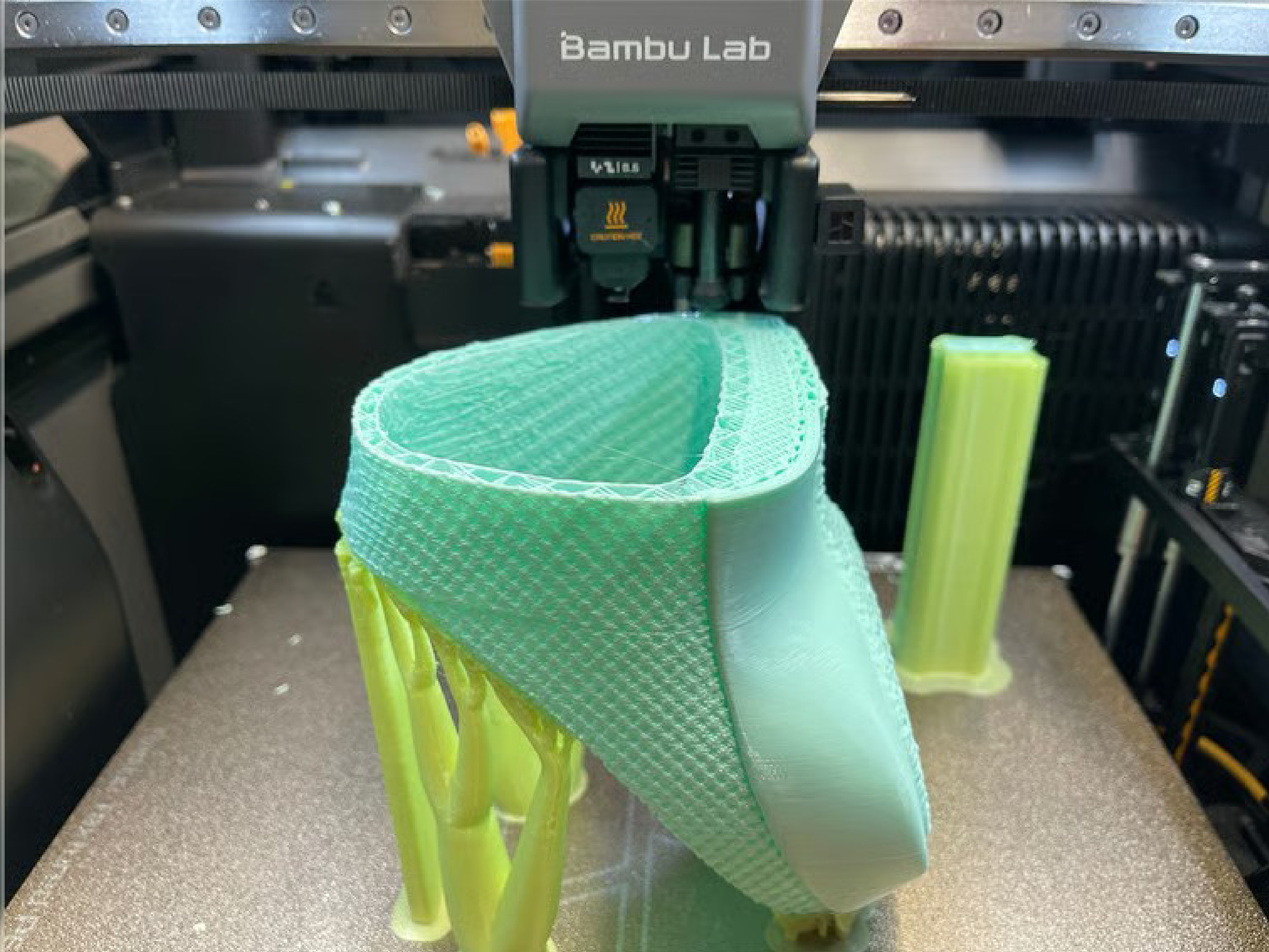
The real challenge was filament feeding. Soft TPU filament is extremely sensitive to resistance — even slight friction causes under-extrusion. The official recommendation of feeding soft material horizontally from the rear was nearly impossible to implement, so we had to DIY a top-mount filament guide, feeding the material vertically down into the extruder from above. Effective, but hardly elegant.
The right shoe was our test run; by the time we printed the left shoe, we'd optimized the feeding setup. Each shoe uses about 300 grams of material.
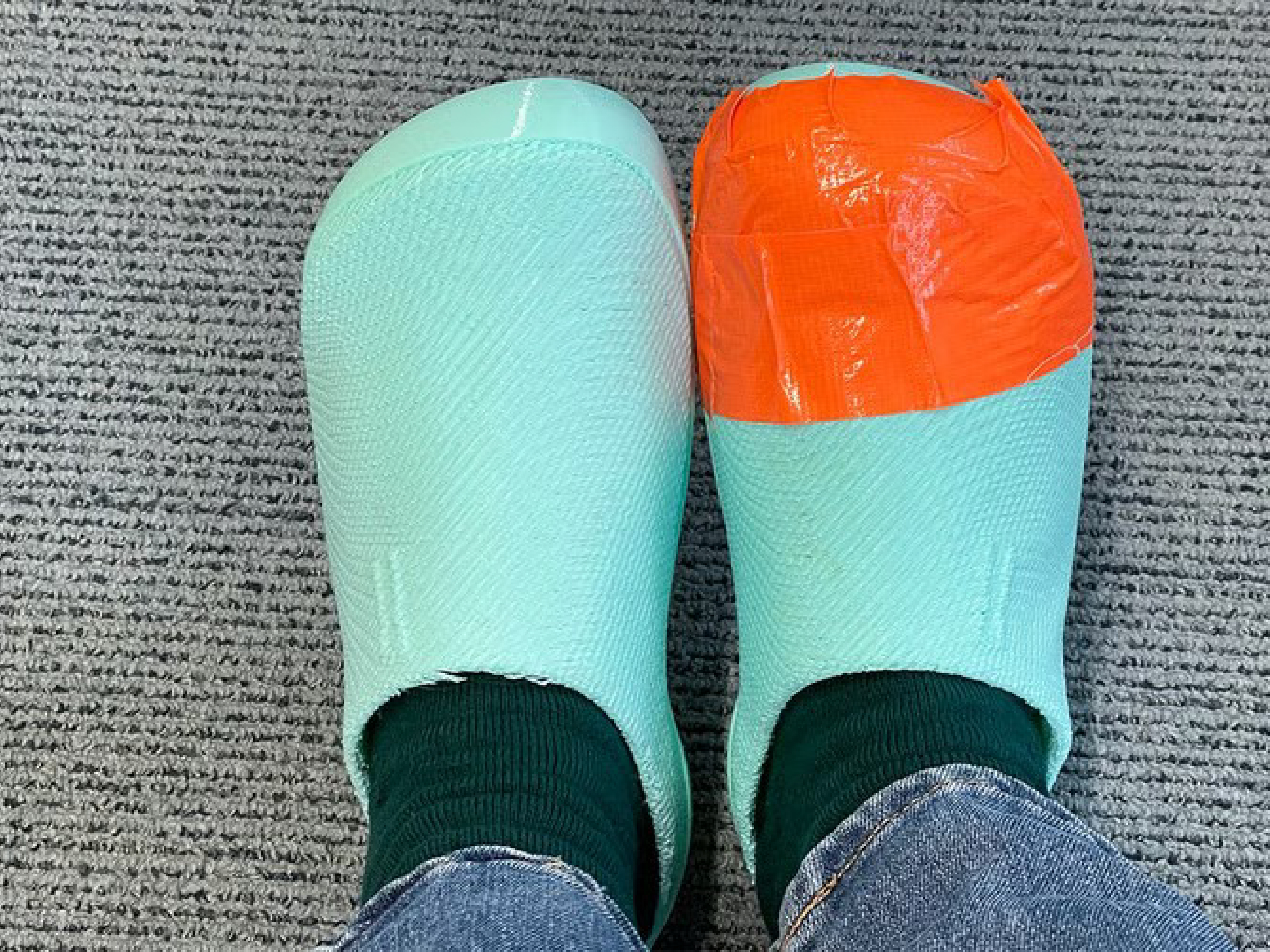
Slipping on my self-printed clogs for the first time was genuinely satisfying — comfortable, stylish, and sturdier than expected. Perfect for office wear.
But after a week, issues emerged: the TPU stretched more than anticipated, and I found myself shuffling to keep them on. The right shoe (our test print) was already showing signs of layer delamination — I had to rescue it with some duct tape. The left shoe, thankfully, is still holding up.
Not counting failed attempts, this pair consumed nearly a full spool of TPU ($45), plus some support material. That puts the cost at roughly twice that of Crocs or close to a pair of Birkenstocks.
Not counting failed attempts, this pair consumed nearly a full spool of TPU ($45), plus some support material. That puts the cost at roughly twice that of Crocs or close to a pair of Birkenstocks.
The design works, and the printer is capable — but right now, the material is the weak link. Everyday footwear demands flexibility and durability that current TPUs still struggle to deliver. Fun experiment, but not yet ready for prime time.