
Home  >  Hardware

September 25, 2025      Hardware      304

Italian large-scale 3D printing system manufacturer WASP introduced the pellet extrusion-based 3D printer CUBO HDP for sustainable manufacturing at the AAPA Expo Europe 2025 in Barcelona.

Shredded plastic waste. Image from WASP.
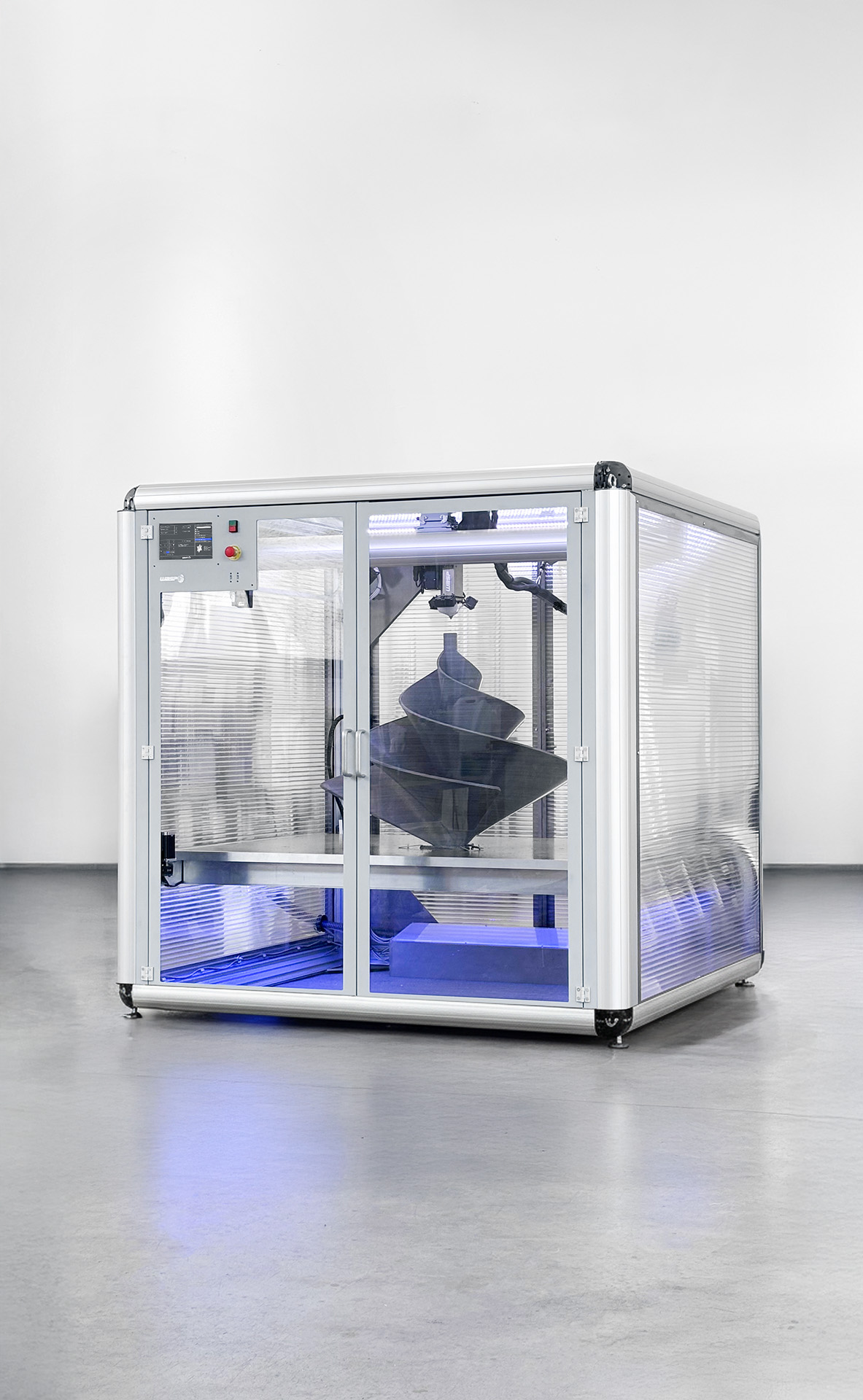
The new system made its debut at the exhibition held from September 23-25 at Fira Barcelona Gran Via (Hall 2, Stand B-115). With a build volume of 120 x 120 x 120 cm, the CUBO HDP is positioned as a versatile machine capable of low-cost circular production using recycled materials. WASP states that the machine's design emphasizes simplicity, efficiency, reliability, and sustainability, with an average power consumption of 450W and peak consumption of 1kW.

Recycled Plastic Workflow

The CUBO HDP is based on WASP's High Definition Pellet (HDP) platform, initially used in its 3MT HDP machine. Its extruder has been redesigned to improve tolerance for irregular pellet sizes, supporting a wider range of ground plastic types. The pellet recirculation system prevents material stagnation, enabling even microplastics to be processed easily.

Through integration with the RIGENERA 3D system, users can produce their own raw materials by shredding, drying, and extruding plastic waste. This enables material loop closure and cost reduction by reusing production waste or locally sourced recycled plastics.

Advancing Sustainable 3D Printing

WASP chose the IAAPA Expo Europe (the largest international trade show for the leisure and attractions industry) as the venue for the CUBO HDP's debut. This printer is well-suited for the decoration industry, where operators are increasingly seeking sustainable methods for producing props, set elements, and large decorative components. Visitors can see the CUBO HDP in operation at the WASP stand in Hall 2.

WASP (World's Advanced Saving Project) was founded in 2012 and is headquartered in Massa Lombarda, Italy. The company has developed a range of large-format, pellet-based 3D printers and sustainable manufacturing solutions, including clay extrusion systems and circular material workflows. WASP has been active in recycled material 3D printing since 2016.

Earlier this year, WASP launched the Shamballa open-air 3D printing lab for sustainable living, integrating architectural design with ecological principles. WASP also collaborated with Columbia University to present a 3D-printed earth installation at the Venice Biennale and showcased a series of sustainable 3D printing innovations at Formnext 2024. These projects demonstrate how WASP positions pellet extrusion and recycled material printing as part of a broader vision for circular and environmentally friendly production.


©2025 3dptimes.com All Rights Reserved