
BUAA: In-situ monitoring enables precise deformation prediction in 3D printing of composite materials.
September 26, 2025 Materials 378

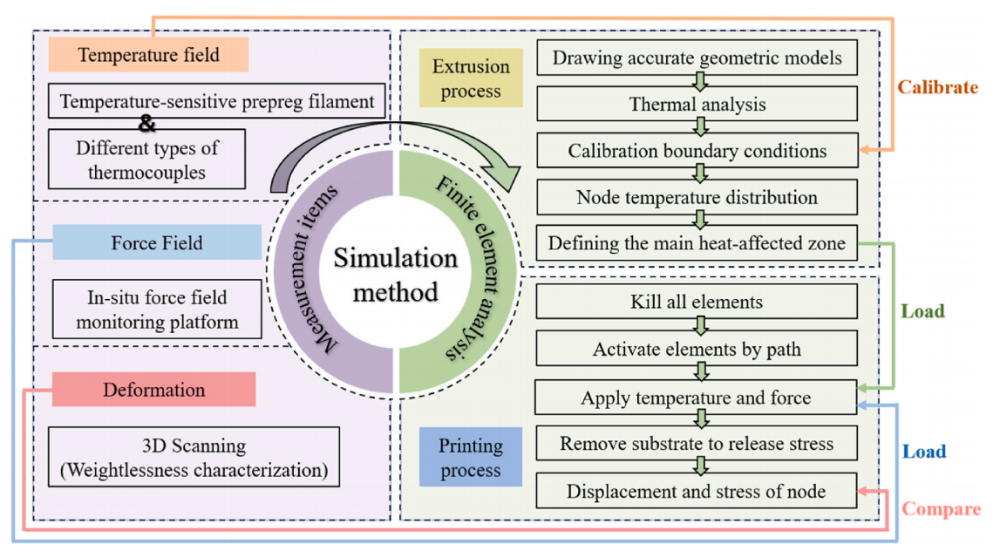 Flowchart of the data measurement and simulation methodology for the 3D printing process.
 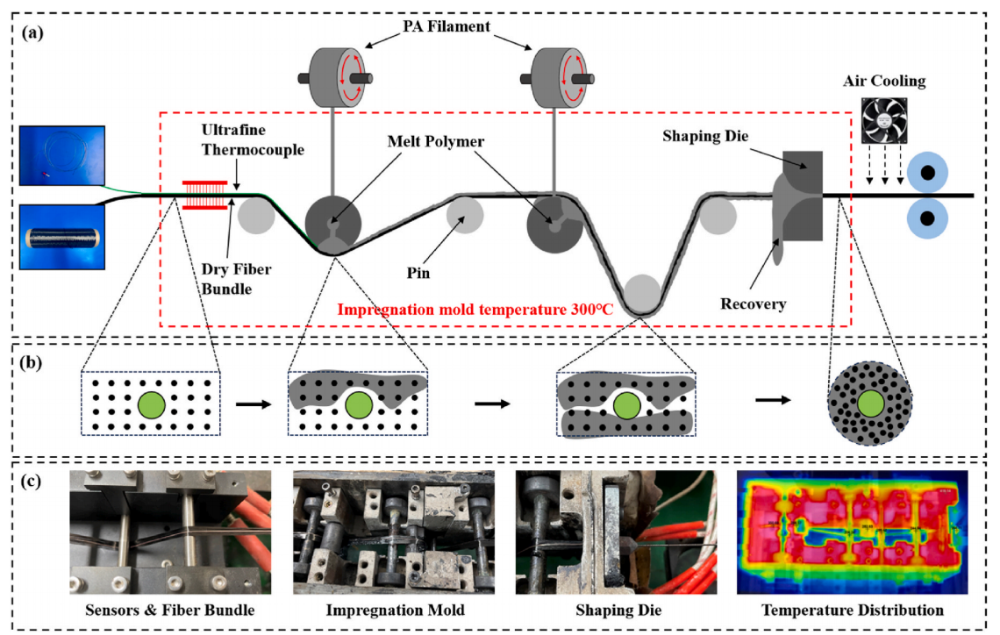 Temperature-sensitive prepreg filament fabrication process: (a) schematic diagram, (b) resin impregnation process, (c) main equipment components and cross-section of the temperature-sensitive prepreg filament.
 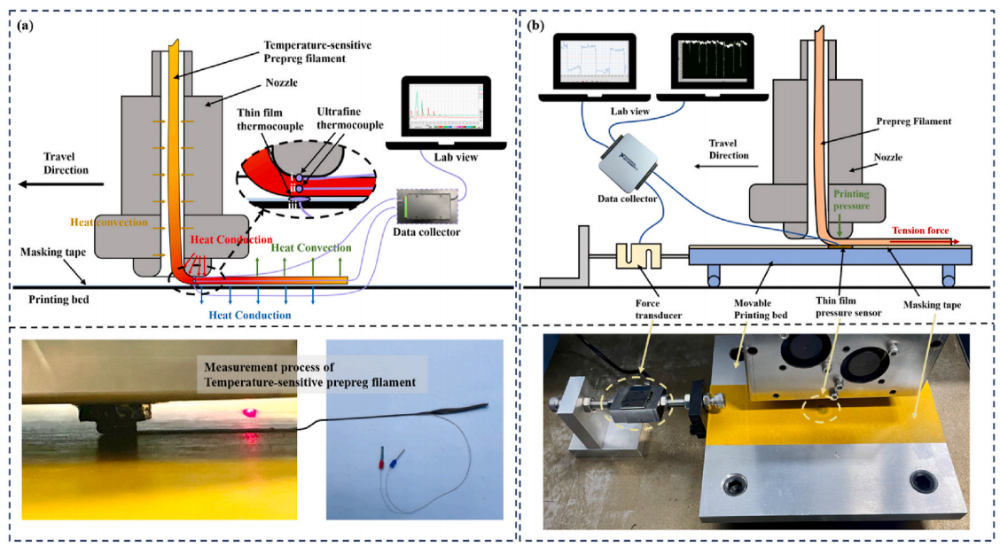 (a) Schematic of in-situ printing temperature measurement, (b) schematic of the in-situ printing force field monitoring platform.
 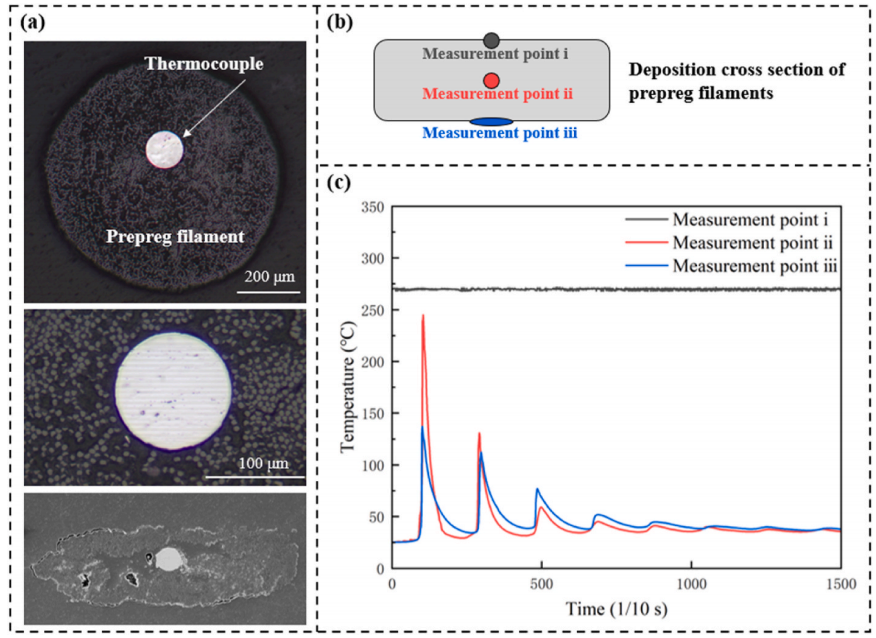 (a) Cross-section of the temperature-sensitive prepreg filament, (b) temperature measurement point distribution, (c) temperature data during the printing process.
 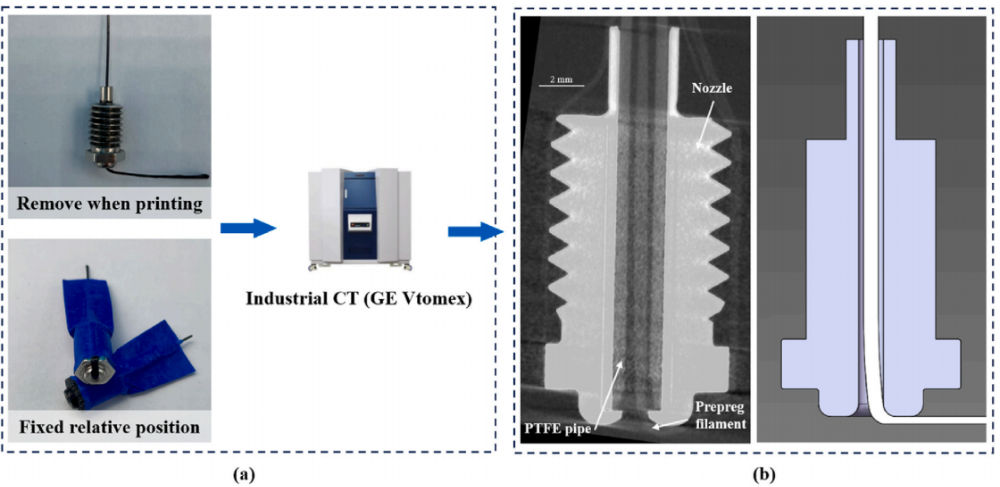 (a) Method for characterizing fiber orientation within the nozzle, (b) characterization and 3D reconstruction results.
 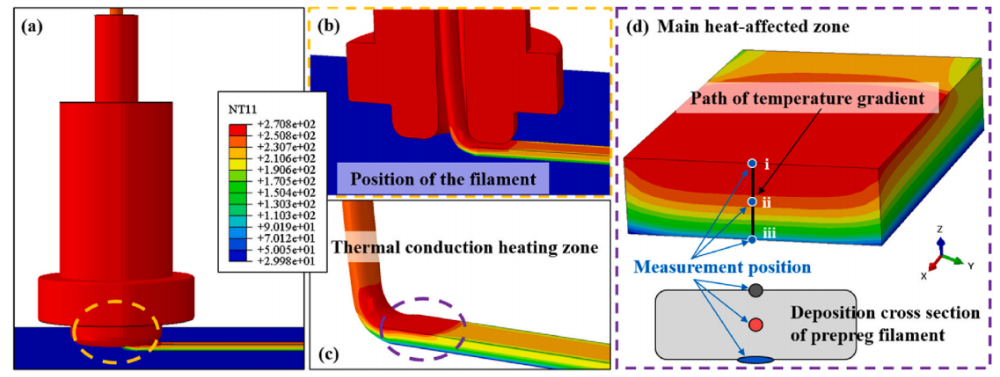 Finite element model of the extrusion process: (a) overall model, (b) local section of nozzle contacting prepreg filament, (c) main heat-affected zone of the prepreg filament, (d) spatial correspondence between the finite element model and experimental measurement points.
 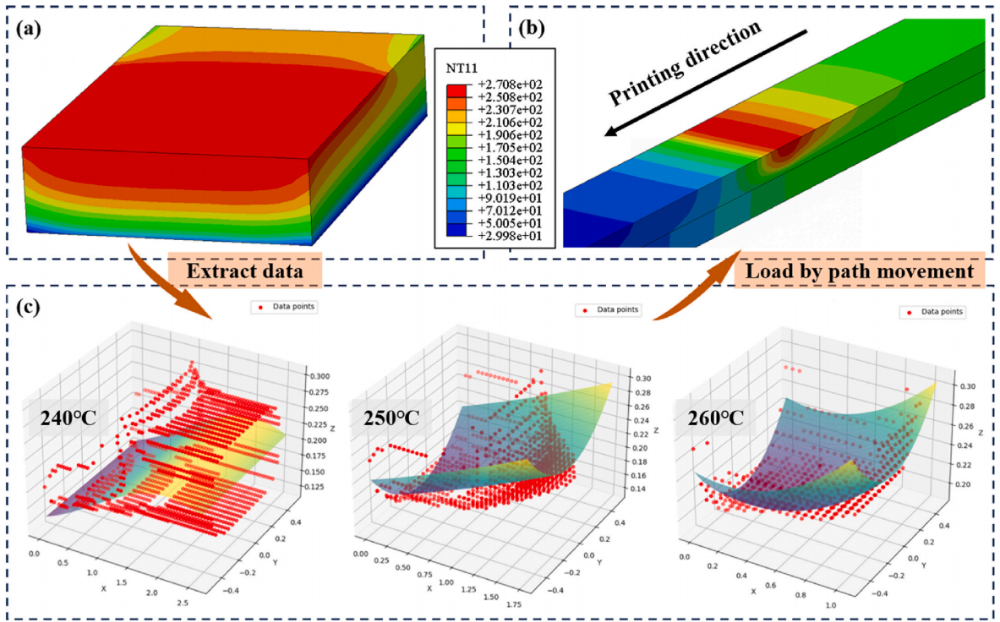 (a) Static simulation of the extrusion process, (b) dynamic simulation of the printing process, (c) Gaussian surface fitting for different isothermal cross-sections.
 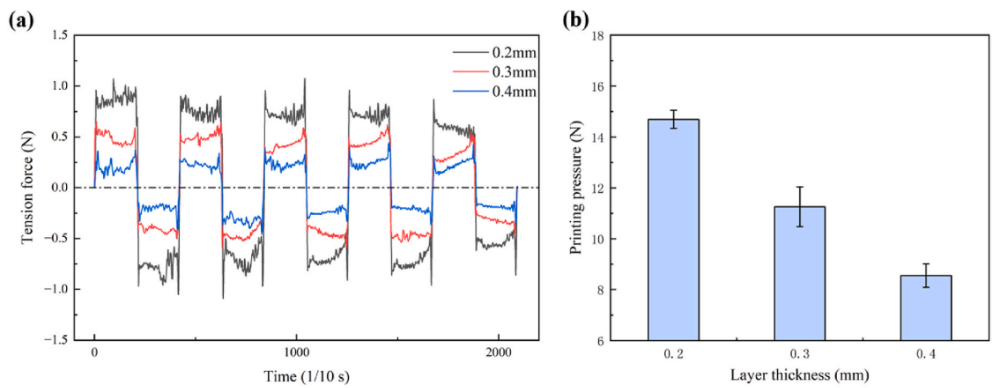 Force field measurement system data: (a) printing tension, (b) printing pressure.
  (a) Internal residual stress at the end of printing, (b) stress release results after detachment from the substrate, (c) Z-direction displacement after detachment from the substrate.
News
About
Events
Newsletter
Research
Podcast
Zones
Forum
Shop
Contact
Advertise
Additive Manufacturing
3D Printing
Industry Directory
Global Offices
U.S. Headquarters
Address: 2595 Pomona Blvd, Pomona, CA 91768, USA
Email: bjldid@gmail.com
Jason
China Office
Address: Room 401, Block C, Zhongguancun Zhizao Avenue, No. 45 Chengfu Road, Haidian District,
Beijing, China 100083
Email: bjldid@126.com
Gwen wechat: scrat3dcom
©2026 3dptimes.com All Rights Reserved