Home  >  News

June 30, 2026      News      9980

Orthotic manufacturing is moving away from the slow era of plaster casting and manual trimming, and shifting toward digital, intelligent design.

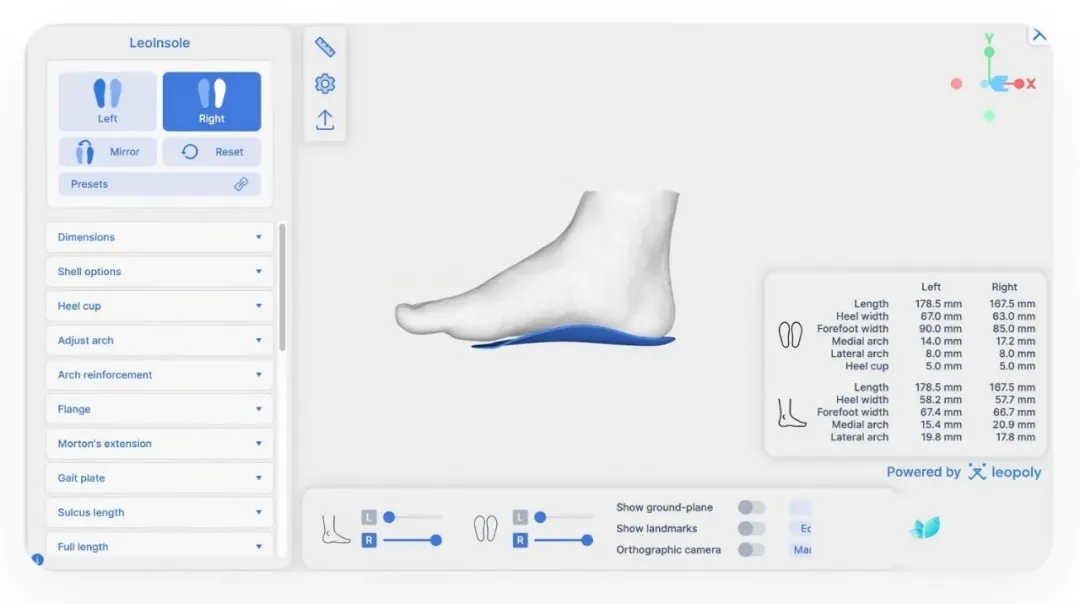
Intamsys, together with Spain’s Edser, has launched the Asian version of the HPDM digital orthotic design system. It combines over 30 years of European clinical orthotic experience with AI algorithms, covering three main product categories: custom insoles, AFO ankle‑foot orthoses, and scoliosis braces. The system forms a complete closed loop from mobile scanning and cloud‑based design to 3D‑printed delivery.
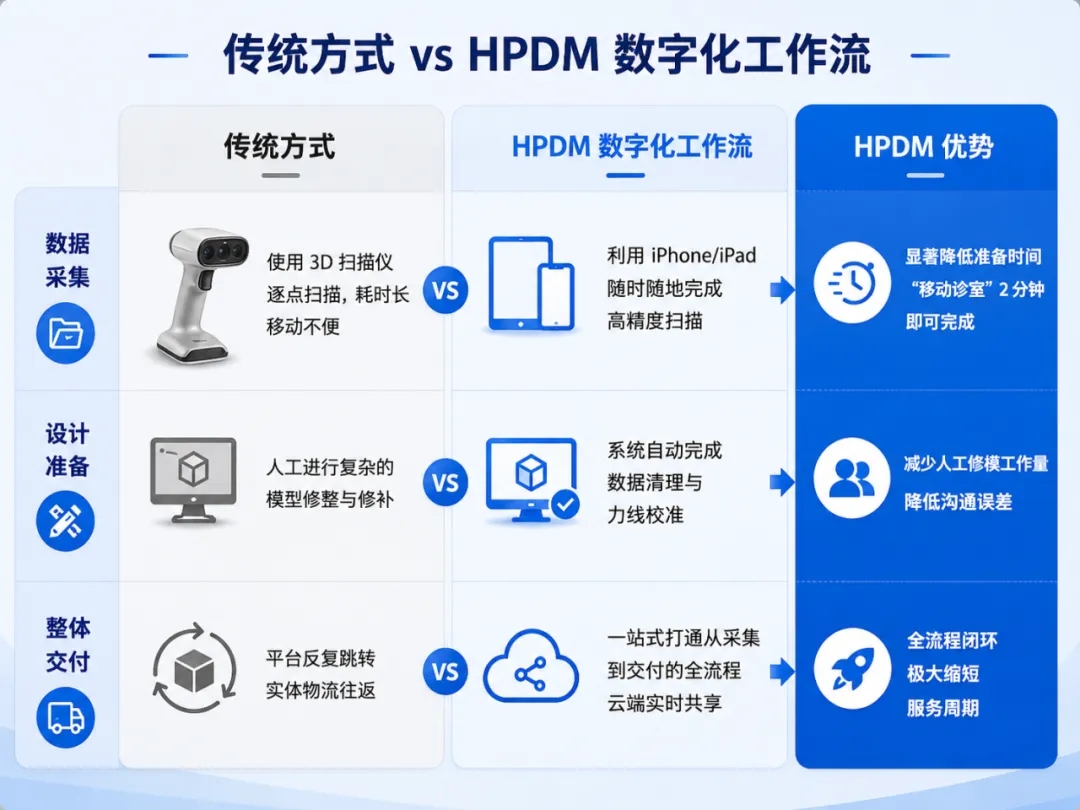
The workflow is remarkably simple: use an iPhone or iPad to capture sub‑millimetre scans of the foot, lower leg, or torso – no clinic‑room restrictions. Cloud‑based AI automatically handles noise reduction, lower‑limb mechanical‑axis alignment, and template matching for specific conditions. What used to take hours of manual modelling can now be done in minutes, leaving the technician to focus on case evaluation and fine adjustments. The finished design can be exported as a standard STL file with one click, compatible with FDM, SLS, CNC milling, and other processes. Organisations can produce the parts themselves, or choose an integrated design‑plus‑printing service if they lack in‑house printing capacity.
This system standardises every step of the chain, drastically shortening training time for new staff. Chain clinics and multi‑site facilities can reliably handle large volumes of cases, making digital production truly scalable.
Early adoption has already begun in South China. Shunde Weiquan Rehabilitation Centre and Guangdong Jianjia Rehabilitation Hospital have signed cooperation agreements to validate the system in real‑world scenarios, focusing on paediatric rehabilitation, AFO braces, and custom insoles. The collaborating specialists note that digitalisation is not about replacing orthotists, but about making scanning, design, communication, and delivery more efficient. It is especially valuable in paediatric AFO and gait‑abnormality cases, where it reduces the difficulty of traditional casting and enhances the institution’s overall service capability.


©2025 3dptimes.com All Rights Reserved