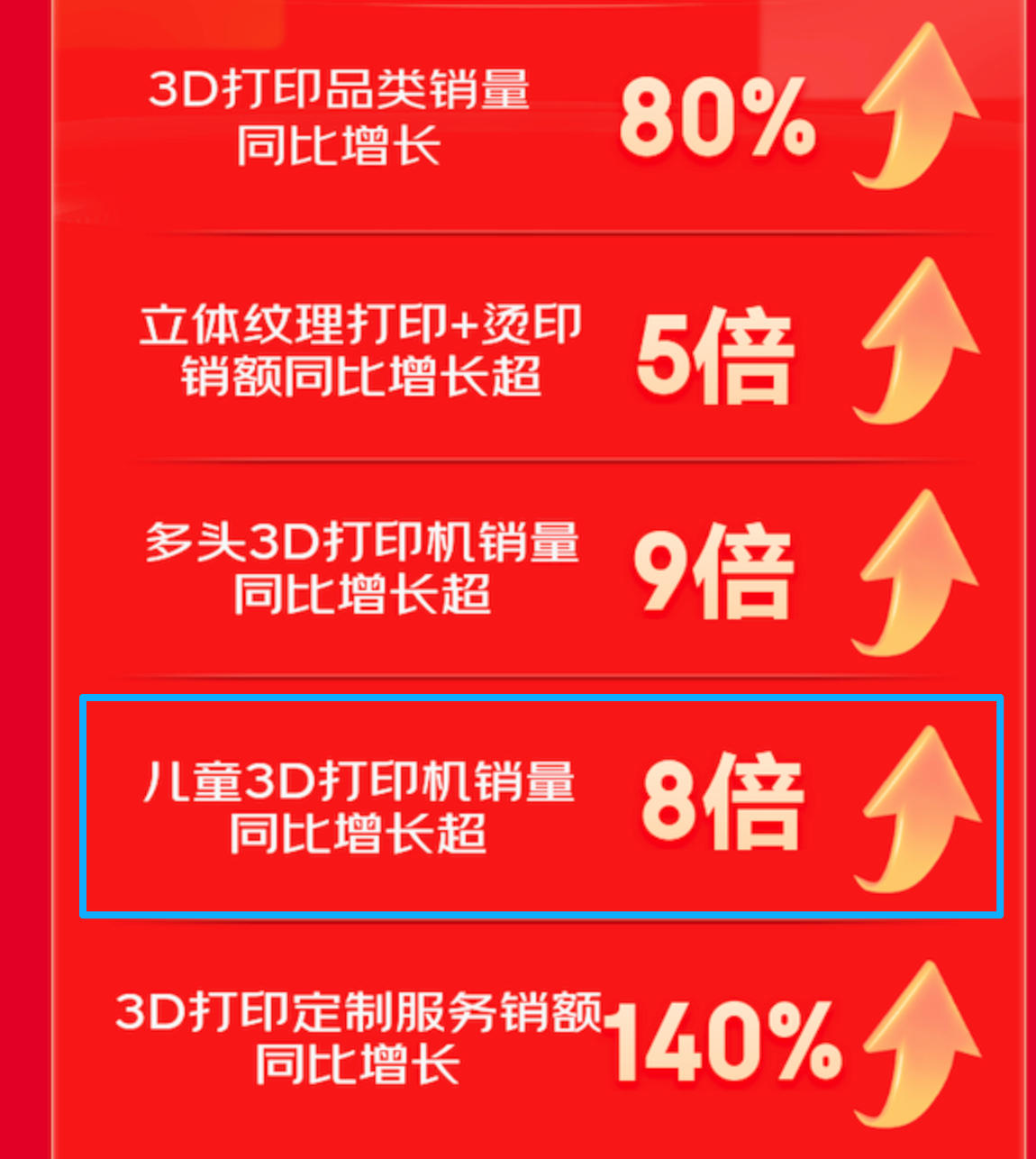
During China’s June 18 shopping festival this year, JD.com saw 3D printing product sales jump 80% year‑on‑year.
Within that, children’s 3D printers soared by over 8 times. Filament sales rose 90%, and custom‑printing services grew 140%. The full‑chain consumption model – “equipment + materials + services” – is clearly taking off.
Why children, though? Industry data shows that about 46.3% of consumer 3D printer usage is tied to family and parenting scenarios. This isn’t geeks buying gadgets – it’s parents investing in their kids’ creativity. And that psychological shift changes everything: when it’s about education and imagination, the willingness to pay is on a completely different level.
On the brand side, AOSEED has been steadily building its presence in the children’s segment, shipping its products to more than 30 countries. Between May and June alone, its single best‑selling model moved over 6,000 units on Tmall. ENTINA Xiao Cheng Guo sold nearly 2,000 units across all online channels during the 618 event, at a retail price of around $110 (799 CNY). With auto‑leveling, pre‑assembly, and zero setup required, even families with no prior experience can start printing right out of the box.
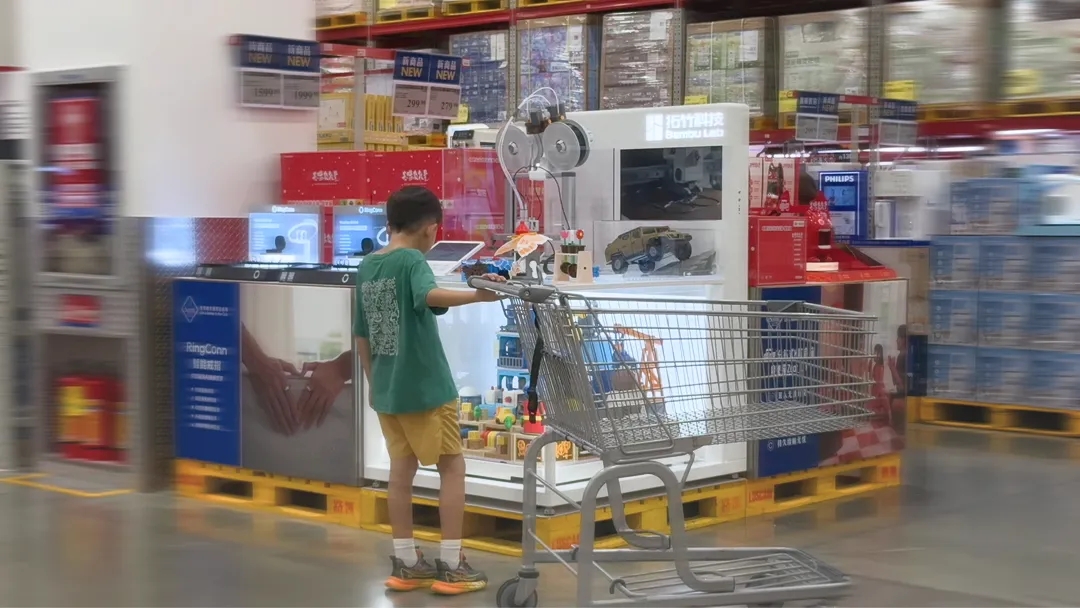
Children’s 3D printers come with three non‑negotiable requirements. Safety comes first – FDM is the only choice, while resin‑based (SLA/DLP) printers are avoided because liquid resin fumes can be harmful to young lungs. Enclosed heated chambers, low‑voltage (12V) power, and eco‑friendly PLA filament are now standard. Ease of use is second – one‑touch printing and fully automatic bed leveling are musts; anything that forces parents to dig through a manual is a deal‑breaker. Third, a built‑in model library is critical to prevent the machine from gathering dust. Bambu Lab, for instance, has moved into all 64 Sam’s Club stores across China this year, putting their printers in front of millions of families. They’ve also teamed up with the high‑end family entertainment brand meland to open 3D printing creative centers in more than 10 cities, accelerating the crossover from hobbyist tool to family activity.
That said, challenges remain. About 72% of users still find 3D printers too difficult to learn, and the retention rate for entry‑level machines is below 30%. If a printer doesn’t produce a satisfying result on day one, it’s likely to end up in storage by day two. The core question is how to make these devices genuinely useful for families, not just a novelty that fades after a few tries.
A 3D printer sitting in the living room can turn a child’s dinosaur sketch into a tangible, hold‑in‑your‑hand model – and that leap from imagination to creation is precisely what makes consumer 3D printing click for the mass market. With an 8‑fold surge in sales, the “family moment” for 3D printing may well have arrived.