3D printing empowers people to create custom, affordable aids for daily living, moving beyond clinical settings.
When you think of 3D printing in medical applications, do you envision prosthetics or surgical guides? Today, this technology is quietly integrating into daily life, creating personalized solutions for people in need—extending far beyond strictly defined "medical devices."
From "Mechanical Hands" to "Walking Coaches"
The global volunteer organization e-Nable has been open-sourcing designs for 3D-printed mechanical hands for years. This allows ordinary families to use desktop printers and PLA plastic to create lightweight, customizable assistive hands for their children. While not as sensitive as myoelectric prostheses, these devices can perform grasping motions, significantly lowering the barrier to access.
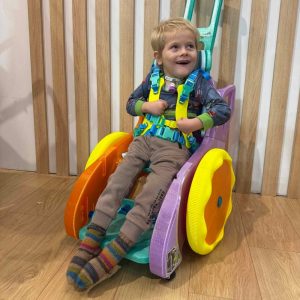
Similarly, the US-based organization MakeGood designs fully 3D-printable modular mobility aids and daily living adapters. Their popular child-friendly gait trainer, for instance, has all its parts printable on consumer-grade machines like the Bambu Lab A1, with design files openly available for parents to modify as needed.
"Sewing with the Chin" and "Building One's Own Wheelchair"
True personalization means creating tools for unique needs. After a spinal cord injury, Twan collaborated with therapists through several iterations. They eventually developed a plastic-printed lever that allows her to operate a sewing machine using chin movements, reclaiming her hobby. She also added 3D-printed splash guards to her mobility device for easier travel in rainy weather.
Former chemical engineer Wu, after developing a neurological condition, designed various mounts, ramps, and control components for his wheelchair. 3D printing enables him to customize parts precisely and continuously refine them, effectively becoming the "product manager" for his own needs.
More Than a Tool—It's Empowerment
The core of these stories is that 3D printing is democratizing the development of assistive tools, moving it beyond specialized institutions. It is becoming an inclusive creative tool, empowering users to participate in the design process and quickly obtain low-cost solutions perfectly tailored to their individual needs. This is not just a technological innovation but a shift in lifestyle—enabling everyone to live more independently and with greater dignity through technology.