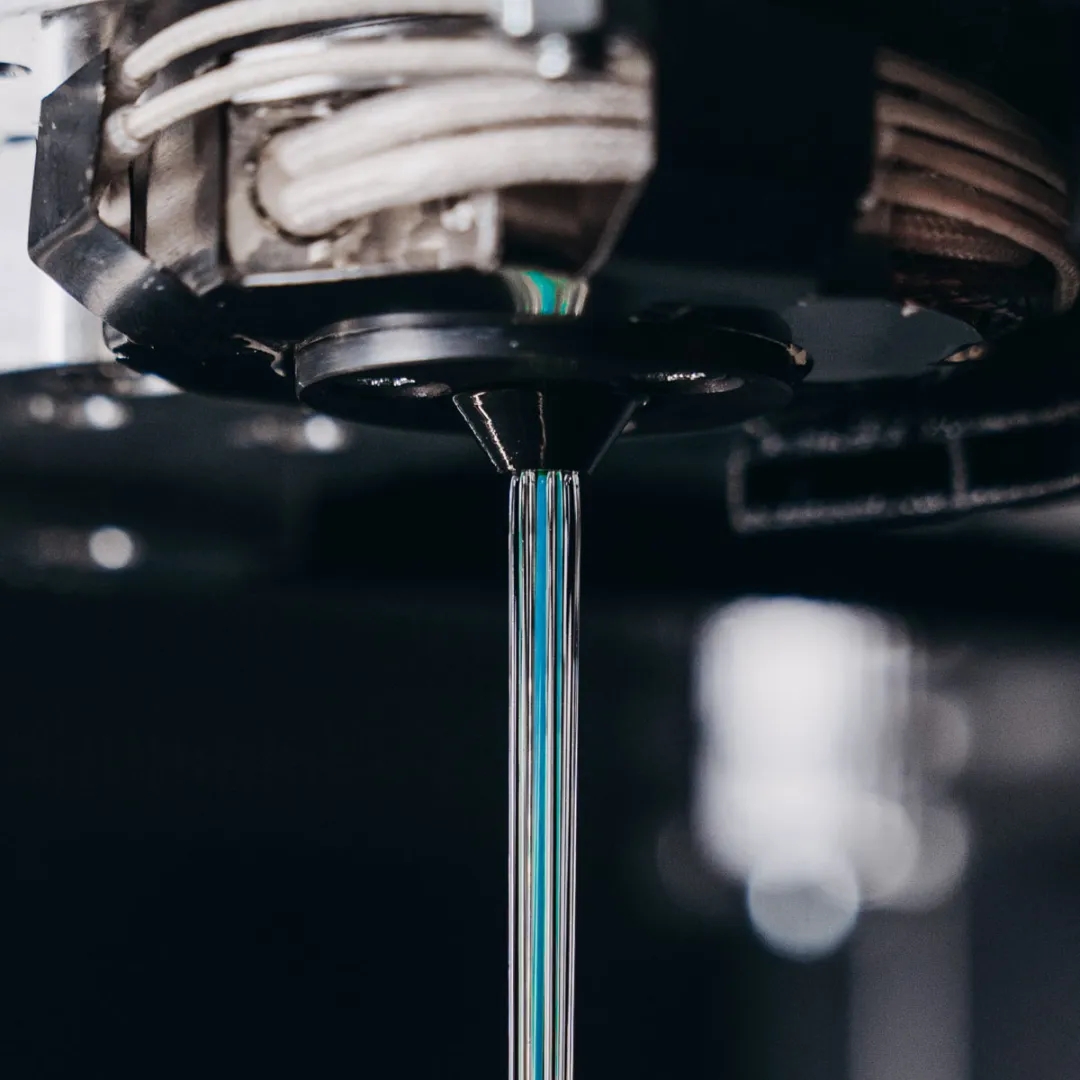
On April 14, 2026, it was learned that Bambu Lab has launched the dual‑nozzle, dual‑extruder 3D printer X2D.
With government subsidies, the single‑unit price is approximately $472 (originally 3,399 CNY), and the multi‑color bundle is approximately $649 (originally 4,674 CNY), making it extremely competitive. It is expected to sell very well again – no wonder the company announced plans to build a smart manufacturing base capable of producing 3 million 3D printers, with Bambu Lab (via Zhuhe Technology) acquiring 83,700 square meters of land in Shenzhen’s Guangming district.
The Bambu Lab X2D is an upgrade from the X1C, focusing on dual‑head, dual‑nozzle, multi‑color high‑speed printing, and intelligent AI detection for desktop FDM 3D printers. It is positioned for both home and professional creative use. It must be said that this machine is truly full of innovations.
Features include:
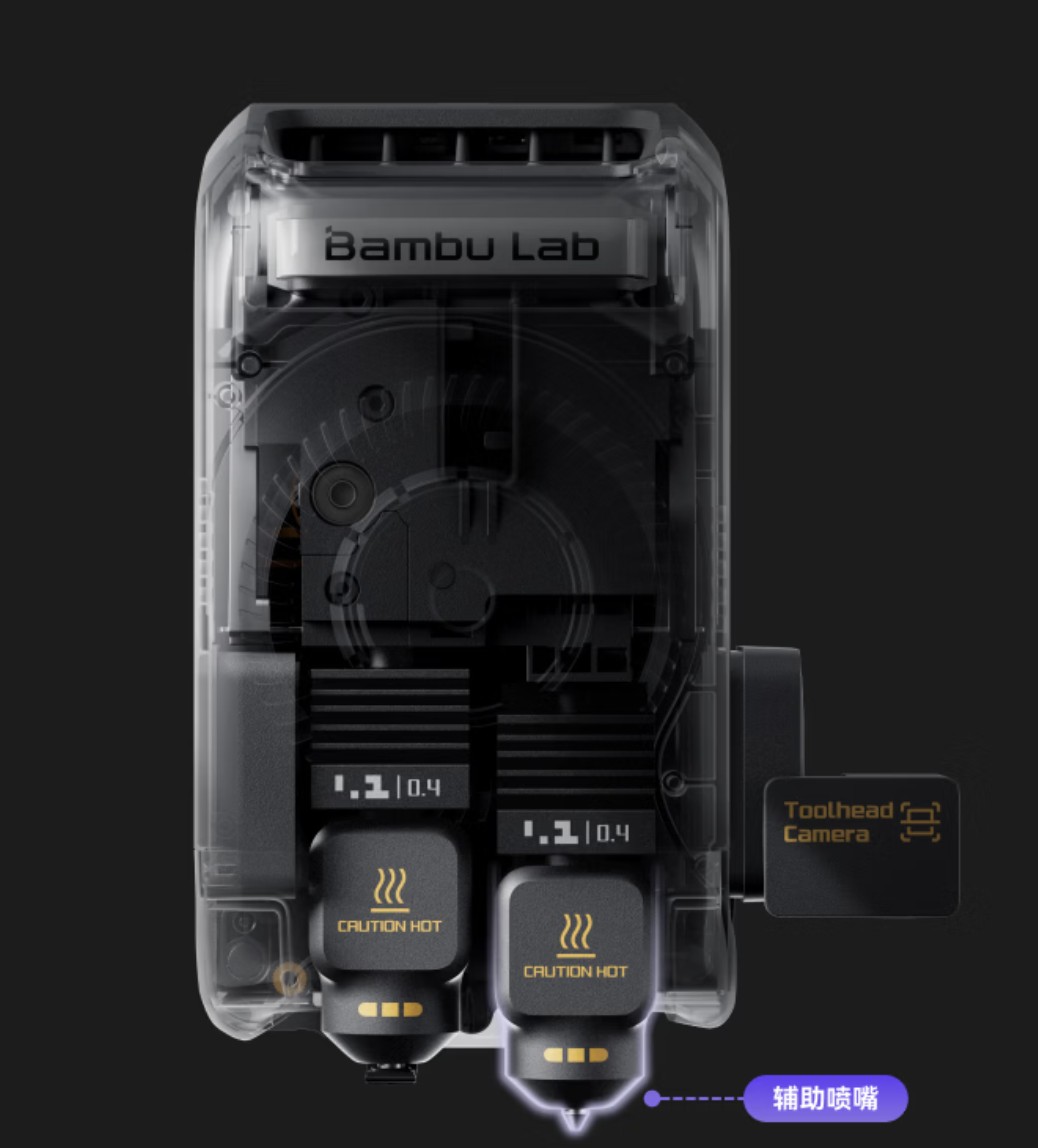
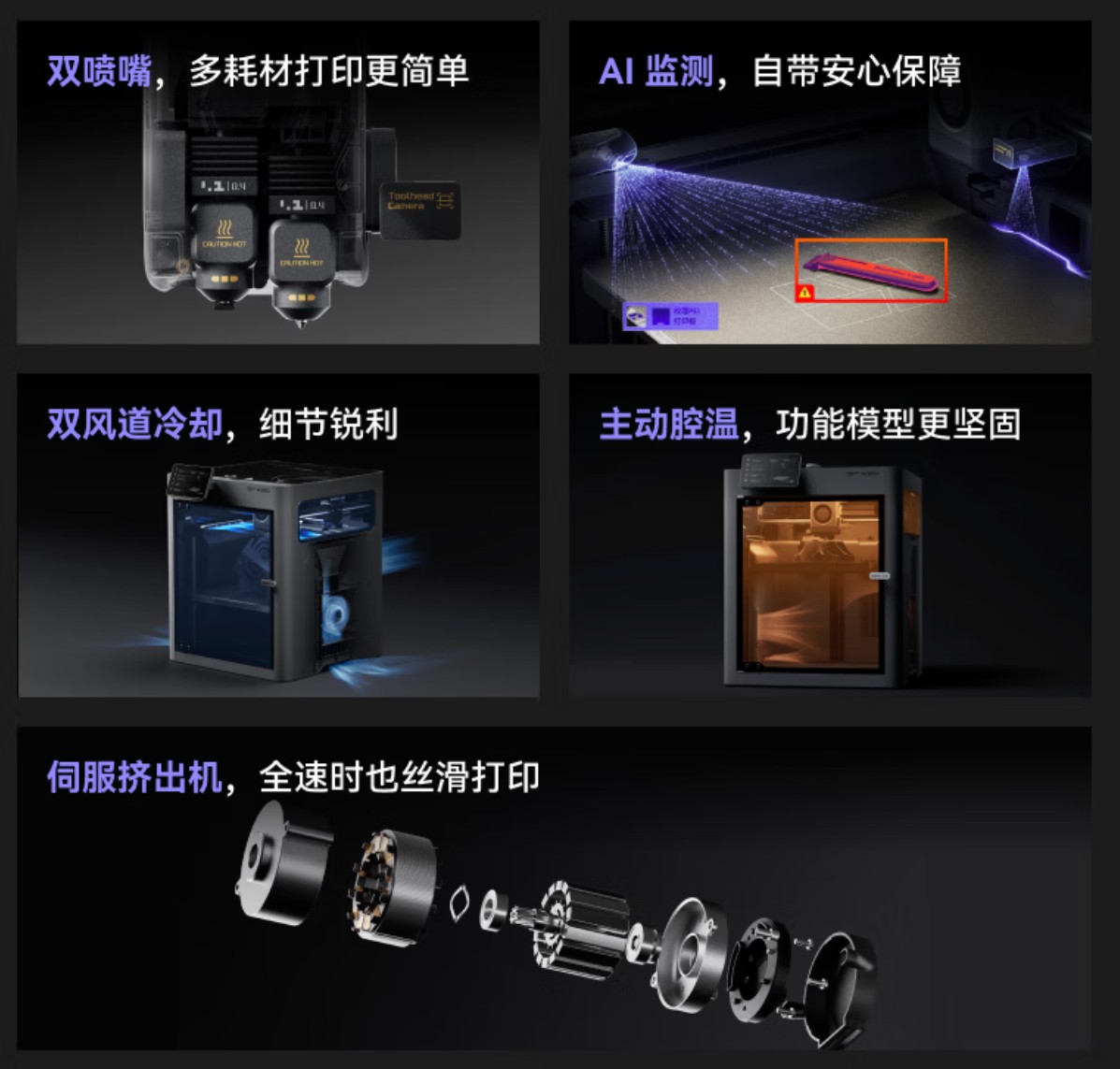
Dual‑head, dual‑nozzle system: Side‑by‑side retractable structure with integrated filament break detection, cleaning, and calibration. Switching is clean, with no oozing, no stringing, and minimal color cross‑contamination.
More refined and accurate models: Unlike traditional motor‑driven systems, the X2D integrates a gear‑driven triggering mechanism into the toolhead. The nozzle‑switch lever lightly touches the trigger rod, which drives the internal gear structure to change nozzles. No extra weight, just clean and crisp switching.
Instant color switching: With the X2D’s dual‑nozzle system, you no longer have to worry about filament waste. The nozzles can switch in an instant, while Bambu Studio intelligently assigns colors, allowing faster color changes, sharper and cleaner color transitions, and reduced filament waste.
Efficient cooling: Upgraded with dual air intakes. The X2D injects cool air into the chamber through left and right intakes, promptly cooling the extruded filament. Continuous air exchange stabilizes each printing stage for low‑temperature filaments like PLA, delivering just the right cooling effect. Even under complex model structures, overhangs remain firm and bridges stay flat.
Calibration that adapts to wear and filament variations: Most printers use only a K‑value to calibrate flow and reuse it for all scenarios – but Bambu Lab does things differently. Dynamic flow calibration builds a time‑varying nonlinear model of the entire extrusion system. Whether there is a small amount of residue inside the nozzle, the nozzle is gradually wearing out, or the filament is slightly moisture‑affected, the system performs calibration and compensation. Consistently achieve smooth surfaces and sharp edges, without leaving it to chance.
FDM multi‑nozzle 3D printers will become even more popular this year
On March 31, we published an article titled “FDM Independent Multi‑Nozzle 3D Printers Will Be Even Hotter This Year,” which attracted widespread attention. There is a strong expectation that in 2026, FDM multi‑nozzle 3D printers will become even more popular. Because when printing multi‑color or multi‑material models, they significantly reduce waste and greatly shorten printing time, making them very popular among users – whether it’s a farm with hundreds or thousands of machines, or individual hobbyists.
At present, several technical routes have emerged both in China and internationally:
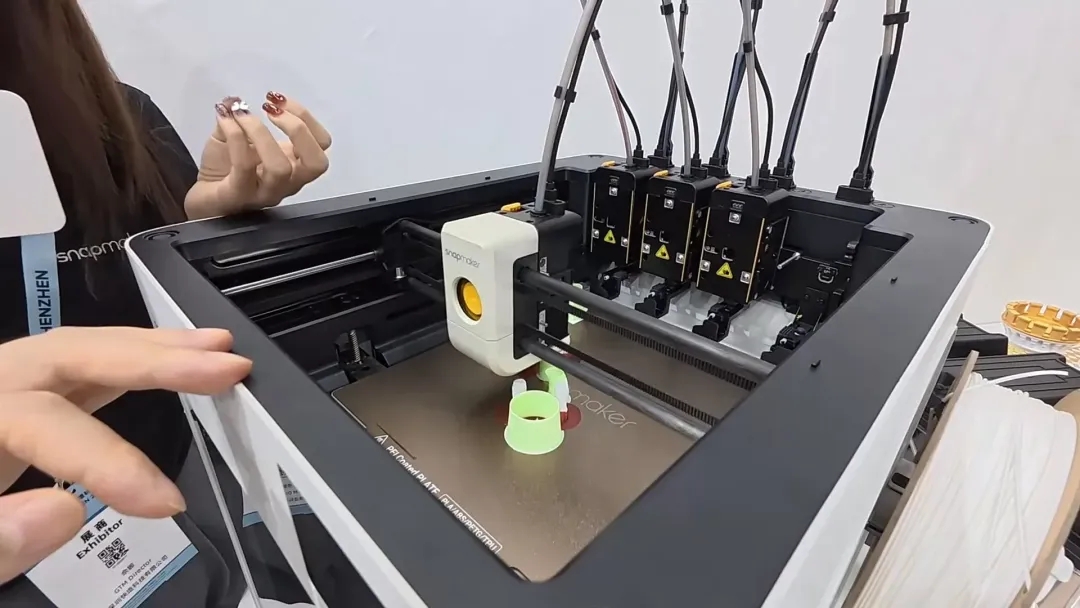
① Independent multi‑nozzle 3D printing: Snapmaker’s U1 has truly achieved mass production of a 4‑independent‑nozzle device. By pre‑installing four independent, pre‑heatable print heads, it achieves a rapid switch in just 5 seconds. This design not only increases multi‑color printing efficiency by up to 5 times, completely changing the traditional situation where “waiting takes longer than printing,” but also, because each nozzle has its own filament feed, there is no need for extensive purging when switching, reducing filament waste by approximately 80%. In addition, the system supports free mixing of various materials such as PLA, TPU, and ABS, greatly expanding creative possibilities.
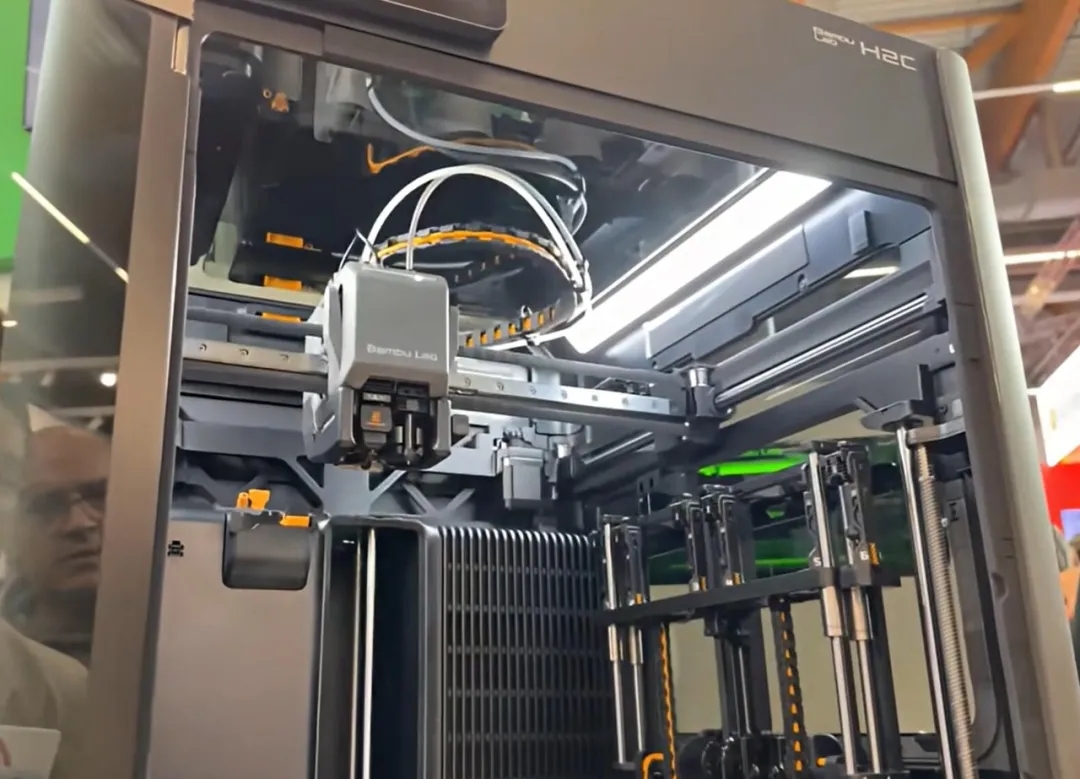
② Bambu Lab’s own Vortec multi‑hotend switching technology: 7 hotends that can be switched, applied in models such as the H2C. This technology is technically challenging and has not yet been adopted by other companies. By automatically and quickly physically swapping entire pre‑heated hotend modules to switch materials, rather than purging through a single nozzle, this fully wireless design combined with induction heating technology not only achieves rapid pre‑heating in 8 seconds but also completely solves the industry‑wide problem of large amounts of “purge waste” in traditional multi‑color printing, making the printing of colorful models or composite materials more efficient and cleaner than ever before.
③ “Multi‑in, one‑out” 3D printing nozzle: The core feature of the LIQTRA FX‑7 is its “multi‑in, one‑out” technology: seven nozzles cooperate with a rotating mechanism to feed material into a single nozzle, achieving seamless multi‑material switching. The biggest advantage is zero waste – when switching materials, there is no need to purge or discard leftover material; simply rotate an internal blade to switch. It can independently adjust the material or color per layer, maintaining print quality while improving efficiency by 75%. This technology solves the waste problem of traditional multi‑material printing and is particularly suitable for professional manufacturing scenarios requiring fine color transitions or composite materials.