Optimized helical metamaterials act as quarter waveplates and unlock new sensing and security applications
According to LLNL, researchers have optimized and 3D printed microscale helix structures that function as optical materials for Terahertz (THz) frequencies, addressing a critical technology gap for next-generation telecommunications, non-destructive evaluation, and chemical and biological sensing.
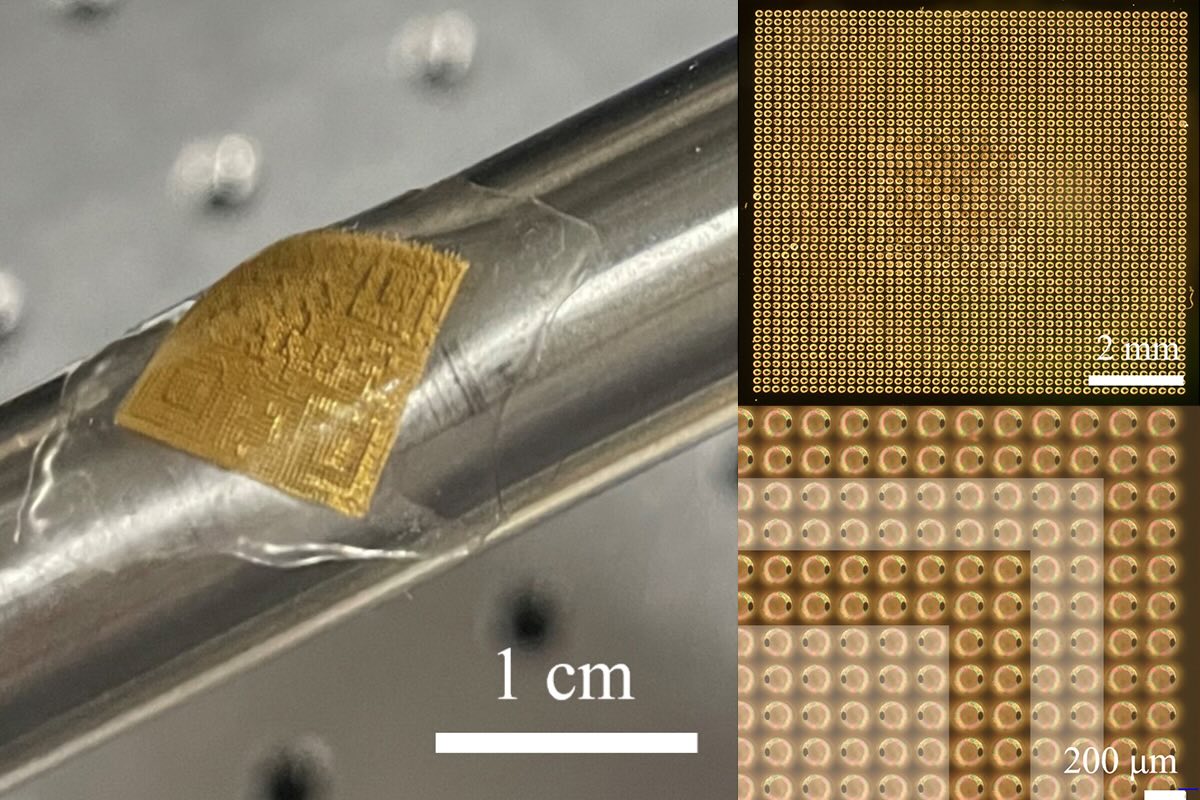
The 3D printed helixes reliably generate circularly polarized THz beams and, when arranged into patterned arrays, can act as a new type of Quick Response (QR) code for advanced encryption and decryption. Published in Advanced Science, the work represents the first full parametric analysis of helical structures for THz frequencies and demonstrates the potential of high-resolution 3D printing for fabricating functional THz devices.
THz frequencies underpin 5G and future 6G communications and offer a non-ionizing alternative to X-rays and gamma rays, while enabling access to chemical and biological signatures unavailable at other wavelengths. However, conventional optical components such as waveplates are difficult to realize at these frequencies. To address this, the team focused on quarter waveplates capable of producing circularly polarized beams.
“Metamaterials are the most effective way to generate circularly polarized beams in the THz frequency range using optimized geometries, as there are currently no optical crystals available for such long electromagnetic wavelengths,” said Materials Science Division scientist and Lawrence fellow Wonjin Choi, who led the project.
Circular polarization introduces chirality, a property central to biomolecules such as DNA and proteins. In the THz regime, this enables the study of larger atomic assemblies and long-range molecular vibrations, opening pathways for disease identification and hazardous material detection. Using two-photon polymerization (2PP), the team precisely fabricated optimized helix geometries at scales well matched to THz wavelengths.
“At around 300 µm, the wavelength of the THz frequency is a sweet spot [for 2PP], so we can create any geometries in that length scale comfortably and control it very nicely,” said Materials Engineering Division staff engineer Xiaoxing Xia.
Through simulation-driven optimization, the LLNL researchers demonstrated broadband THz activity and consistent circular polarization. They also showed that arrays of left- and right-handed helixes could encode information through phase rather than brightness, leading to what Choi describes as the world’s first “chiral QR code.”
“I realized we can make pixelation if we make black pixels right-handed and white pixels left-handed,” Choi said. Viewed only with the correct polarization and frequency, these chiral QR codes offer a new layer of security. “For hospitals or banks or military purposes, sometimes we might need to add encryption while maintaining the convenience of the rapid scan.”