Home  >  News

July 13, 2026      News      10013

Against the backdrop of ever‑rising AI computing power and increasing power‑semiconductor density, thermal management has become the key bottleneck limiting performance delivery.

Pure copper, with a thermal conductivity of about 400 W/(m·K), remains the first choice for heat sinks and vapor chambers. However, the demand for more precise, miniaturised, and complex heat‑dissipation structures has put both traditional CNC machining and laser‑based 3D printing in a bind – copper’s high reflectivity to laser light makes SLM processing unstable, while conventional methods cannot produce intricate internal cavities.
Wuhan Yizhi has broken the deadlock with binder‑jetting (BJ) technology. Unlike SLM, BJ operates at room temperature, using a printhead to deposit binder and bond powder layers together, completely sidestepping the laser‑reflectivity problem. This “cold‑forming” approach eliminates thermal stress and oxidation, making it easy to produce thin walls and complex internal flow channels. With a specially optimised high‑temperature sintering process, the density of pure‑copper parts consistently reaches over 98%, and their thermal, electrical, and mechanical properties approach those of wrought copper.
The performance of a vapor chamber hinges largely on its internal wick structure. Traditional manufacturing has long faced four major pain points: it is difficult to balance porosity and permeability in sintered copper powder; welding introduces extra thermal resistance and is prone to fatigue failure; complex three‑dimensional flow paths cannot be machined; and under the trend toward ultra‑thin designs, dimensions below 0.3 mm easily lead to deformation and cracking. Binder‑jetting offers a one‑stop solution – it allows free design of complex micro‑channel capillary structures, optimising capillary suction from the ground up, while also enabling integrated “all‑in‑one” printing of the cover, vapour chamber, support pillars, and wick. This eliminates secondary welding, removes interfacial thermal resistance, and greatly improves reliability and yield.
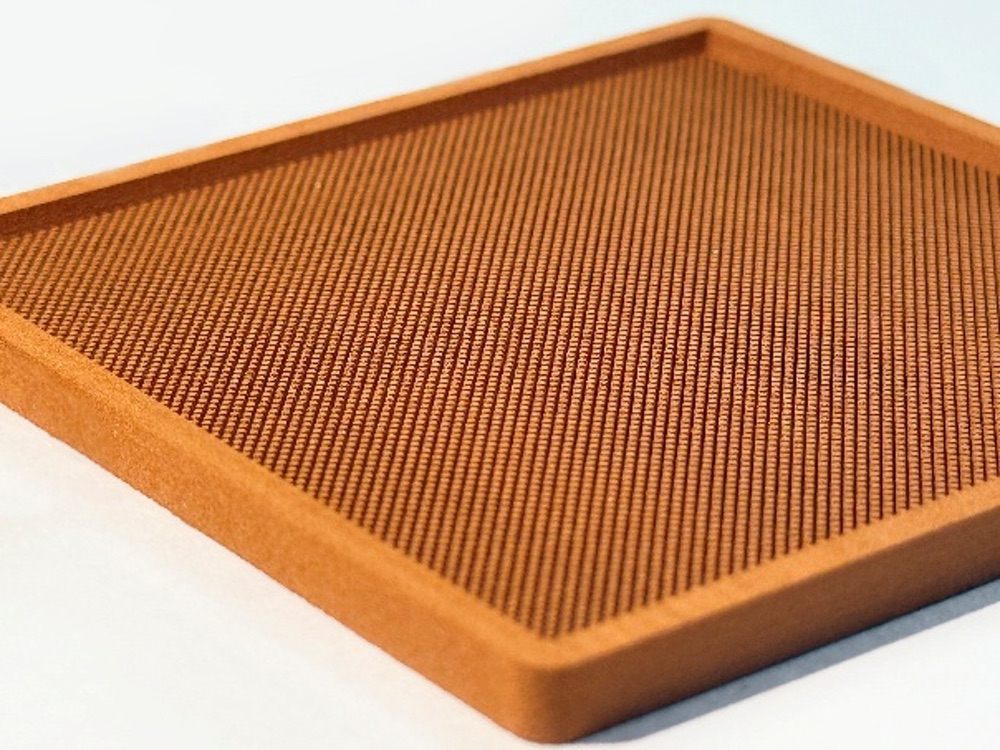
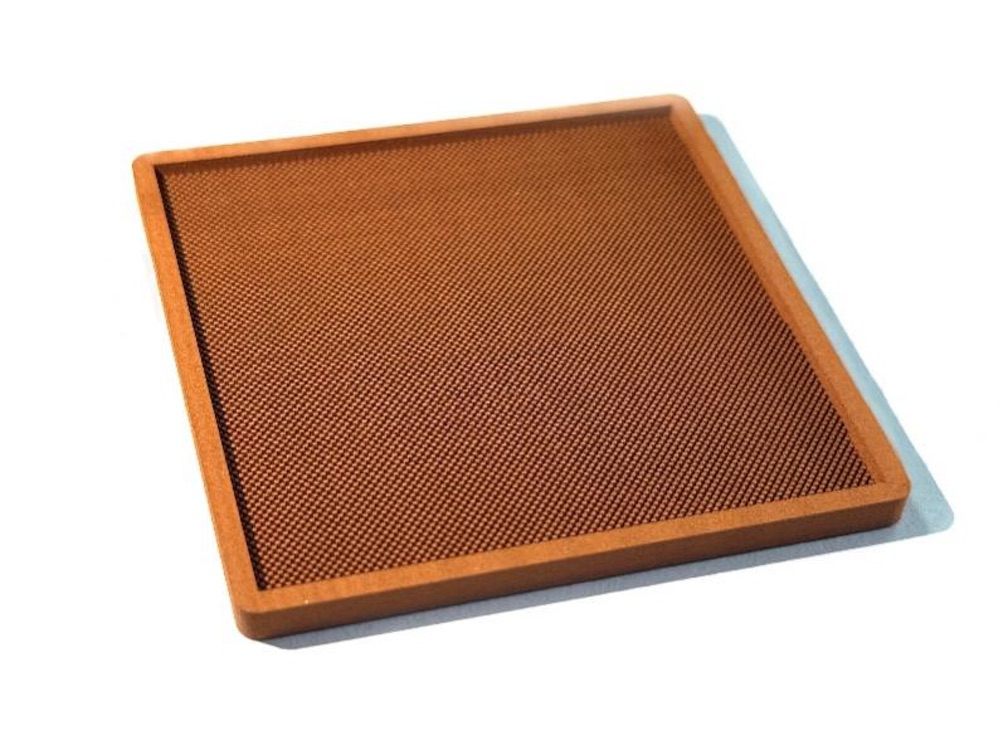
Today, BJ technology is moving from trial production of a few thousand parts to truly high‑volume manufacturing on the scale of hundreds of thousands. As the earliest company in China to commercialise binder‑jetting metal 3D printing in this field, Wuhan Yizhi produces pure‑copper micro‑channel capillary heat‑spreading substrates with copper pillars only 0.2 mm in diameter, which effectively extend the heat‑exchange area and significantly increase capillary transport distance. This technical route has broad prospects in high‑heat‑flux chip cooling, high‑power laser cooling, and electric‑vehicle drive‑motor cooling, helping customers reduce device thickness and volume while improving heat‑exchange efficiency by more than 30%. For materials like titanium alloys, the printing cost is also about 70% lower than that of SLM, offering a truly optimal solution for large‑scale production of thermal components.


©2025 3dptimes.com All Rights Reserved