
Home  >  Services

September 29, 2025      Services      168

The recently launched 9th Tsinghua University 3D Printing Competition, a benchmark event in China's academic additive manufacturing scene since 2017, has been ranked as one of the university's "Top Ten" scientific contests for 2025.
The official mission statement of the competition highlights its aim to enhance students' 3D modeling capabilities and creative thinking, broaden their horizons, and cultivate their artistic sensibility, hands-on research skills, awareness of emerging trends, and innovative entrepreneurship. It seeks to spark enthusiasm for exploring scientific theories and experimental techniques, foster a passion for the 3D printing industry, and promote the development of new materials and related technologies.

This year's edition features four competition categories: Appearance Design, Mechanical Design, Material Preparation, and Scientific Research & Application. It is hosted by the School of Materials Science and Engineering and Weiyang College of Tsinghua University, with sponsorship from leading 3D printing companies including Shenzhen Bambu Lab, Xi'an Bright Laser Technologies (BLT), and Shenzhen Molfront.

Let's take a look at the award-winning projects from the previous competition across these four categories, which can serve as a valuable reference for current participants.

Appearance Design Category:

Design an exterior model applicable to 3D printing technology, with no restrictions on the theme (e.g., bio-inspired structures, footwear, architecture, jewelry, educational tools, practical everyday items, medical products, industrial products, etc.).

Design a jewelry product or a distinctive cultural and creative product.

"Into Tsinghua" Cultural & Creative Blind Box Series First Prize, Appearance Design Category (8th Edition)
Mechanical Design Category

Using an FDM 3D printer extruder as a reference, design a modular extruder head with a freely detachable structure.

Design a mechanical structural component with no restrictions on theme (e.g., transmission mechanisms, sensors and actuators, mechanical speed-changing structures, analytical mechanical assemblies, etc.).

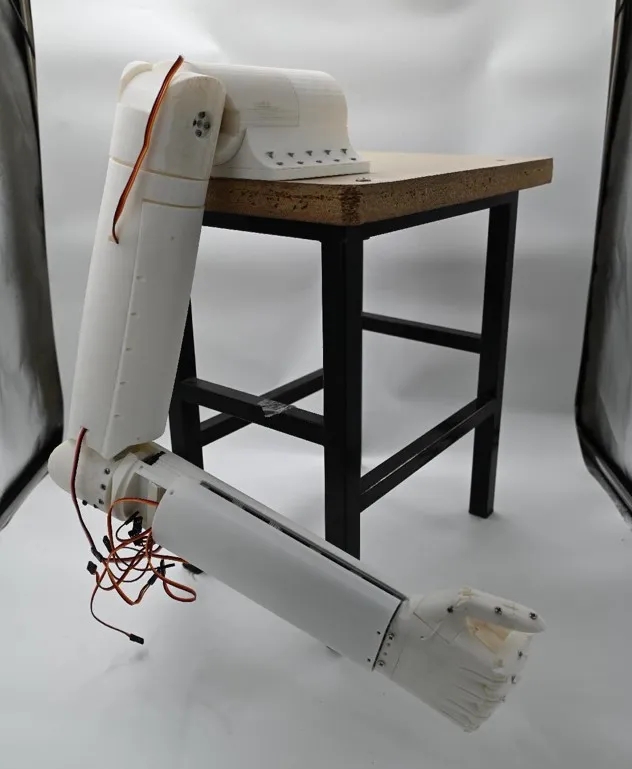
Design a creative product incorporating mechanical transmission or grasping functions. Electronic components or other parts may be added (with 3D-printed portions accounting for no less than 80% of the design). Highly intricate details may employ other forming techniques.

"First" Mechanical Gripper First Prize, Mechanical Design Category (8th Edition)
Material Preparation Category

Develop a flexible photosensitive resin suitable for vat polymerization (SLA/DLP/LCD) 3D printing and characterize its properties.

Select one 3D printing technology (Fused Filament Fabrication, Vat Polymerization, or Selective Laser Melting) to develop a 3D printing material and characterize its performance.

"Silicon Nitride Ceramics" First Prize, Material Preparation Category (8th Edition)
Scientific Research & Application Category

Leverage the unique advantages of 3D printing—including design freedom, material diversity, and complex structure fabrication—to design and develop a lightweight, complex structural product with high scientific research value. The design should address practical needs in high-tech fields such as biomedical, aerospace, intelligent manufacturing, or automotive, demonstrating significant innovation and application potential.

Design a 3D-printed product with clear potential for industrial translation in practical application fields, such as a lightweight cervical spine protective device.

"Optimized Design of Lightweight, High-Strength, Impact-Resistant Energy-Absorbing Lattice Metamaterials" First Prize, Scientific Research & Application Category (8th Edition)

Awards & Prizes
Based on registration numbers and participant performance, multiple First, Second, and Third Prizes will be awarded across the four competition categories, with cash awards of RMB 4,000, RMB 2,000, and RMB 800, respectively. A number of Excellence Awards will also be granted, featuring custom competition prizes. All award recipients will receive official certificates. Additionally, all finalists will be eligible for a small gift.

Competition Schedule
From the date of this announcement: Registration opens
October 18: Registration deadline
October 25: Preliminary round (project proposal submission deadline)
Late October: Finalists announced
Late October to late November: Model printing period
Early December: Finals, presentations, and closing ceremony

Competition Requirements
Participants must complete the following stages by specified deadlines: creative design/proposal submission, model submission, model assembly, and final presentation. Final scores will be determined based on both the quality of the work and the presentation performance, assessed according to the specific criteria of each competition track.

To ensure consistent printing quality and manage the scale of the event, the organizing committee will arrange for the unified printing of all competition models. Participants will only need to assemble and paint the printed parts (participants in the Material Preparation category must coordinate with the organizers in advance regarding laboratory space, equipment, and consumables).

Registration for External Participants
External participants must form a team with at least one current Tsinghua University student.

Registration Method
The competition accepts registrations from individuals or teams of 1–4 members. Cross-institutional teams are permitted, and the event is open to all undergraduate, graduate, and high school students.
Please scan the QR code below to complete the registration form, and team leaders are requested to scan the additional QR code at the end of the form to join the group chat.

For detailed competition information, please refer to the original announcement by the organizing committee.

Weiyang College Student Association of Science and Technology
Weixian College Student Association of Science and Technology


©2025 3dptimes.com All Rights Reserved