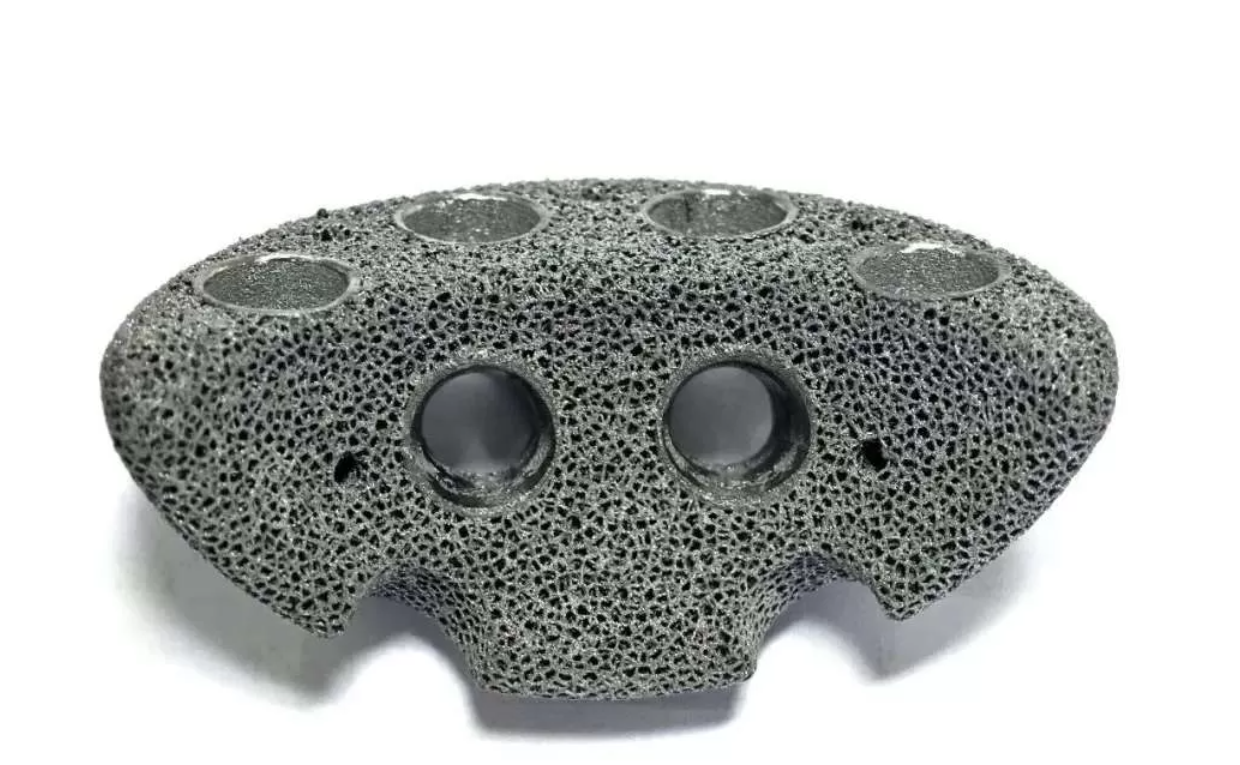
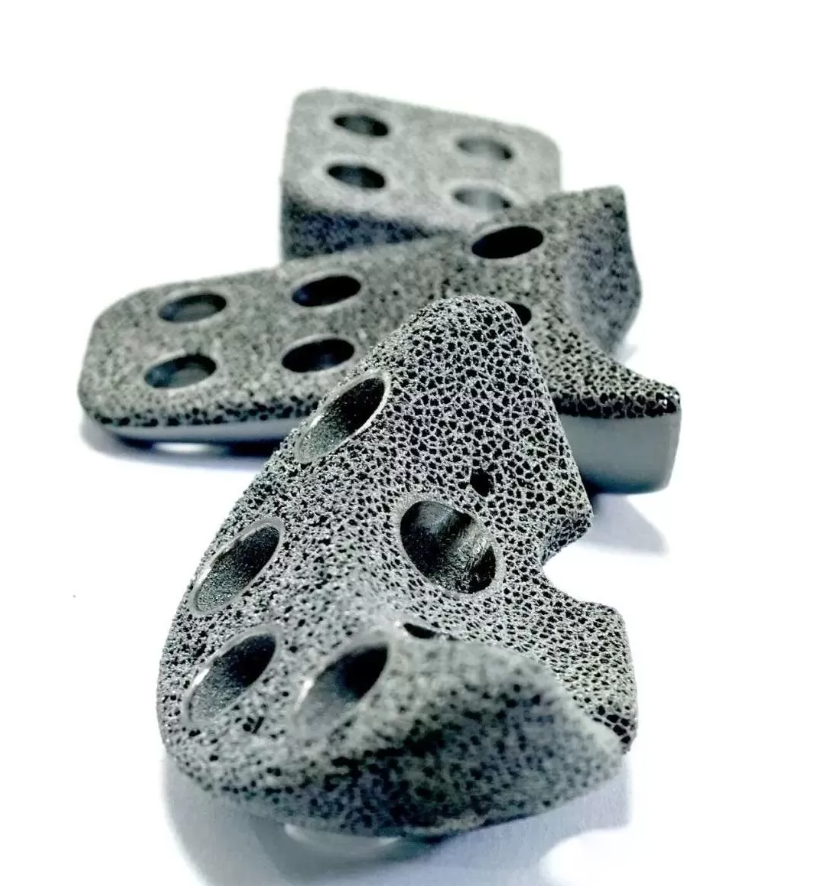
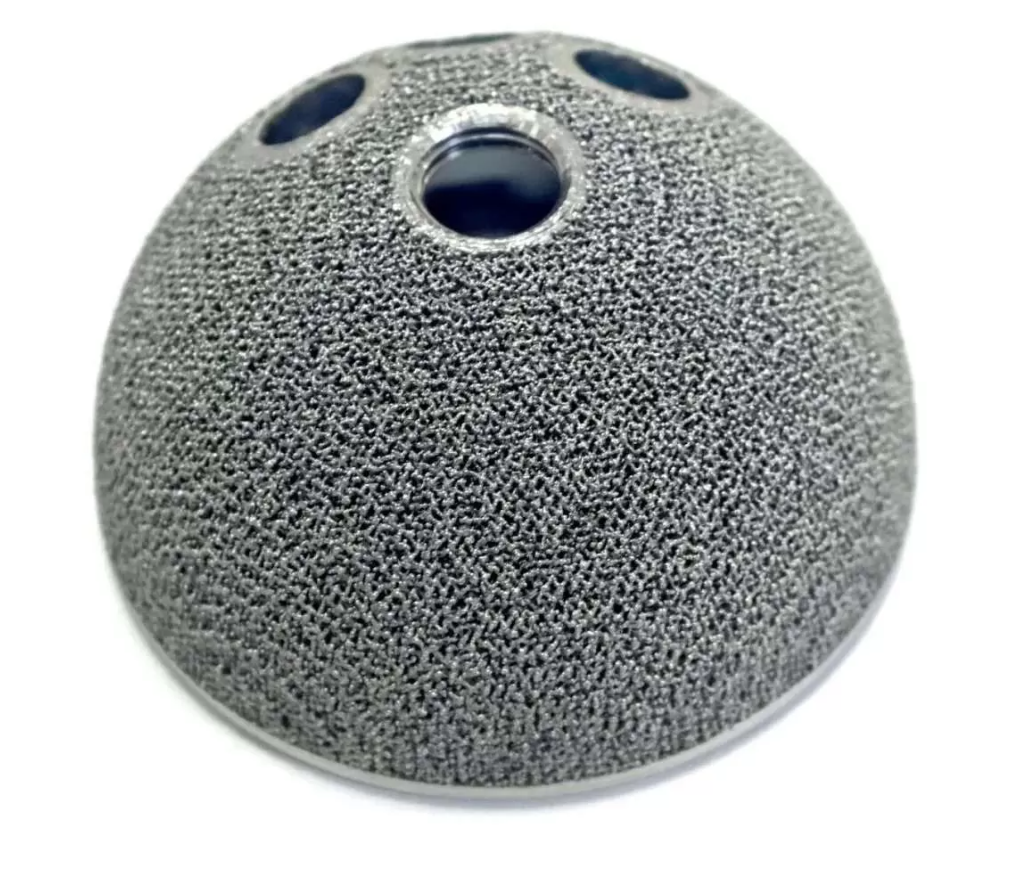
3D-printed acetabular cups provide a customized solution for complex bone defects in hip revisions.
It is projected that by 2026, the volume of hip revision surgeries in China will increase significantly. Among these, managing severe acetabular bone defects poses the greatest challenge in revision procedures. In response to this issue, 3D-printed acetabular cups and augment technologies—leveraging their capabilities for personalized design and biomimetic porous structures—are reshaping the treatment landscape for complex hip revision surgeries.
Beijing Huakang Tianyi Biotechnology Co., Ltd. has obtained registration certificates for 3D-printed acetabular cups and augments, paving the way for providing superior solutions to more patients undergoing hip revision surgery in the future.
Revision Challenge: Complex Bone Defects as a Surgical Difficulty
With the widespread adoption of total hip arthroplasty, the demand for hip revision surgery is increasing year by year. Scholars predict that the total number of hip revision surgeries in the United States will double by 2026, a trend that also applies to the Chinese market.
In revision surgery, managing acetabular bone defects is particularly challenging. Paprosky type III acetabular defects, as a severe type of bone loss, often prevent the prosthesis from obtaining effective support. Traditional solutions like metal augments, jumbo cups, or structural bone grafts either struggle to match the complex defect morphology or carry high risks of complications. Studies show that the complication rate using traditional methods for severe bone defects is as high as 30%.
Precise Match: From "Cutting the Feet to Fit the Shoes" to "Customizing for the Bone"
3D printing technology offers a new solution for severe acetabular bone defects, with its primary advantage being precise anatomical reconstruction. Through pre-operative 3D modeling based on patient CT data, 3D-printed augments can perfectly fit irregular bone defect morphologies, achieving "customization for the bone."
A team led by Chief Physician Kang Pengde from the Orthopedics Department of West China Hospital, Sichuan University, recently successfully managed an extreme case—a patient who developed severe bone lysis almost "hollowing out" the pelvis 25 years after total hip arthroplasty. The team used 3D printing technology to create a special acetabular prosthesis, successfully achieving stable reconstruction.
Chengdu Third People's Hospital also treated an elderly patient with an old acetabular fracture combined with severe osteoarthritis. Using 3D printing technology, they restored a 1:1 3D model of the acetabulum and customized a titanium alloy acetabular cup prosthesis, successfully repairing the large-scale bone defect.
Structural Innovation: Porous Design Promotes Bone Ingrowth
Another major advantage of 3D printed acetabular technology lies in material and structural innovation. These custom implants are typically made of titanium alloy (Ti6Al4V) using Electron Beam Melting rapid prototyping technology or Laser Powder Bed Fusion technology.
The bionic trabecular porous structure is the core design of 3D printed acetabular products. This structure creates a 100% three-dimensionally interconnected pore network with a porosity rate as high as 70%-80%, effectively simulating the human cancellous bone environment and providing ideal conditions for bone cell ingrowth.
A research team from The First Affiliated Hospital of Fujian Medical University confirmed that personalized 3D printed porous titanium alloy augments exhibit excellent biomechanical performance: under jogging load, the peak stress on the augment itself was about 15% lower compared to the commercial control group (329.8 MPa vs 387.8 MPa), and the stress distribution on the fixation screws and acetabular cup was more balanced.
Surgical Efficiency: Precise Planning Simplifies the Process
The application of 3D printing technology in hip revision also significantly improves surgical efficiency and safety. Precise pre-operative planning is key to success. Doctors can use 3D printed physical models to repeatedly simulate the surgical approach and prosthesis installation angle, greatly reducing intraoperative uncertainty.
A study on the implantation accuracy of custom acetabular components with iliac stem fixation showed, by comparing pre-operative CT planning with post-operative X-ray results, that this technology enables high-precision implantation: the average deviation in anteversion angle was only -0.25°, the deviation in abduction angle was 1.7°, and the center of rotation deviation was minimal (superior 1.77±3.97 mm, lateral 0.53±3.97 mm).
Clinical practice at Chengdu Third People's Hospital indicates that with the aid of 3D printing technology, even the most complex hip replacement surgery can be completed within 90 minutes, with intraoperative blood loss less than 200 milliliters.
Mass Production: 3D Printing Enters the Era of Batch Production
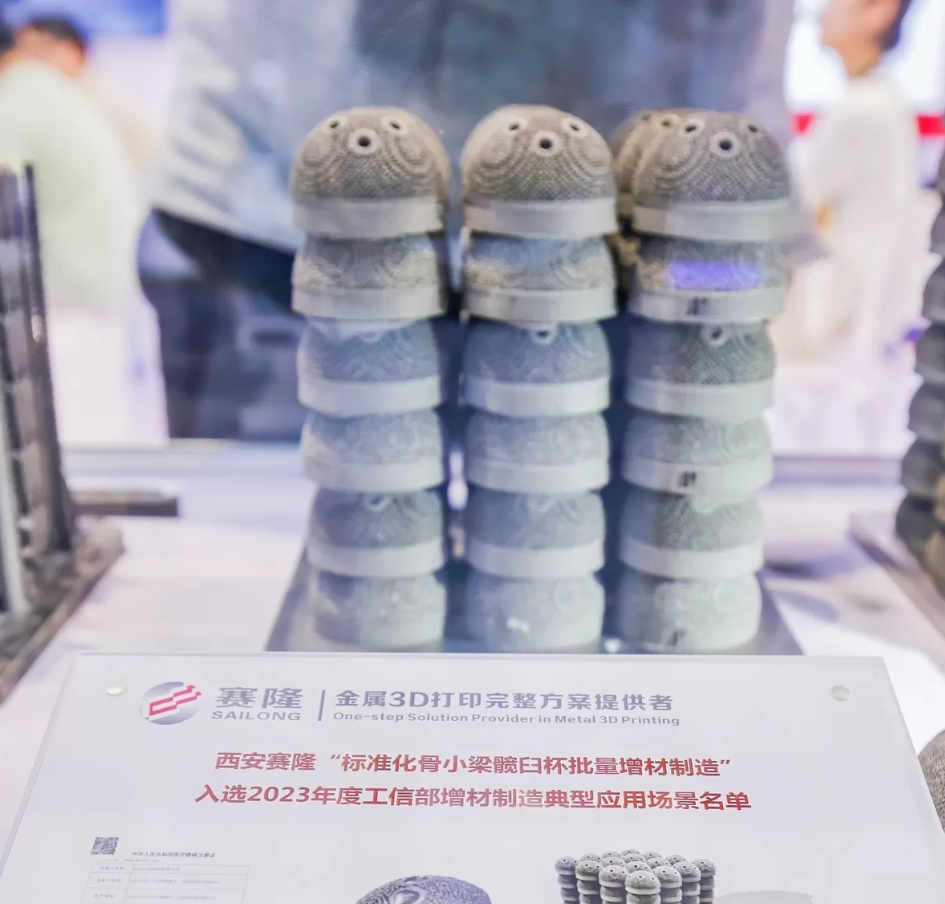
With the widespread application of 3D printing technology in the field of orthopedics, its production process is expanding from personalized customization to standardized mass production. Companies like Xi'an Sailong have established scaled production lines for 3D printed orthopedic implants.
Taking the T200 electron beam 3D printing equipment as an example, a single batch can produce 288 acetabular cups, with a printing time of about 120 hours, providing users with batch, high-efficiency, low-cost manufacturing solutions. The company has deployed over 40 electron beam 3D printing devices with independent intellectual property rights, establishing an orthopedic implant production line with an annual capacity of over 100,000 pieces, and delivered over 50,000 pieces in 2024.
The significant improvement in mass production efficiency has further optimized the production cost of 3D printed orthopedic implants, even making it lower than traditional manufacturing methods, laying the foundation for the technology's popularization.
Clinical Outcomes: Patients Can Get Out of Bed Early
The ultimate value of 3D printed acetabular technology is reflected in the improvement of patient clinical outcomes.
Research data from The First Affiliated Hospital of Fujian Medical University shows results for 3 patients with Paprosky type III acetabular defects treated with personalized 3D printed porous titanium alloy augments:
The average post-operative Harris Hip Score (HHS) increased by 45.3 points, and limb length discrepancy (LLD) correction reached 92%. All patients achieved assisted walking within 2 weeks after surgery, with no mechanical complications occurring.
The extreme case from West China Hospital was able to get out of bed with a walker on the first post-operative day and was discharged smoothly on the third post-operative day. The patient from Chengdu Third People's Hospital also achieved standing and walking within 24 hours post-operation.