September 30, 2025      Applications      110

Chongqing Jinshi Reshaping City Landmarks with 3D Printing: 12-Meter Sculpture Becomes Deyang's New Gateway.

For a long time, urban sculptures were primarily made using casting or fiberglass processes. While these methods are mature and reliable, they often prove inefficient, imprecise, time-consuming, and environmentally challenging when creating large-scale, complex, or eco-sensitive pieces. Today, digital manufacturing offers a superior alternative. 3D printing not only overcomes the design and structural limitations of traditional methods but also significantly boosts efficiency and sustainability, establishing itself as a new pathway for creating city landmarks.
Indeed, this shift is no longer confined to small installations; large-scale urban sculpture projects are now widely adopting 3D printing. In Deyang's gateway landmark project, Chongqing Jinshi Zhicheng Technology Co., Ltd., a subsidiary of Jinshi 3D Group, was responsible for the design and manufacturing of several core nodes, deeply participating in this practice of reshaping the city's image through digital manufacturing.
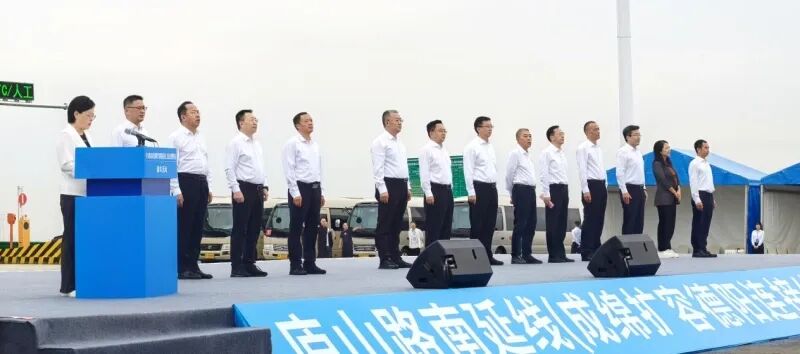
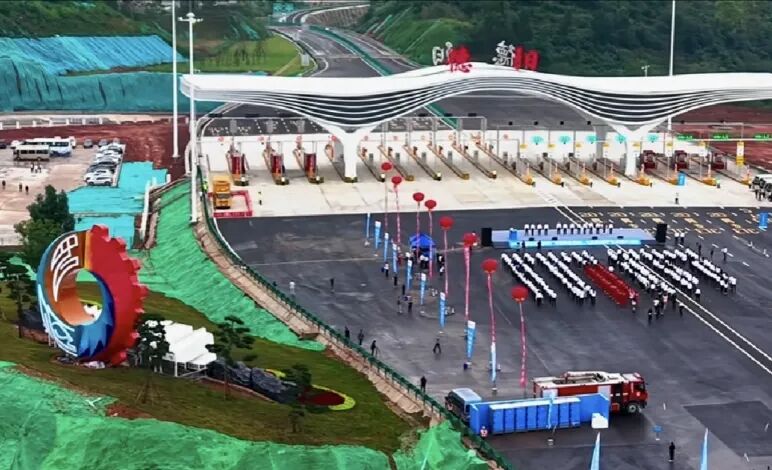
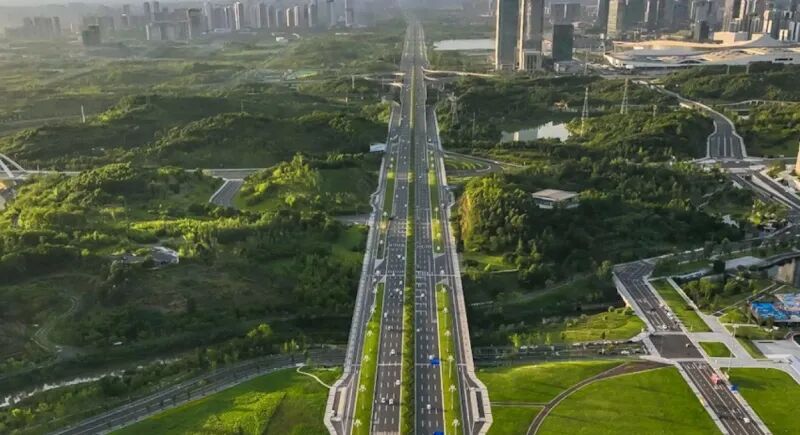
According to Resources Library, on September 29th, the "Welcome Corridor of China Equipment & Tech City" project in Deyang, Sichuan, held its completion and ribbon-cutting ceremony. With the route now fully open to traffic, it has added a new landmark vista to the city's gateway, one that masterfully integrates a sense of technology with aesthetic design.
As a key 2025 project for Deyang's urban gateway, Chongqing Jinshi leveraged its core technical expertise to create the largest 3D-printed landmark cluster in China. This innovative manufacturing approach is helping Deyang forge a new city identity as a "Powerhouse of Equipment" and a "Leader in Intelligent Manufacturing."
A stroll through the "Welcome Corridor of China Equipment & Tech City" unfolds as a visual journey that blends technology, art, and industrial heritage. Spanning a total area of 180,000 square meters, this urban gateway is structured into three thematic sections—countryside, ecology, and city—seamlessly integrating Deyang's green spaces with its industrial spirit.

Located in Deyang, a cluster of 3D-printed urban landmark sculptures, created by Chongqing Jinshi, is taking shape. The project, led by Jinshi, has fully commenced and includes 13 key scenic nodes along the corridor, featuring installations such as the city logo, cultural sculptures, and industrial equipment. Progress is on track: six nodes have been successfully delivered, with the remaining seven currently in phased installation.

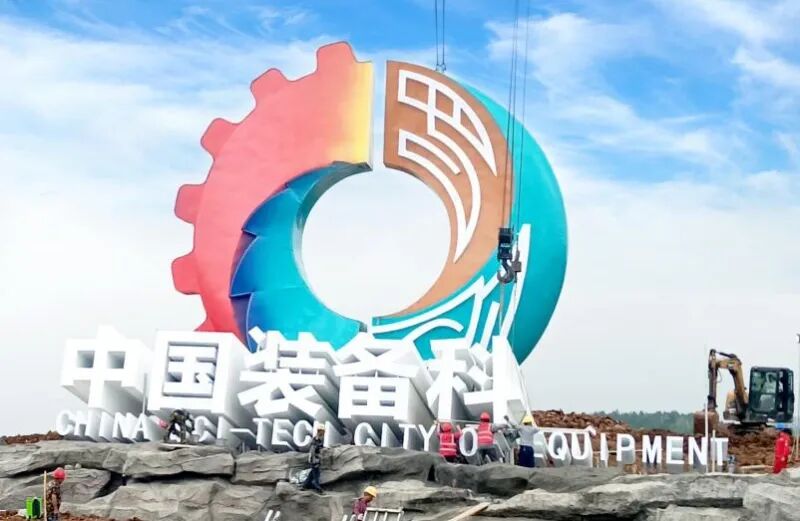
Upon entering Deyang from the highway toll station, visitors are first greeted by a monumental 12-meter-diameter city logo sculpture. Using the letter "D"—the initial of Deyang—as its core element, the design incorporates surrounding greenery and the contours of rolling hills to form a highly recognizable "three-dimensional manifesto." It serves not only as a landmark but also as the city's first impression.
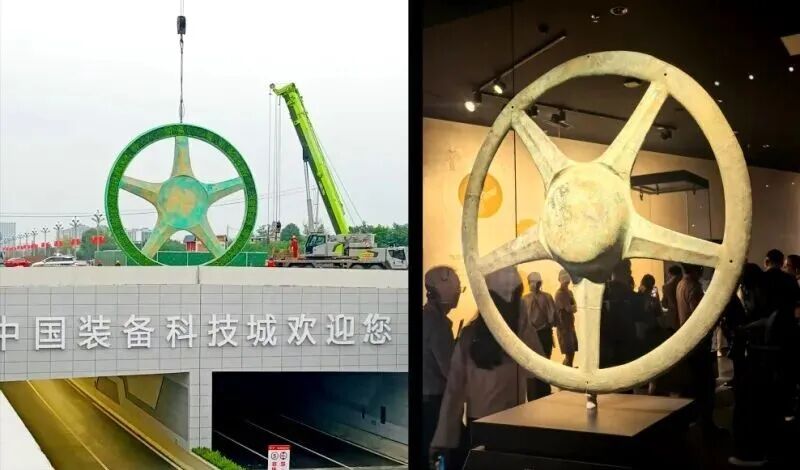
Continuing onward, an enlarged replica of the Sanxingdui Sun Wheel, standing nearly 10 meters high, commands attention. Crafted with a metal copper-like finish to evoke the mystique of the ancient Shu culture, it incorporates an integrated LED lighting system. This creates a "dual sensory experience": appearing solemn and substantial by day, while transforming into an ethereal and dynamic spectacle by night.
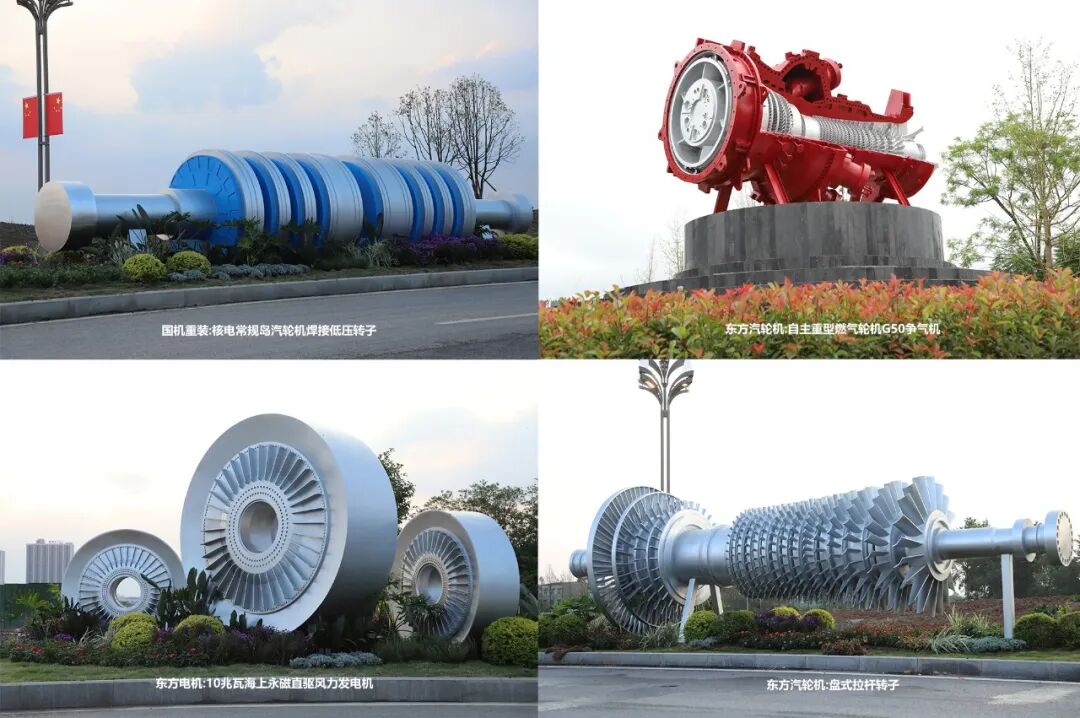
Deeper within the corridor, the view opens up to reveal a series of full-scale sculptural installations based on iconic national industrial equipment. These pieces, including themes such as the welded low-pressure rotor for a nuclear power conventional island turbine by SINOMACH, the G50 heavy-duty gas turbine, the 10MW offshore wind turbine generator, and the Dongfang disc-type pull-rod rotor, were all crafted by Chongqing Jinshi using high-precision 3D printing. The technology captured the intricate structures and details of these key assets with filament-level accuracy, vividly showcasing Deyang's profound industrial heritage. This approach demonstrates that 3D printing is not only fast but also remarkably stable, fundamentally redefining efficiency in urban sculpture construction.
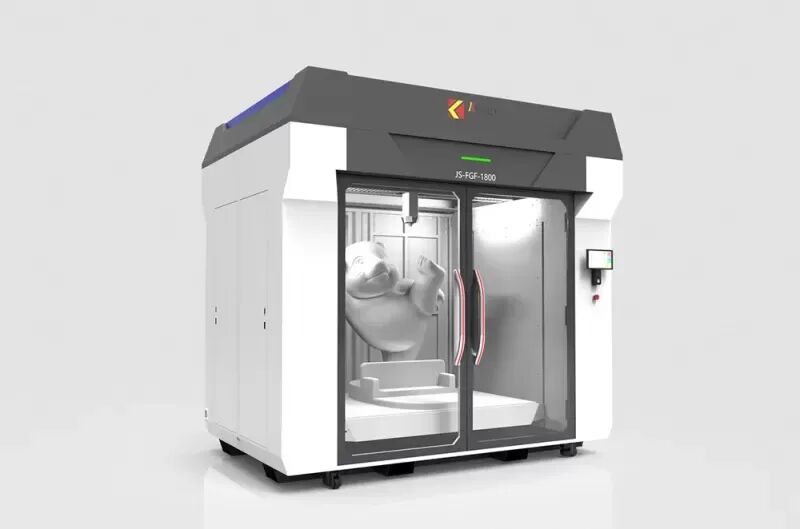
The manufacturing process was spearheaded by Jinshi 3D's self-developed, industrial-grade, large-format 3D printing systems. This included the use of both the FGF1800 pellet printer and the FDM1000 filament extrusion printer, leveraging a combination of advanced processes for collaborative manufacturing.
Chongqing Jinshi significantly enhanced project delivery efficiency and accelerated the transition from design to implementation through a comprehensive approach involving digital modeling, segmented printing, rapid assembly, and the application of high-strength materials.

The primary structure was printed using high-strength ABS, supported internally by a steel tube framework. This core was further reinforced with a backing mold process and filled with low-pressure polyurethane foam. This integrated methodology successfully achieved an optimal balance of lightweight properties, structural stability, and high dimensional accuracy.

As revealed to Resources Library by Chongqing Jinshi, the first batch of six node sculptures was installed with remarkable efficiency within 30-40 days. Leveraging a mature manufacturing system and meticulous project management, the company achieved a "zero-delay, high-quality" delivery. This rapid deployment not only secured valuable time for subsequent phases but also set a new industry benchmark for efficient execution in large-scale 3D printed urban projects.

Five Years of Dedication: Crafting a City's Technological Identity with 3D Printing

As the project's lead contractor, Chongqing Jinshi has reshaped the industry's understanding of large-scale customized intelligent manufacturing through its comprehensive capabilities in oversized 3D printing, structural optimization, and rapid delivery. This breakthrough is not accidental but rather the culmination of experience and technological refinement gained from multiple successfully implemented projects.

For instance, in the Enshi Daughter City project in Hubei, the company undertook the 3D printing manufacturing of large-scale sculptures and scenic installations. Through seamless design coordination and efficient on-site delivery, the project once again demonstrated the vast potential of digital manufacturing in creating cultural and tourism landmarks.
Finally, we wish to emphasize that 3D-printed cultural and creative sculptures represent a promising field with broad prospects. Leveraging the technology and resources of Jinshi 3D, Chongqing Jinshi has dedicated five years to this domain, accumulating extensive experience and achieving remarkable results.

As they advocate, using 3D printing to reshape urban spatial narratives enables every city to possess its own unique technological identity. And this vision is steadily becoming a reality.

About Chongqing Jinshi

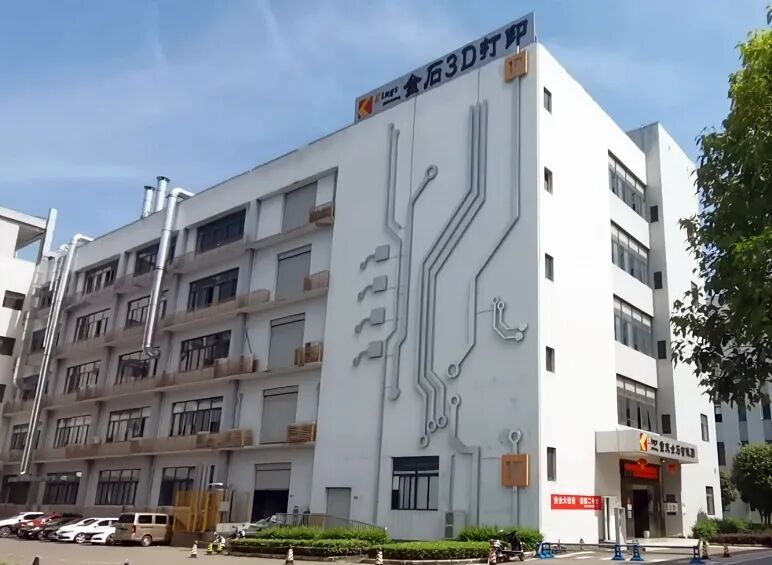
Chongqing Jinshi Zhicheng Technology Co., Ltd., established in 2020 and located in Chongqing Yubei Airport Industrial Park, is a high-tech enterprise wholly owned by Shenzhen Jinshi 3D Group. The company specializes in both metal and non-metal 3D printing, creating an integrated one-stop platform for small-batch customized manufacturing that combines equipment, services, and materials. It extensively serves industries including automotive, military, healthcare, footwear, architecture, and cultural creativity.

The facility spans a production area of 15,000 square meters, supported by a professional team of nearly 200 members and equipped with hundreds of advanced devices. Its capabilities encompass 3D printing, CNC machining, sheet metal fabrication, rapid tooling, mold replication, spray painting, and laser engraving. Guided by the mission of "Enhancing Life Through Intelligent Manufacturing," the company is committed to becoming a leading smart manufacturing service provider in Southwest China with a global outreach.


©2025 3dptimes.com All Rights Reserved