In recent years, engineering education has been shifting from traditional lecture‑based teaching to practice‑driven, project‑oriented learning models.
At the Hamburg University of Technology (TUHH) in Germany, 3D printing has become an indispensable tool in undergraduate engineering education, helping students turn theoretical knowledge into functional prototypes.
On April 14, 2026 – Desktop 3D printer manufacturer Creality announced a partnership with the Hamburg University of Technology. Machines such as the K1C and K2 Plus have been deployed at the university’s Institute of Smart Engineering and Mechanical Elements (ISEM) to support hands‑on teaching and prototyping courses for engineering undergraduates.
Hardware upgrades improve the quality of educational practice
Although ISEM had used 3D printing for prototyping for many years, they found that the entry‑level systems they initially used had limitations in accuracy, consistency, and material compatibility. This meant students could only create relatively simple designs and often faced time‑consuming troubleshooting and print failures.
To overcome these limitations, the institute decided to upgrade its printing hardware so that students could test complex concepts and develop innovative products and systems. Now, TUHH provides students with a range of high‑quality, affordable 3D printers, including Creality’s K1C and K2 Plus, as well as accessories like the CFS system. With these systems, students can complete complex prototyping projects in a hands‑on way and truly apply their engineering design skills.
The K1C is designed for efficient printing and carbon‑fiber‑filled materials, making it suitable for rapid iteration of functional prototypes. The K2 Plus supports multi‑color printing and, together with the CFS system, can handle up to 16 colors, offering more possibilities for creative design. In addition, Creality’s Filament Maker M1 and Shredder R1 systems allow students to recycle and reuse waste materials, supporting sustainable manufacturing and the development of their own materials.
Practical examples: from pool robot to functional grill
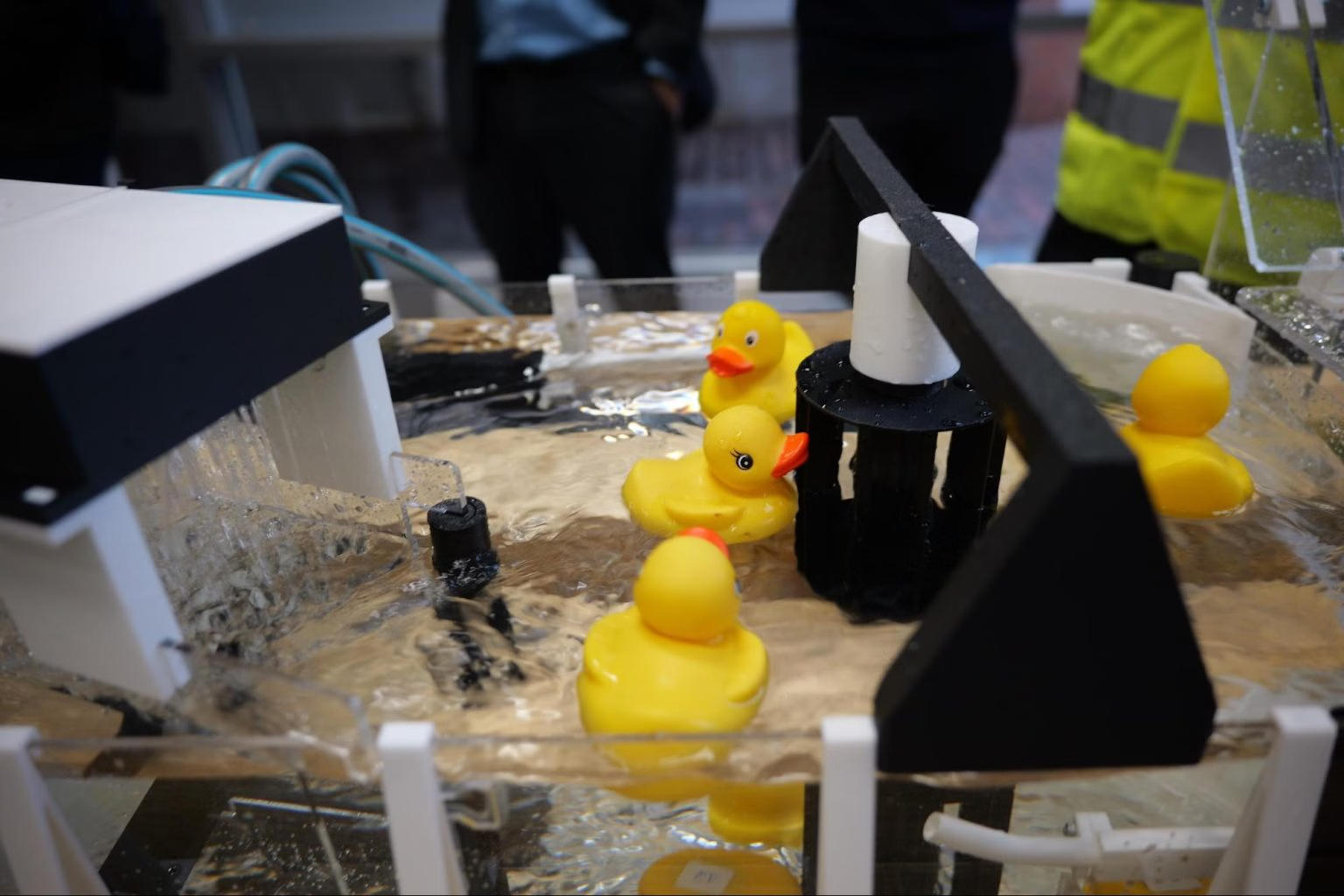
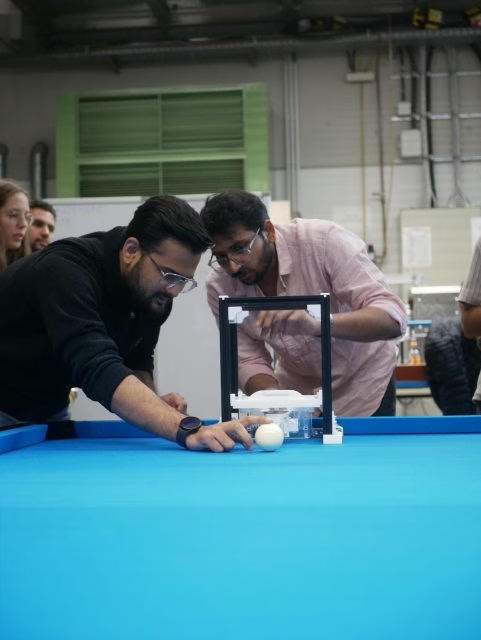
In ISEM’s “Mechanical Design Project II,” student teams develop complex mechatronic systems, such as a pool robot that integrates a mechanical ball‑striking unit and goes through multiple rounds of iterative design. Creality’s 3D printers played a key role in producing robot parts, structures, and enclosures, accelerating the prototyping process and improving design quality and diversity.
In the “Sheet Metal Generation Development (GSD)” module, students use 3D printing to quickly produce functional grills as well as related components such as fixtures and test adapters, achieving high‑value, high‑intensity practical project outcomes. Professor Nikola Bursac, who leads this project, noted: “The Creality printing systems have transformed prototyping from a limiting factor into a driver of innovation.”
Expanded applications and future plans
Globally, the use of 3D printing in education continues to expand. For example, students at Tohoku University and Keio University in Japan have used Creality Ender series printers to prototype Mars rover models, while educators in France have used the K2 Plus and K2 Pro to create tactile 3D‑printed models to enhance the experience of human anatomy courses. Ultimately, the simple decision to invest in 3D printing hardware allows students to develop and refine skills related to engineering design and problem‑solving.
TUHH now plans to extend Creality’s printing solutions to more STEM courses, including Design for Additive Manufacturing (DfAM) research and outreach programs for younger students. This summer, ISEM will also launch an additive manufacturing workshop based on iterative development, further unlocking innovative potential.