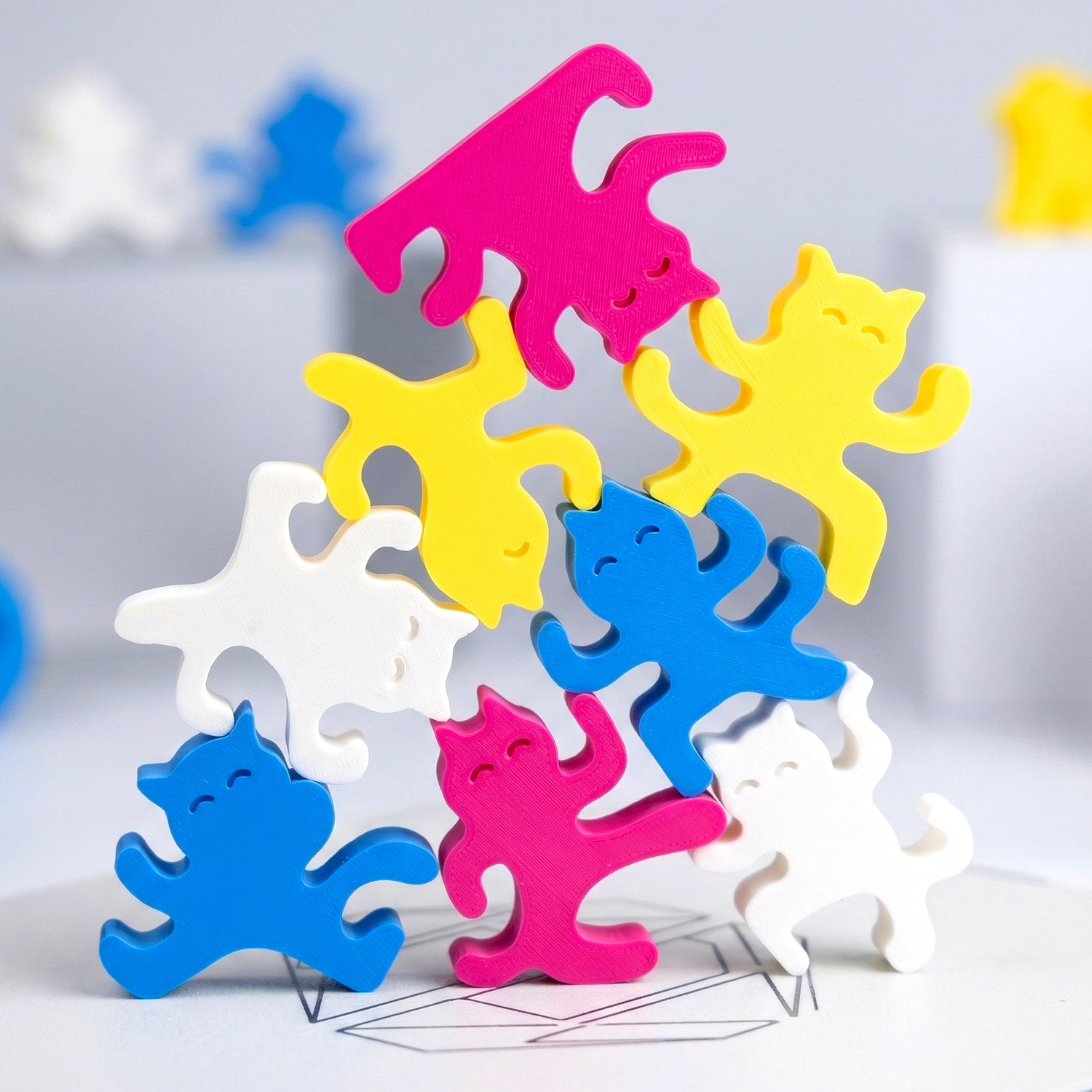
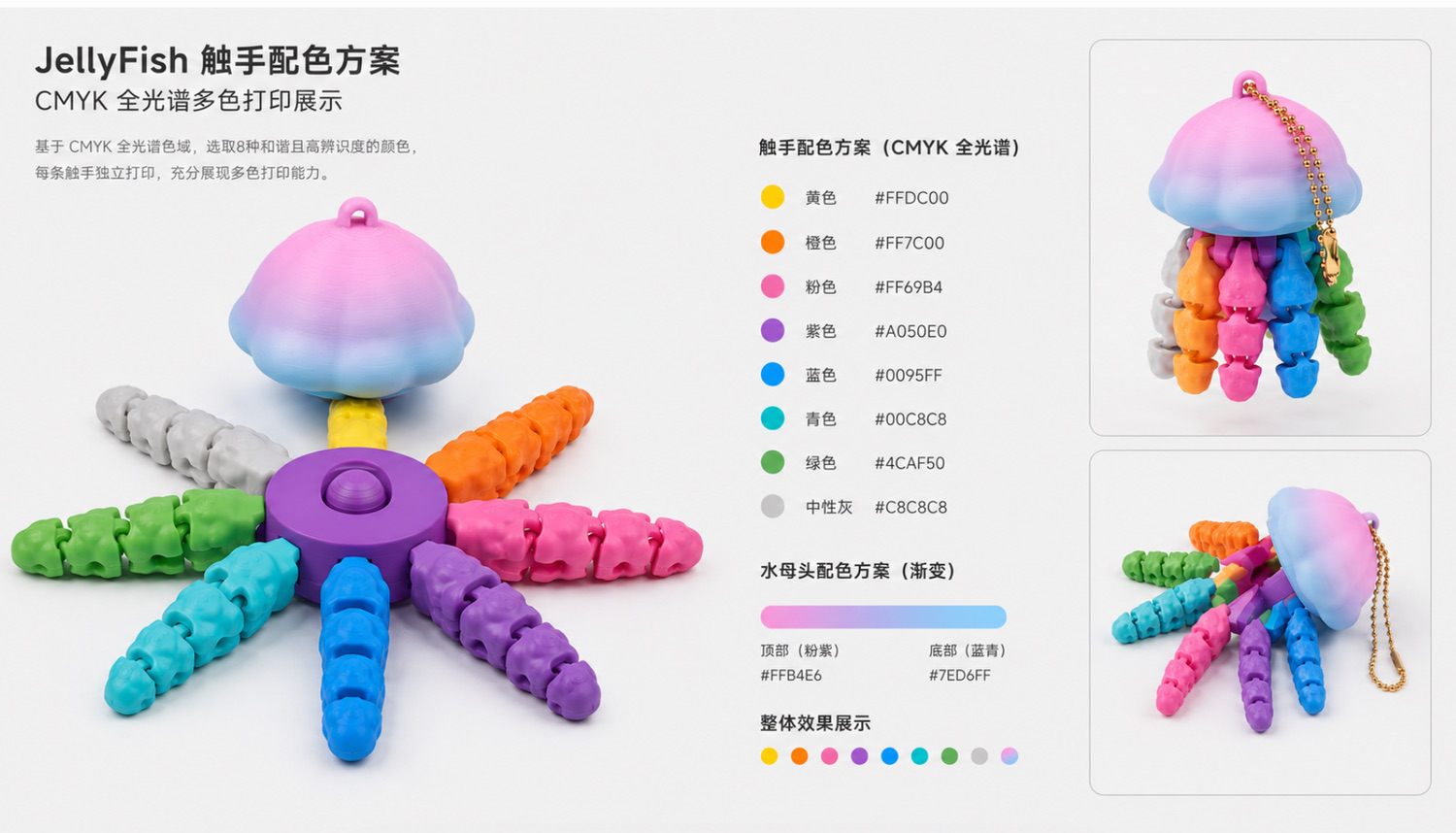
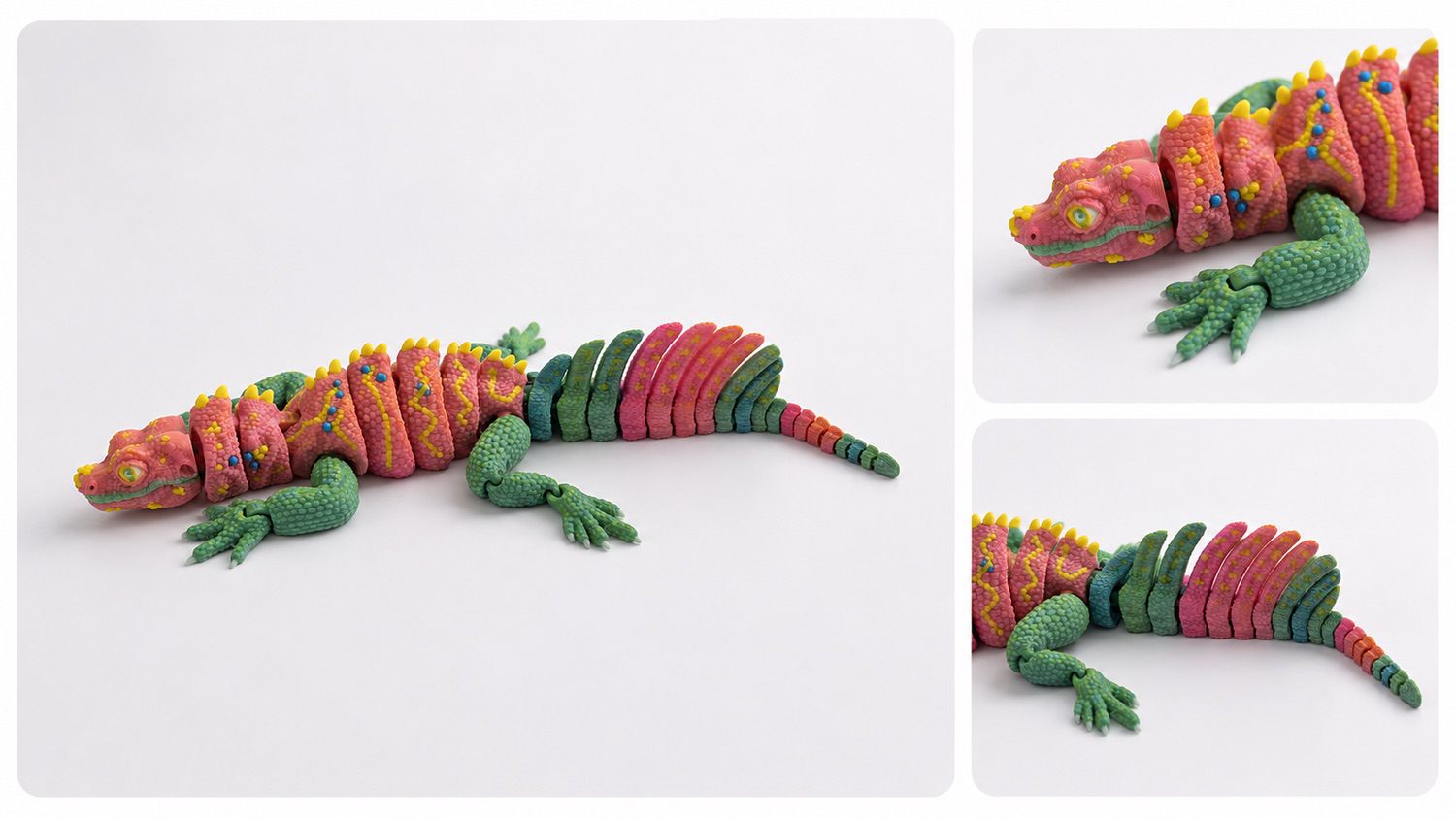
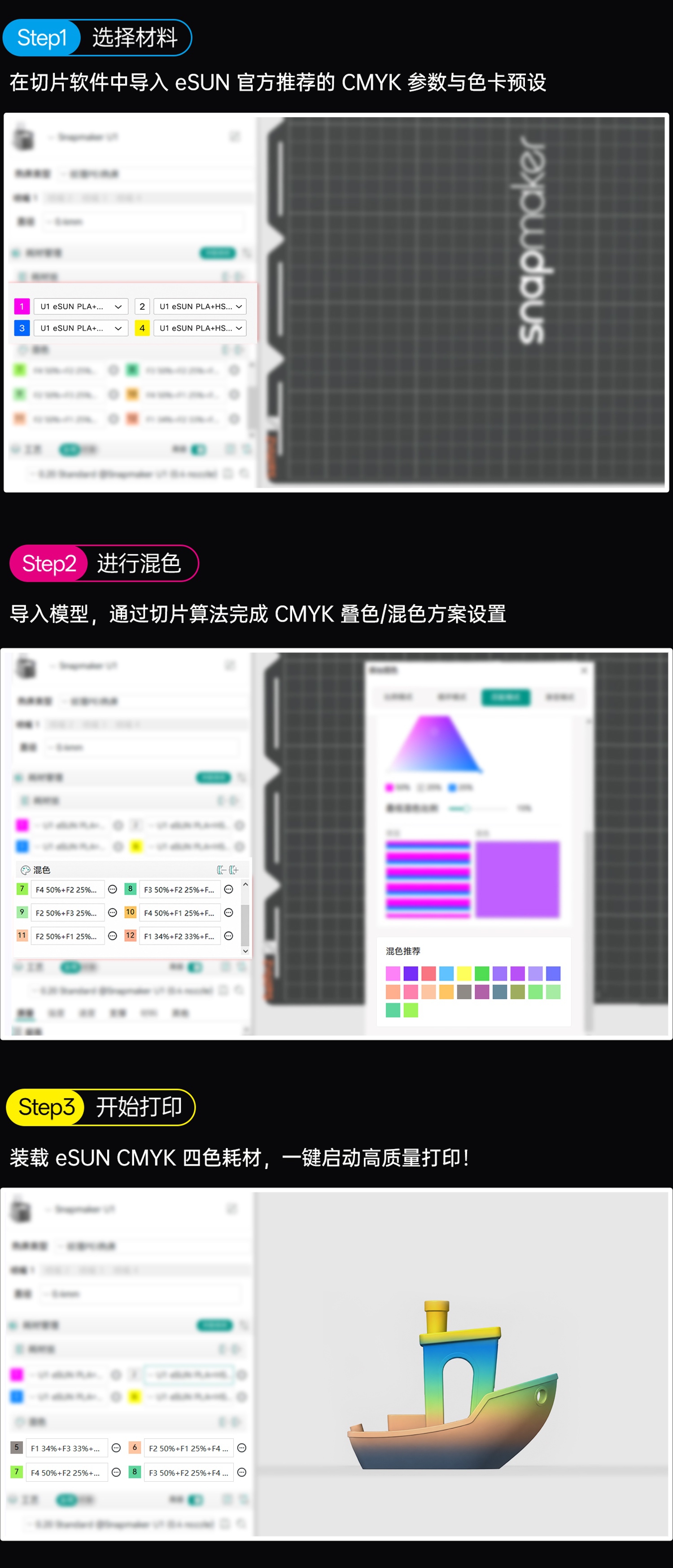
In short, it lets you create infinite colors from a limited set of filaments.
Recently, "full spectrum printing" has been gaining significant traction in 3D printing communities both in China and abroad. Unlike traditional multi-color printing, which relies on frequent filament changes, full spectrum printing uses only four CMYK filaments combined with slicing algorithms and color mixing principles to produce smooth gradients and intermediate hues.
Advantages and Trade‑offs
The benefits are clear: it saves filament and reduces costs, making it especially suitable for character figures, anime models, artistic decorations, and other creations that demand smooth color transitions.
But there are trade‑offs. Full spectrum typically requires layer heights as low as 0.04–0.08 mm, which dramatically increases print time. With a single‑nozzle multi‑material system, frequent filament switching generates a large amount of waste. Additionally, factors like transparency, layer thickness, and variations in melting point and light transmittance among different brands of materials can affect the final color, leading to batch‑to‑batch color discrepancies.
eSUN’s CMYK Solution
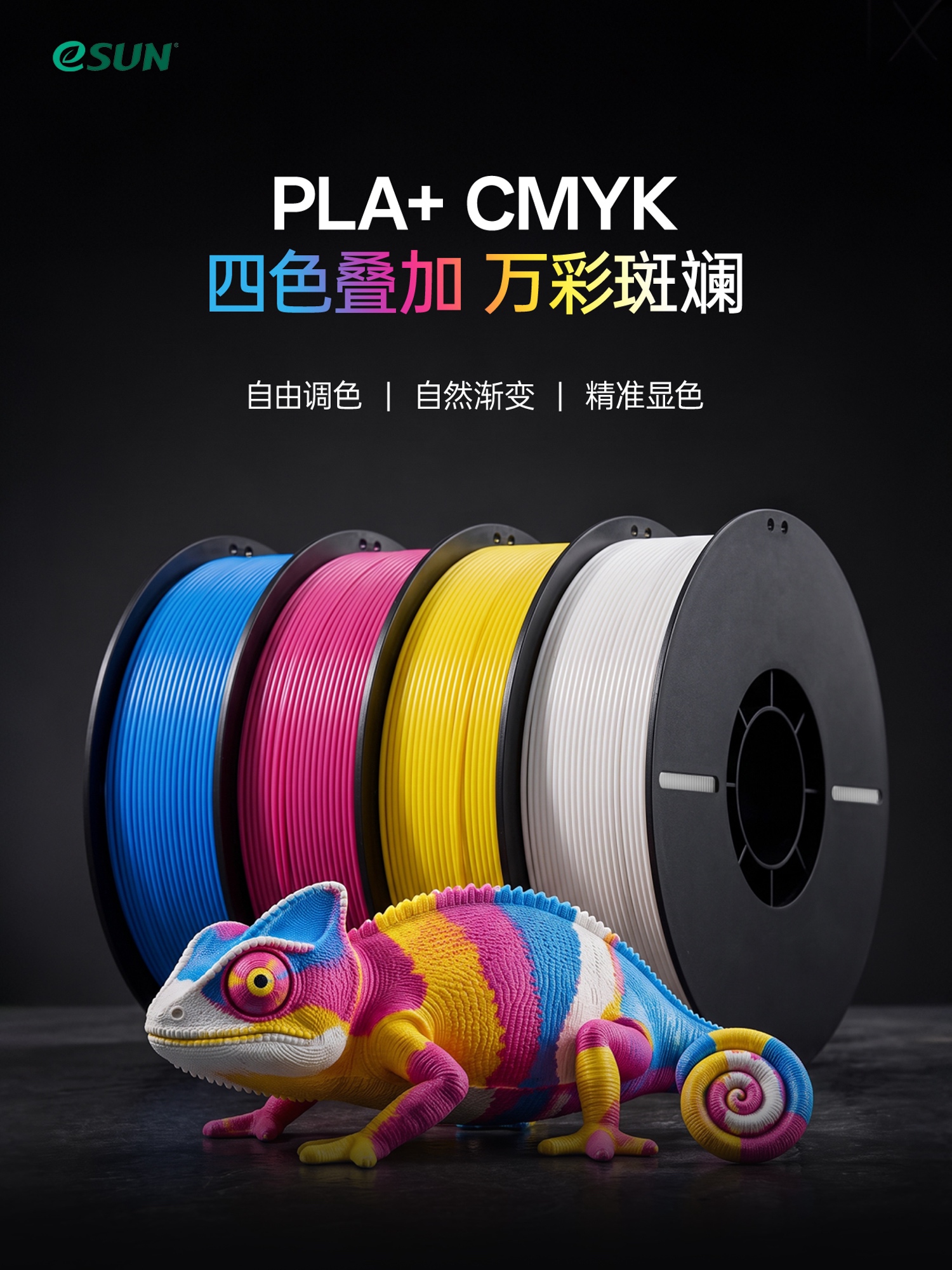
Long before full spectrum became a hot topic, eSUN had already launched its PLA+ CMYK Kit. This material continues the PLA+ series’ reputation for stability and ease of printing. Its flow properties are sufficient to support continuous extrusion at low layer heights, reducing the risk of jams, stringing, or clogging—helping users avoid many common pitfalls.
Tips for Better Success Rates
Stick to CMYK filaments from the same brand and series—mixing brands not only causes color mismatch, but differences in melting point and light transmittance can ruin the final effect. Don’t blindly follow the crowd on layer height; find a balance between efficiency and color quality. Keep your filament dry—moisture leads to stringing and bubbles. Start with small, simple models to get a feel for the process before tackling larger prints.
eSUN’s PLA+ CMYK kit is compatible with major slicers such as Snapmaker Orca, Bambu Studio, OrcaSlicer, and Prusa Slicer, and the official presets make it easy to get started.
Two Paths, Each with Its Own Place
The rise of full spectrum printing reflects a key divergence in FDM multi‑color technology: one path focuses on adding more physical filament channels to reduce switching waste, while the other explores mixing a few base colors with software algorithms to expand the color gamut. The former is efficient and stable, ideal for mass production; the latter is low‑cost and low‑barrier, offering a shortcut to color freedom for users with limited hardware—though it comes at the expense of longer print times and more tinkering.
These two approaches aren’t mutually exclusive; they serve different needs. If your priority is smooth, rich gradients and expressive color, full spectrum is definitely worth exploring.