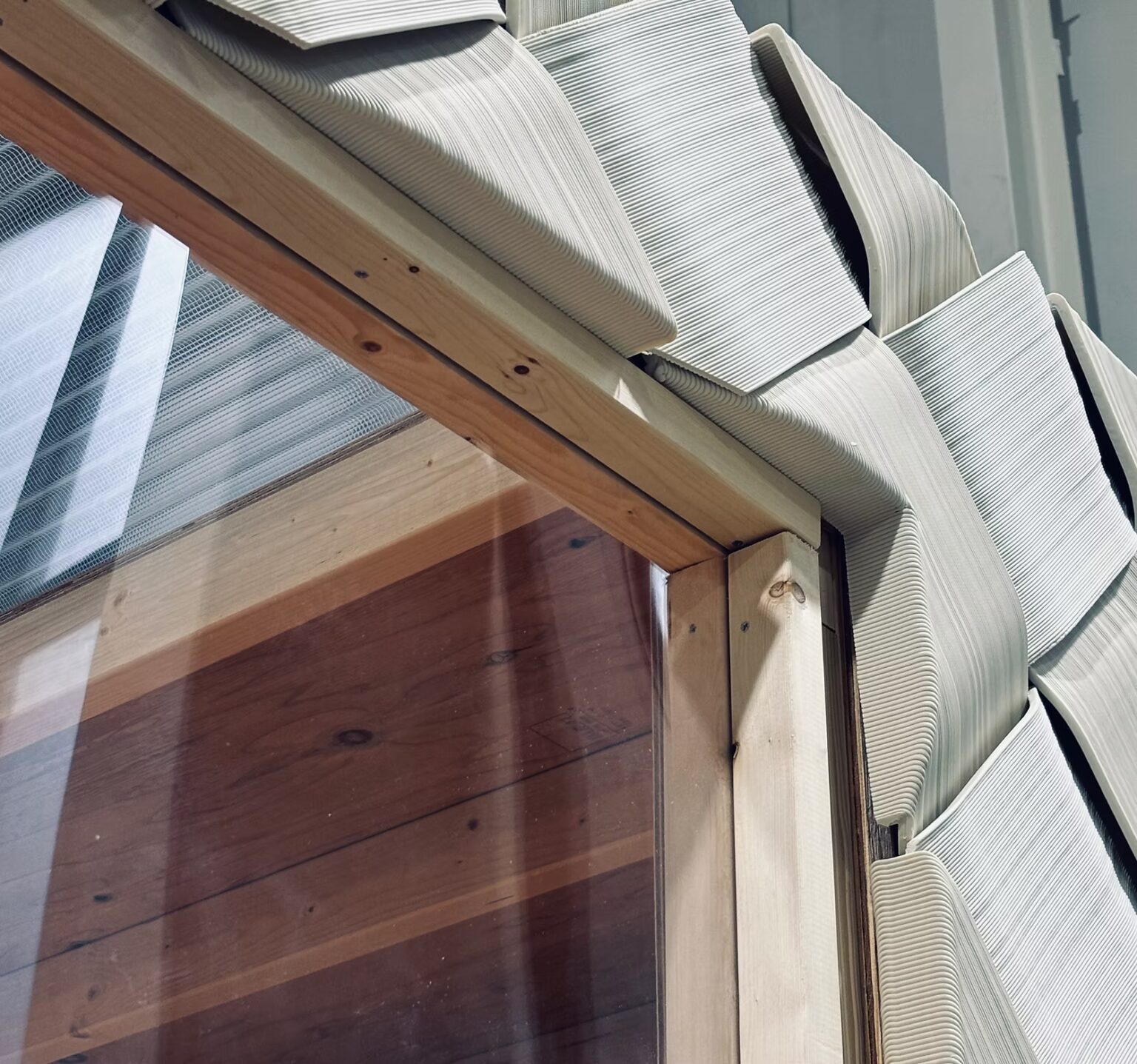
Japanese architect uses 3D printing to create detachable, adaptable "living" architectural components.
In the traditional view, architecture is solid and heavy. But Japanese architect Yuko Oka and her studio are challenging this notion with 3D printing technology, making buildings lightweight, flexible, and even capable of "breathing" and "growing."
Their signature project—the CIRCULUS Atelier studio in Yokohama—is a living example of future architecture.
1. A Breathing, Knit-Like Facade
The most striking feature of the building is its exterior wall. Unlike conventional walls, it appears as if a giant 3D printer has "woven" a soft, knitted fabric wrapping around the entire structure. This system, named "KNIT," consists of countless unique modules of varying shapes, creating rich interplay of light, shadow, and texture as the day progresses. Achieving this with traditional materials would be extremely difficult, but 3D printing makes it possible while keeping costs manageable.
2. An Interior Without Partition Walls
The creativity doesn’t stop at the exterior. Inside, you’ll find a series of flexible 3D-printed components hanging from the ceiling. They shape light and space like gentle curtains, naturally defining areas, filtering daylight, and absorbing noise—all without the need for rigid walls.
3. The Core Philosophy: Architecture Is "Alive"
What’s truly revolutionary is their "CIRCULUS" (Circular) philosophy. Every 3D-printed component here—whether part of the facade or the interior—is designed to be detachable, repairable, and reconfigurable. Architecture is no longer a "finished and fixed" object but a flexible, evolving "living organism" that adapts over time and according to use.
Why Does This Matter?
3D-printed construction is no longer new globally, but what sets Yuko Oka’s studio apart is how they deeply integrate additive manufacturing into the core of their design thinking. For them, 3D printing is not just a tool for creating unusual forms but a new language for rethinking materials, spatial lifespan, and the relationship between people and their environment.
Using their own factory and large-scale robot-arm 3D printers with recyclable resin materials, they continue to explore integrated production—from architectural components to furniture. This shows us a future where buildings can be more human-centered and sustainable, truly serving the people who inhabit them rather than forcing people to adapt to rigid shells.