
November 2, 2026      Applications      3DPTimes | English translation and technical editing of a supplied Chinese manuscript dated November 2, 2026. Project: Michael Rechtin / YouTube. Images supplied with the manuscript.      4

A creator-led experiment combines desktop 3D printing, CAD and a thrust stand to explore an afterburner for an electric ducted fan, highlighting rapid iteration and material limits.

Michael Rechtin testing the experimental EDF afterburner outdoors. Images: Michael Rechtin / YouTube, supplied with the original manuscript.
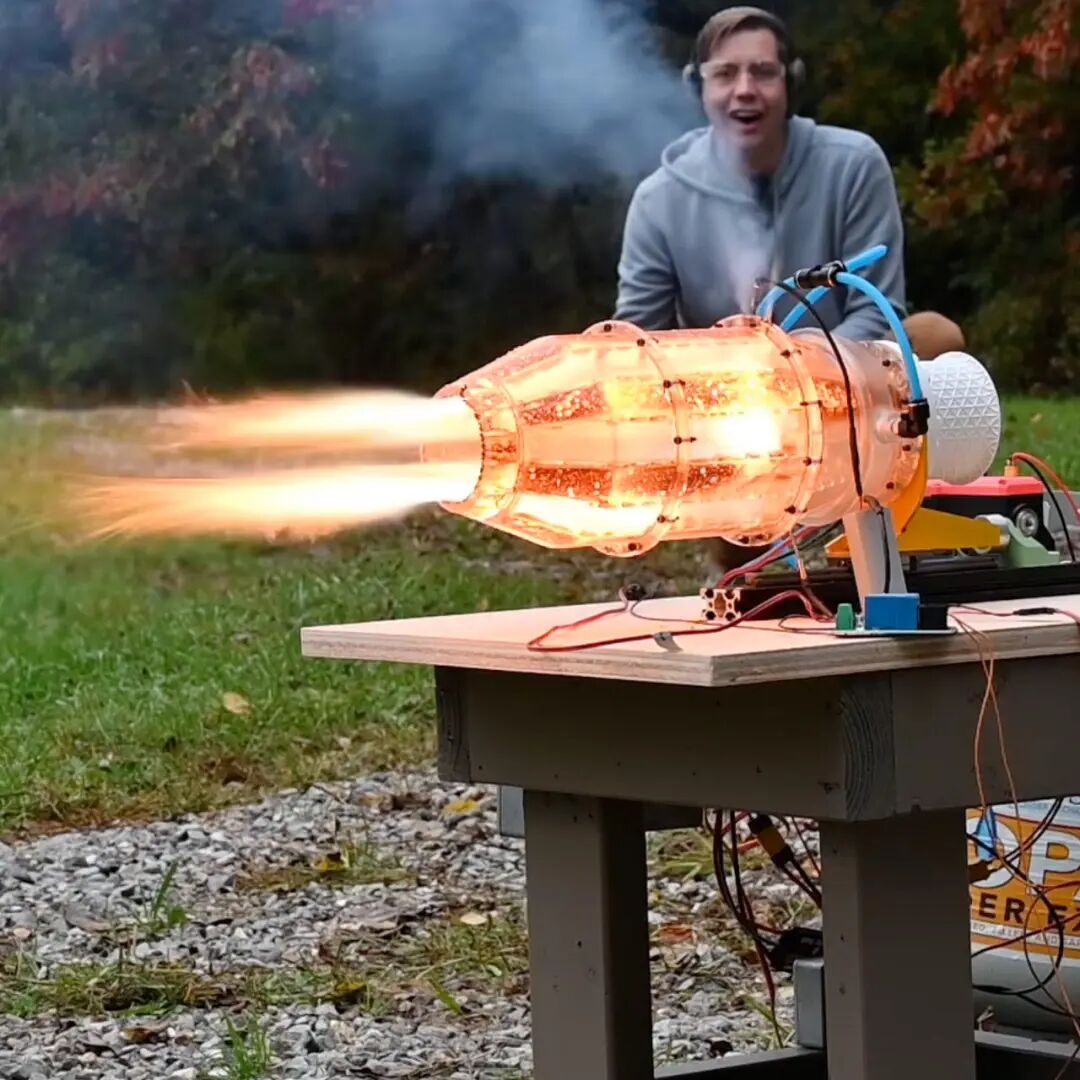
Aerospace engineer Michael Rechtin has used consumer 3D printers to build and test an experimental afterburner for an electric ducted fan (EDF). The project brings together computer-aided design, printed components and thrust measurements to explore what happens when combustion is added to a fan-driven airflow.

Rechtin works in aerospace engineering and pursues ambitious fabrication projects in his spare time. This experiment illustrates how desktop additive manufacturing can support functional testing as well as visual prototypes.

Moving Beyond a Display Model

An EDF uses an electric motor to move air through a duct. In Rechtin's experiment, a combustion section sits downstream of the fan. Its purpose is to add heat to the moving airflow and investigate whether that produces additional thrust.

Rechtin designed the assembly in Onshape and used Bambu Lab printers to produce structural components. The supplied manuscript describes printed housings, fuel-distribution features and flame-holding components that survived long enough for experimental measurements. Surviving a short test, however, does not establish long-term heat resistance or suitability for continuous operation.

Keeping combustion stable in a fast-moving airflow is a central challenge. A visible flame alone is not a reliable measure of useful propulsion performance.

Measurements Matter More Than the Flame

An electric ducted fan produces a relatively modest pressure rise. Adding heat to its airflow does not automatically translate into a useful thrust increase: combustion stability, pressure losses and the behavior of the exhaust all affect the result.

Rechtin compared the fan operating alone with the same assembly running with the afterburner. The important distinction is between seeing the device burn and measuring what the complete system actually achieves. A practical assessment also needs to account for the extra fuel, equipment mass and drag. The demonstration does not by itself establish a net propulsion benefit in flight or performance comparable to an aircraft jet engine.

From Long Fabrication Cycles to Rapid Iteration

The project builds on Rechtin's earlier work with printed motors and large drones. In this case, 3D printing provides a way to revise experimental geometry and manufacture replacement parts without commissioning a new set of machined components for every change.

That shorter design-to-test cycle is the broader manufacturing lesson. Desktop printers can help individual creators investigate functional questions involving airflow, mechanical loads and short-duration heat exposure. Material durability and repeatability remain essential limits; the experiment should not be read as evidence that ordinary printed plastics are generally suitable for combustion hardware.

Source and Images

Adapted from the supplied Chinese manuscript dated November 2, 2026. Original project video by Michael Rechtin: https://www.youtube.com/watch?v=e1UKmoi9sQA

Images: Michael Rechtin / YouTube, supplied with the original manuscript.

Michael Rechtin with the experimental EDF afterburner during an outdoor test. Image: Michael Rechtin / YouTube, supplied with the original manuscript.
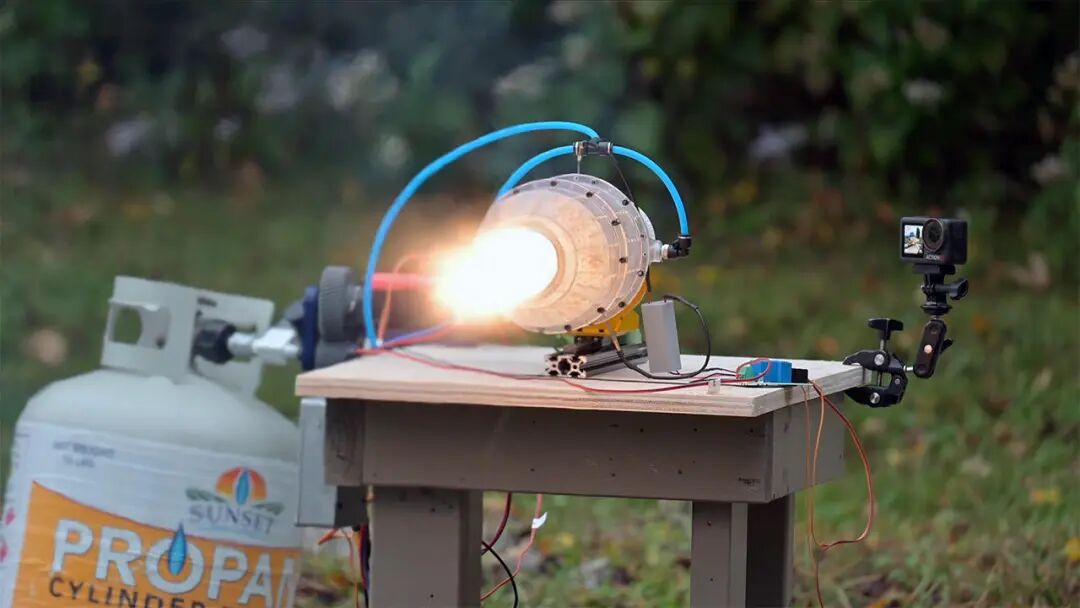
The afterburner firing on the outdoor test rig. Image: Michael Rechtin / YouTube, supplied with the original manuscript.
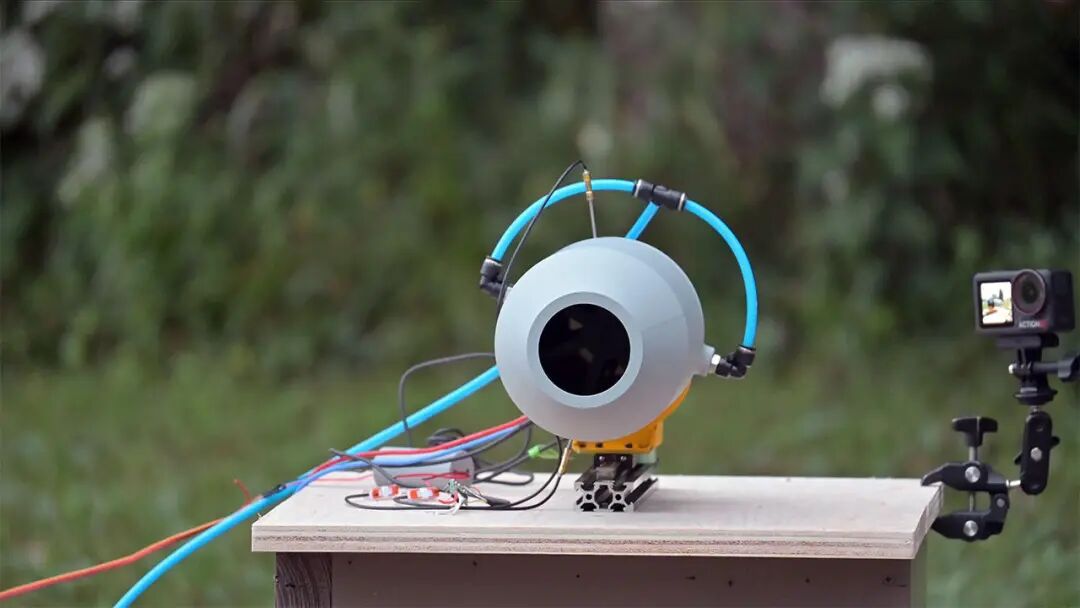
The experimental assembly mounted on the test stand with no visible flame. Image: Michael Rechtin / YouTube, supplied with the original manuscript.
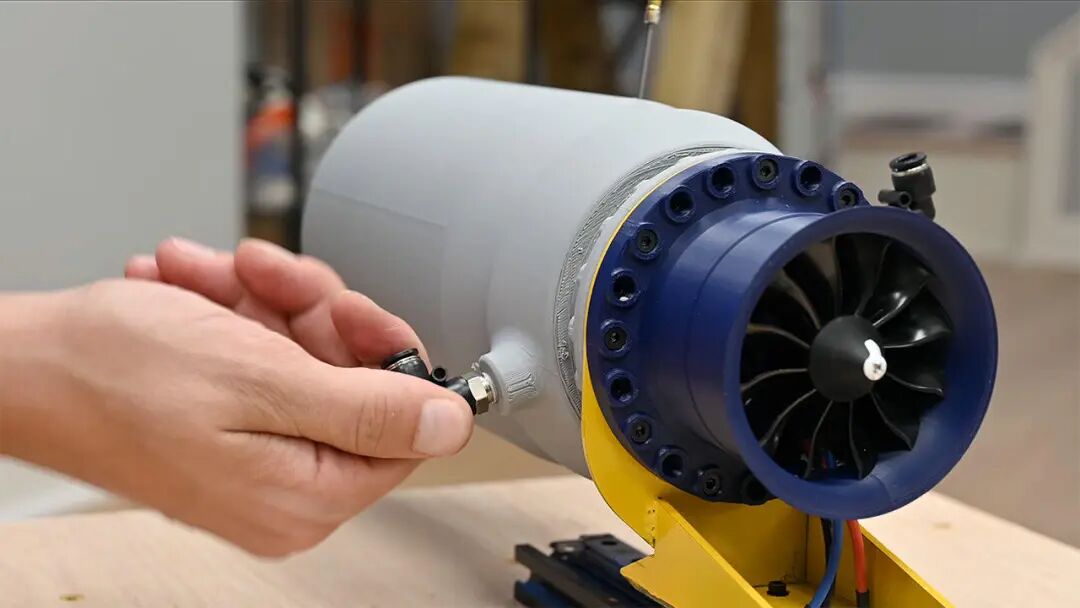
The electric ducted fan end of the experimental assembly. Image: Michael Rechtin / YouTube, supplied with the original manuscript.
CAD views labeled Version 1 and Version 2 show changes to the experimental assembly. Image: Michael Rechtin / YouTube, supplied with the original manuscript.


©2026 3dptimes.com All Rights Reserved