Home  >  News

May 7, 2026      News      9702

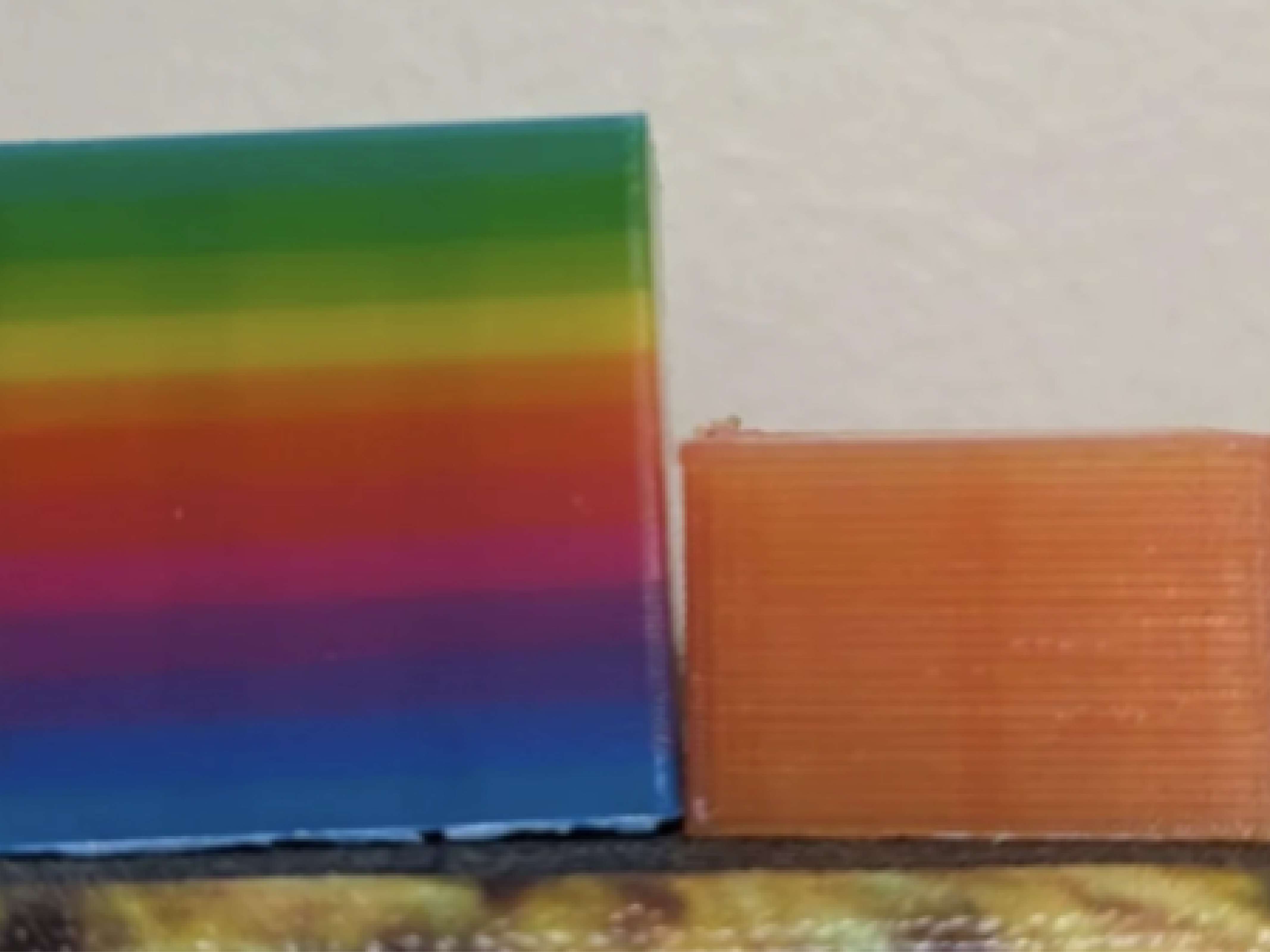
Recently, the "3D printing color layering" technique has been getting a lot of attention.

It's not true full-color printing in the conventional sense. Instead, it uses optical illusion—stacking thin layers of different colors—to make models appear to have gradient or multi-color effects.
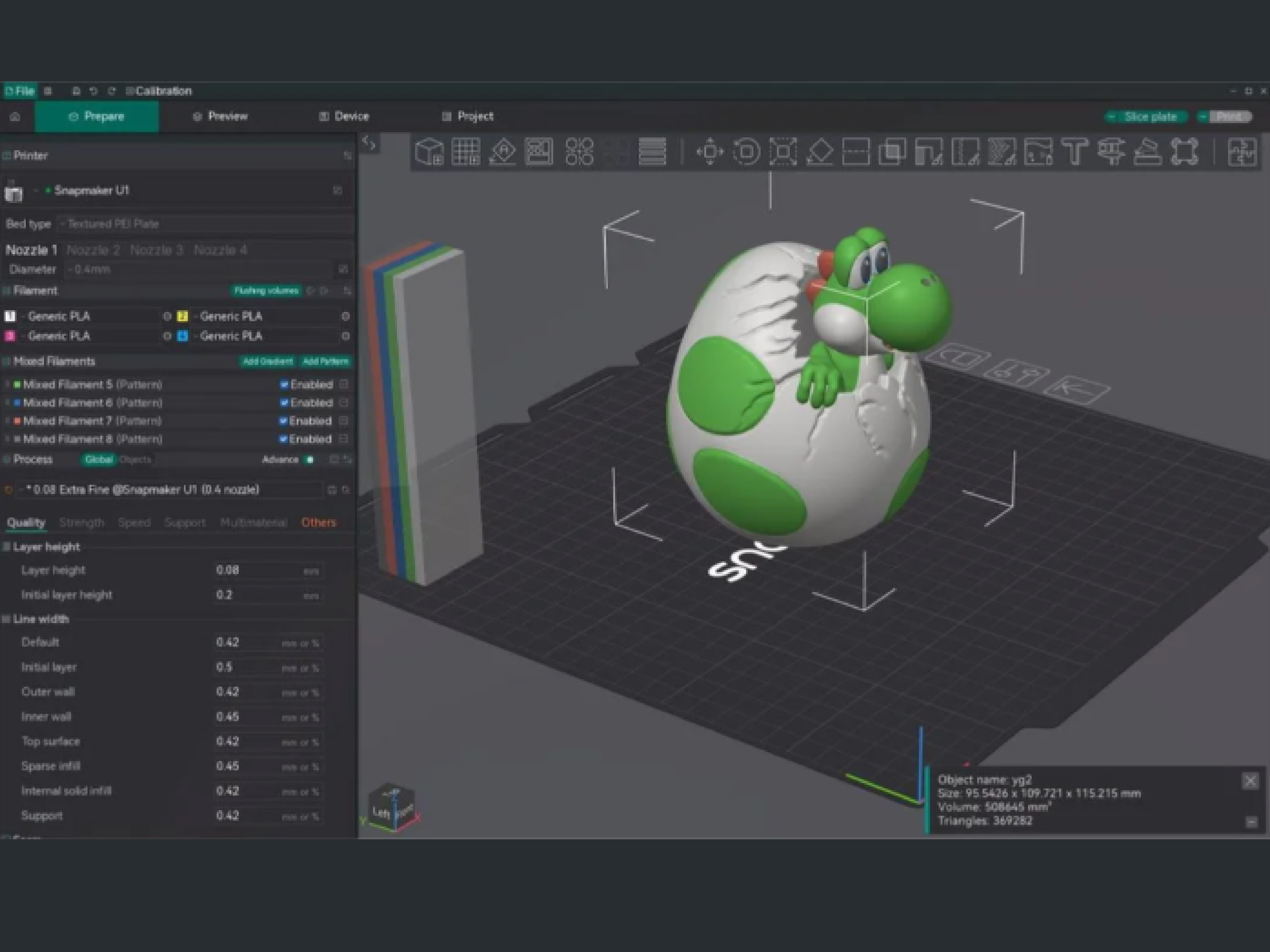
The principle is simple: with four basic filaments, such as cyan, magenta, yellow, and white, or red, yellow, blue, and white, stacking layers in a specific order and ratio can theoretically simulate thousands of visual colors. Layer height is critical, typically requiring ultra-thin layers of around 0.08 mm or 0.1 mm. The thinner the layer, the smoother the transition.
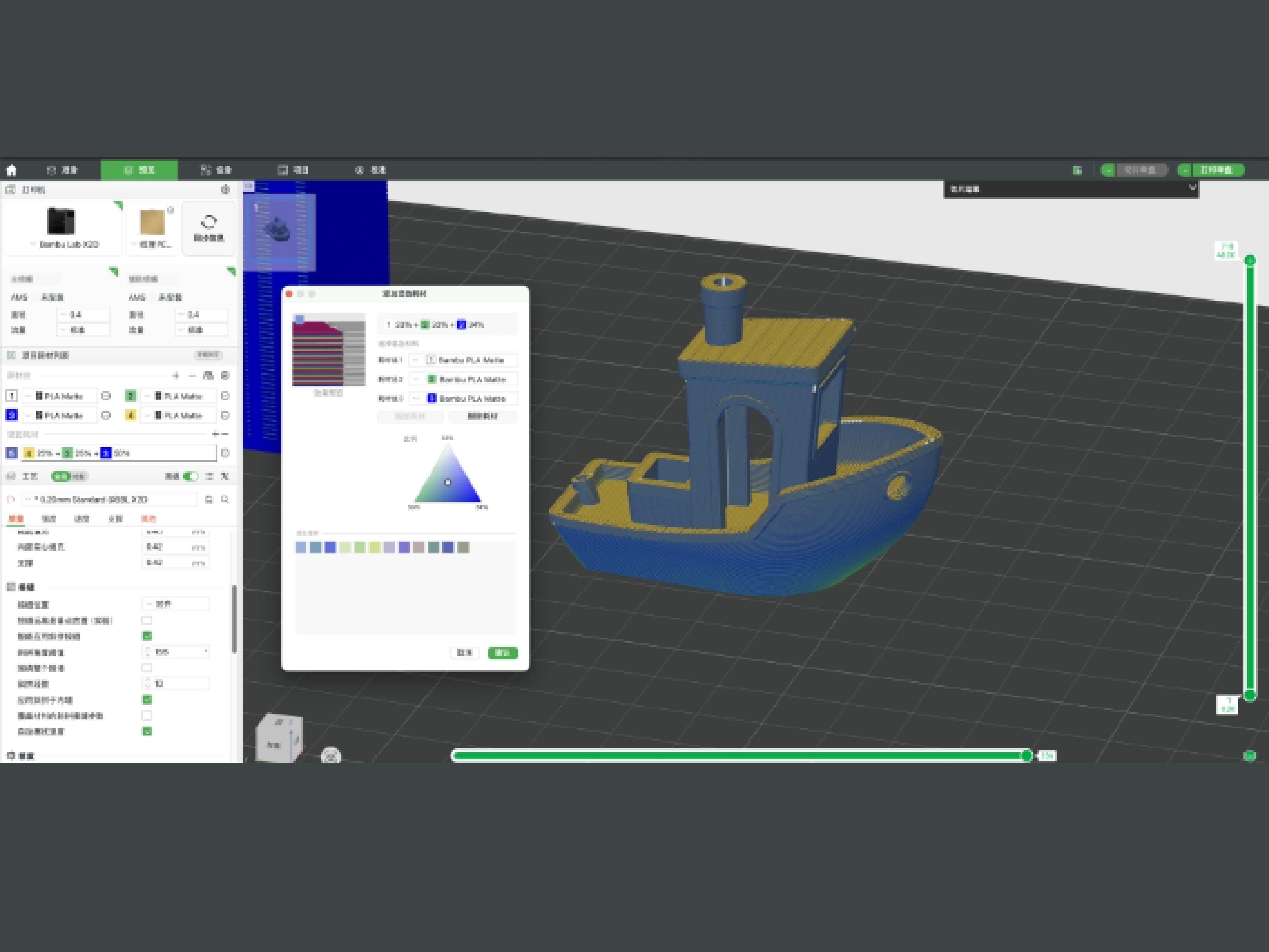
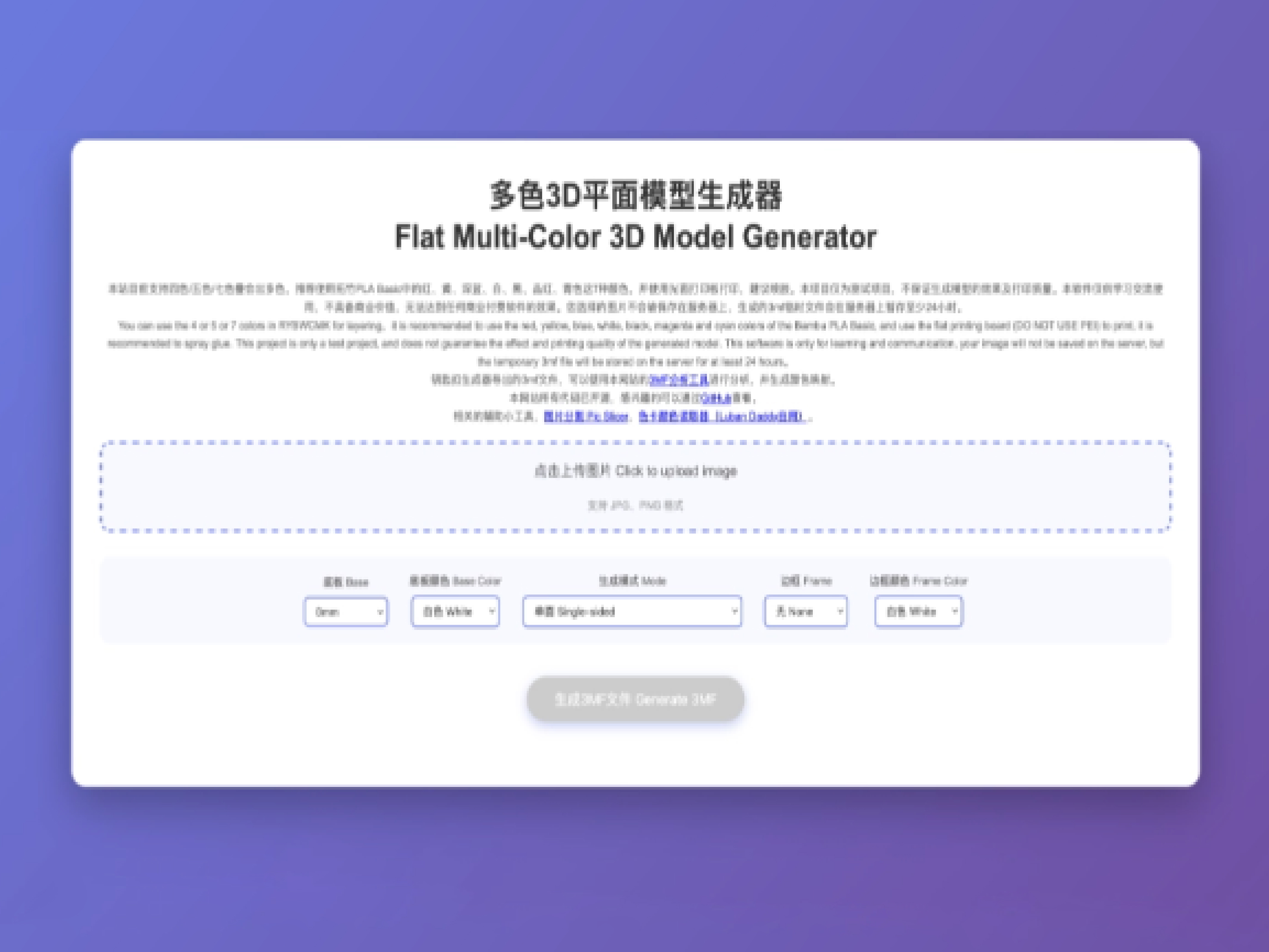
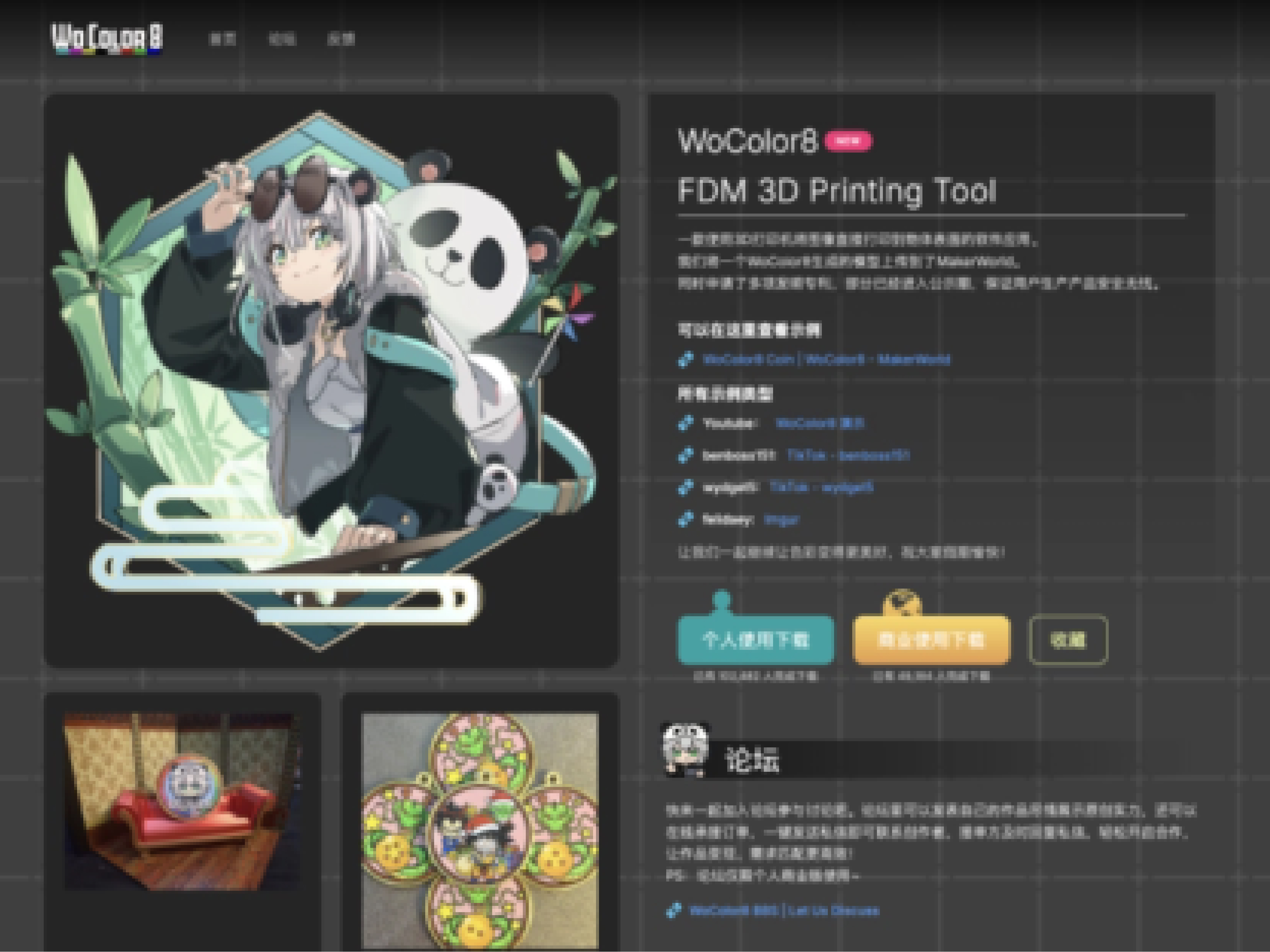
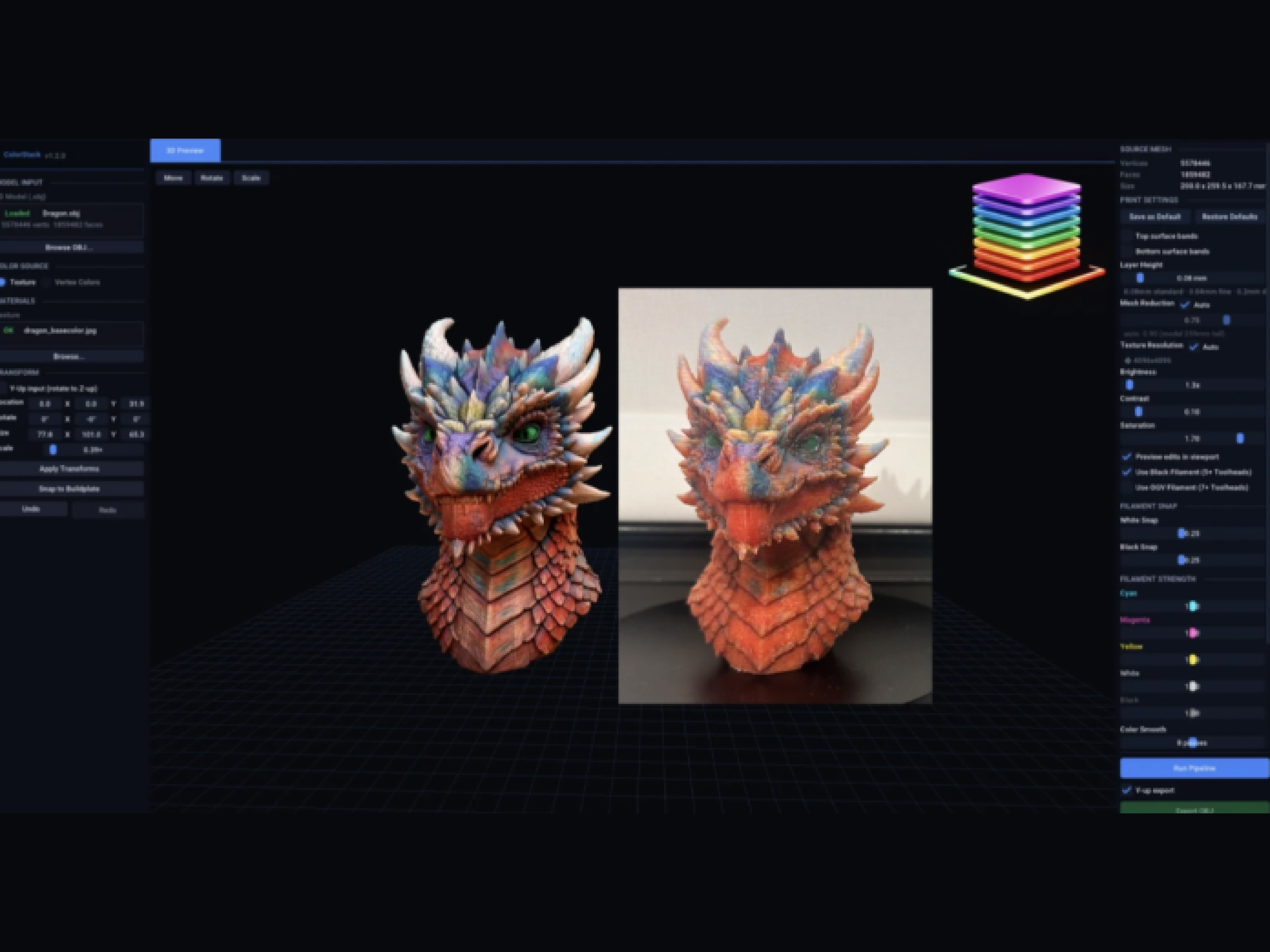
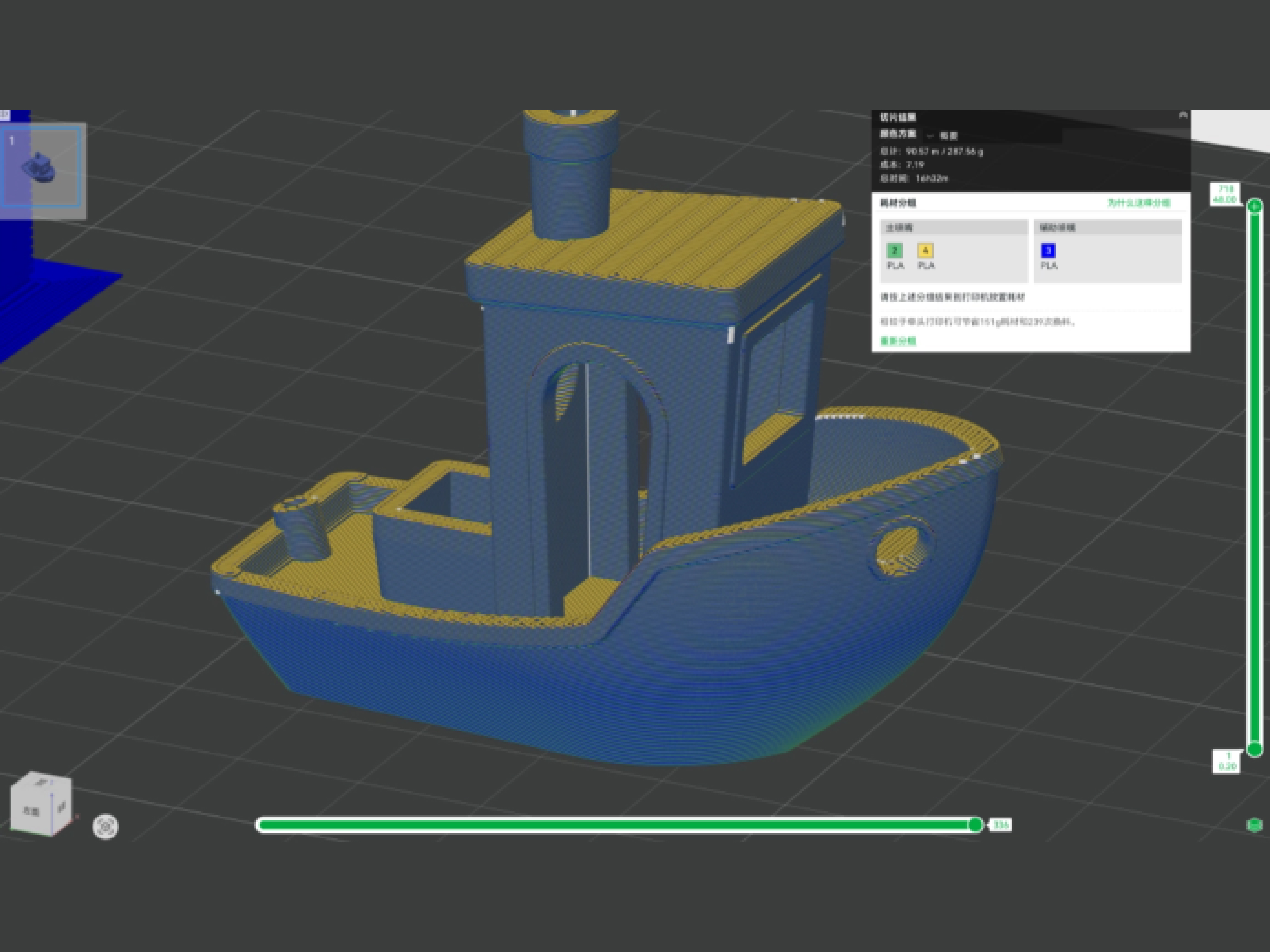
Currently, there are two main types of solutions. On the manufacturer integration side, Bambu Studio from Bambu Lab already supports three-color mixing and gradient preview. The Snapmaker U1 from Snapmaker works with its exclusive branch software. The maker scene offers even more options. For example, Lumina-Layers, a project by Chinese developer Big Fat Cat, achieves rich colors by stacking transparent layers. Meanwhile, Luban Dad's web tool lets users generate color-layered models with four to seven colors directly in a browser. For international options, ColorStack takes the technique a step further by achieving volumetric color stacking, resulting in textures that are much closer to real photography.
Of course, color layering also has clear downsides: the color gamut is limited and can't match the precision of professional color mixing. Frequent filament changes place high demands on the equipment, and single-nozzle solutions produce significant waste. Moreover, ultra-thin layers lead to very long print times. Multi‑toolhead 3D printers—such as the Bambu Lab H2C and Snapmaker U1—are the more ideal choice.
Overall, color layering technology is still in its early stages, but it's opening a new door to desktop‑level full‑color 3D printing.


©2025 3dptimes.com All Rights Reserved