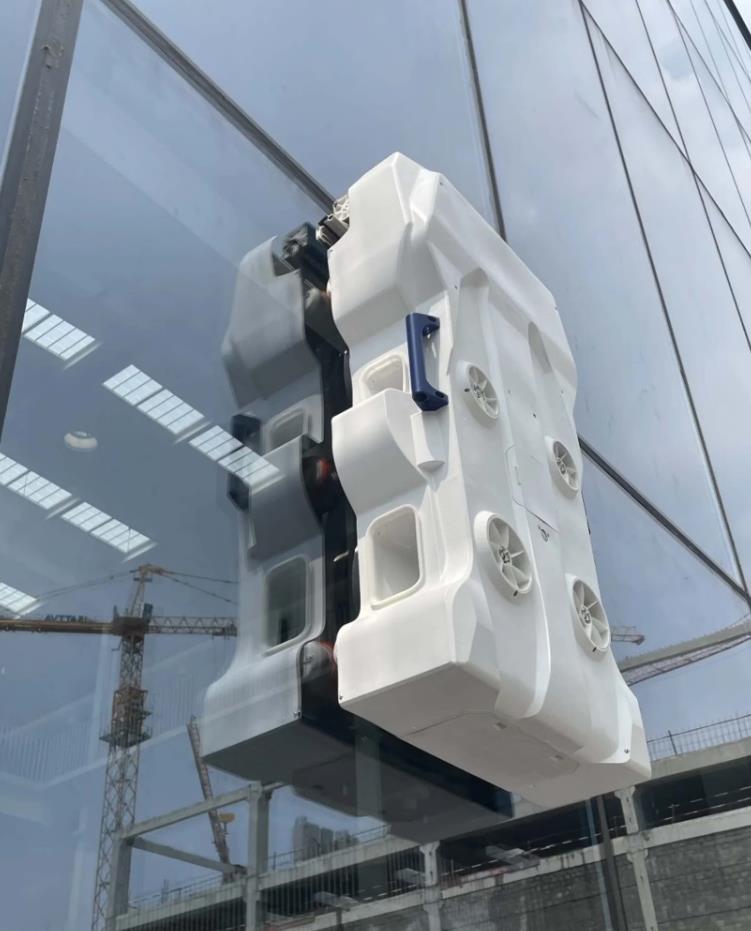
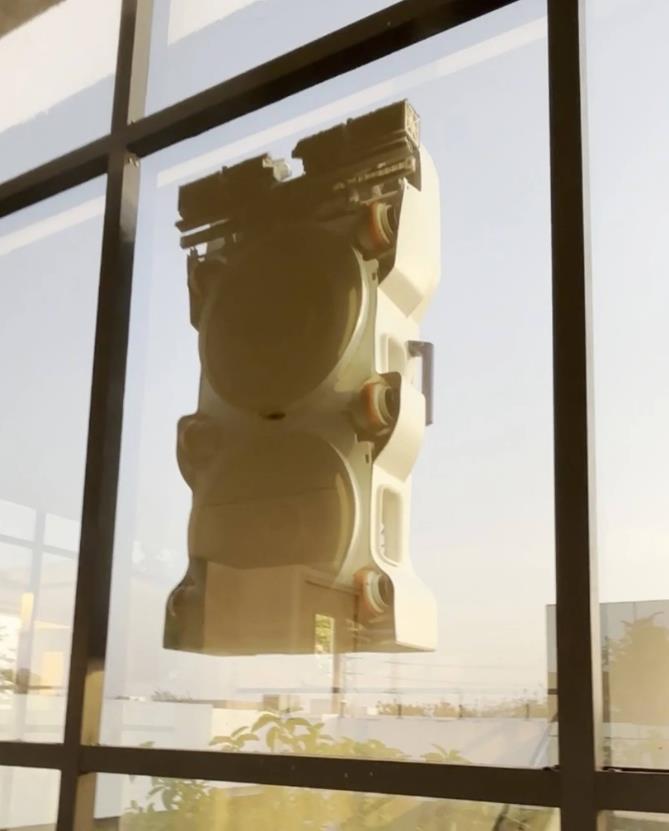
In the modern cityscape of towering skyscrapers, cleaning high-rise building façades is a high-risk job. WCB Robotics was determined to change this with robotics and successfully introduced E.L.M.O., a façade-cleaning robot that can climb autonomously without ropes. The key to its successful realization was EOS's Selective Laser Sintering (SLS) 3D printing technology.
When Traditional Manufacturing Meets Design Limits
While designing E.L.M.O., the R&D team faced stringent requirements for lightweighting, high precision, and weather resistance. Traditional machining processes were not only costly and time-consuming for manufacturing the robot's complex internal channels and AI-optimized organic geometries but were often entirely incapable. Attempts with common FDM or SLA 3D printing encountered a series of issues, including inconsistent tolerances, insufficient material durability, and cumbersome support removal.
SLS Technology and Specialized Materials Provide the Solution
The SLS 3D printing solution and PA 2200 material provided by EOS perfectly addressed these challenges. The SLS process can form complex, precise parts without the need for supports, achieving complete design freedom and repeatable production. The PA 2200 material, with its excellent stiffness-to-weight ratio, creep resistance, thermal stability, and moisture resistance, ensured the robot's reliable performance in the variable high-altitude environment.
End-to-End Advantages from Prototyping to Production
This technological combination delivered comprehensive benefits:
Extreme Lightweighting: Through design optimization for 3D printing, E.L.M.O.'s final weight is only 16 kg, a 68% reduction compared to the original machined design.
Extreme Lightweighting: Through design optimization for 3D printing, E.L.M.O.'s final weight is only 16 kg, a 68% reduction compared to the original machined design.
Cost Reduction & Efficiency Gains: The manufacturing cost for some components was reduced to one-fifth of that for machining. Taking a suction cup component as an example, its post-processing time plummeted from 9 hours to just 30 minutes.
Accelerated Innovation: The seamless workflow from prototype to end-use part production significantly shortened R&D iteration cycles and sped up time-to-market.
Ultimately, key components on the E.L.M.O. robot, including the structural chassis, a patent-pending multi-port water bottle, and a fluid-optimized squeegee, were all produced by EOS 3D printers. This not only confirms the maturity of additive manufacturing for producing high-performance end-use parts but also showcases a vision for future manufacturing that is smarter, safer, and more economical.