December 12, 2025      Applications      9824

Low-carbon concrete mix and digital fabrication methods highlight how advanced materials can merge sustainability, craftsmanship, and heritage in urban infrastructure

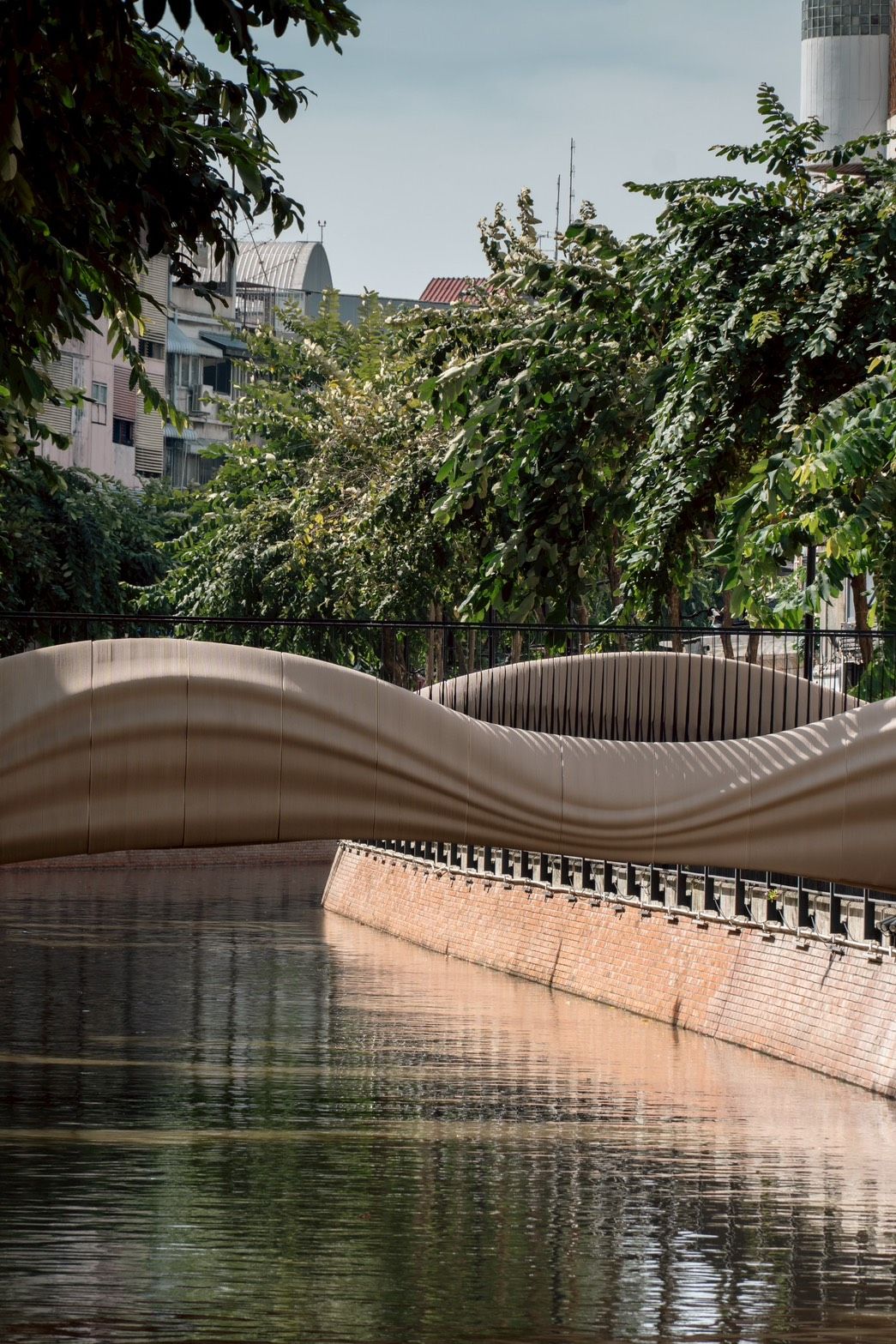
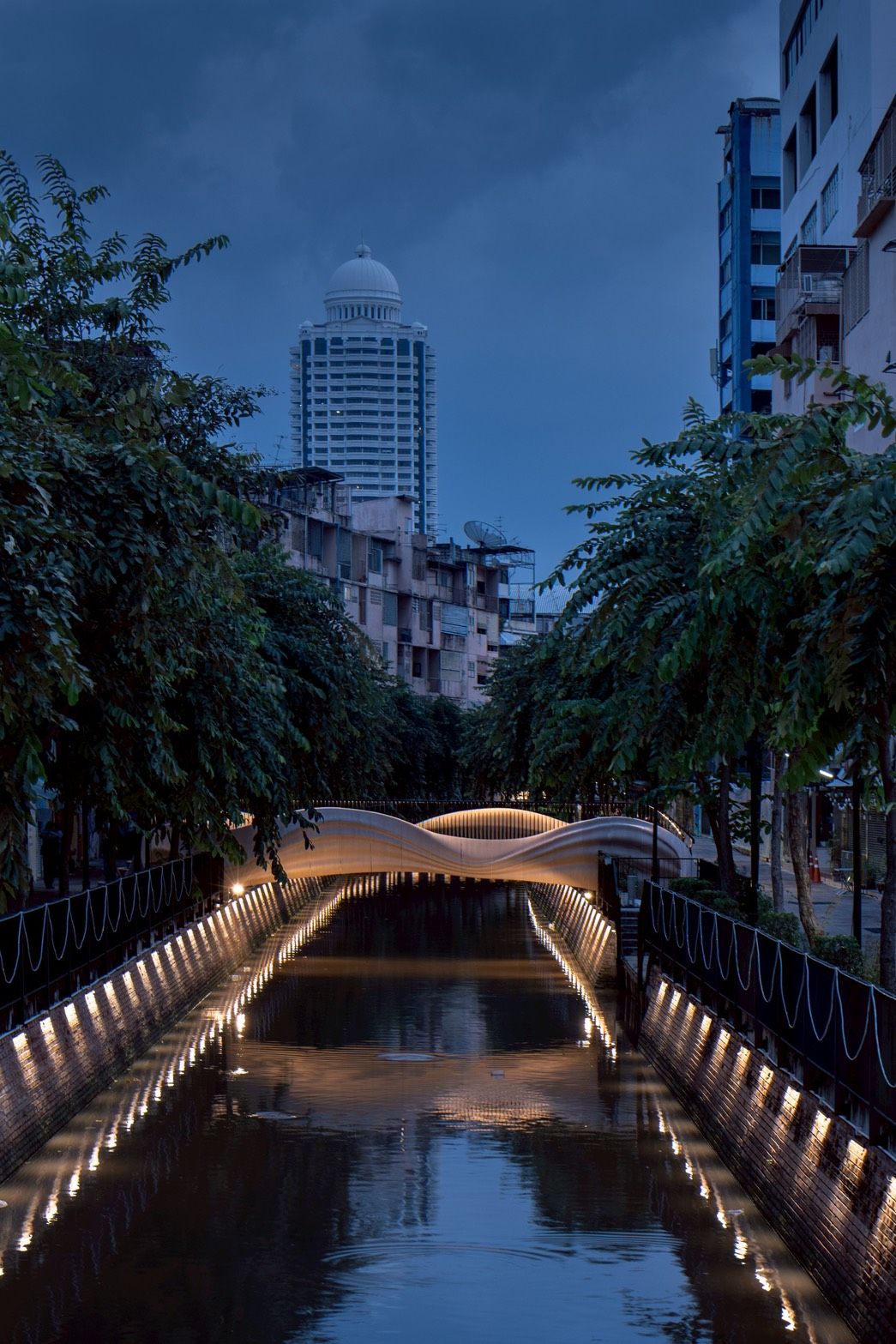
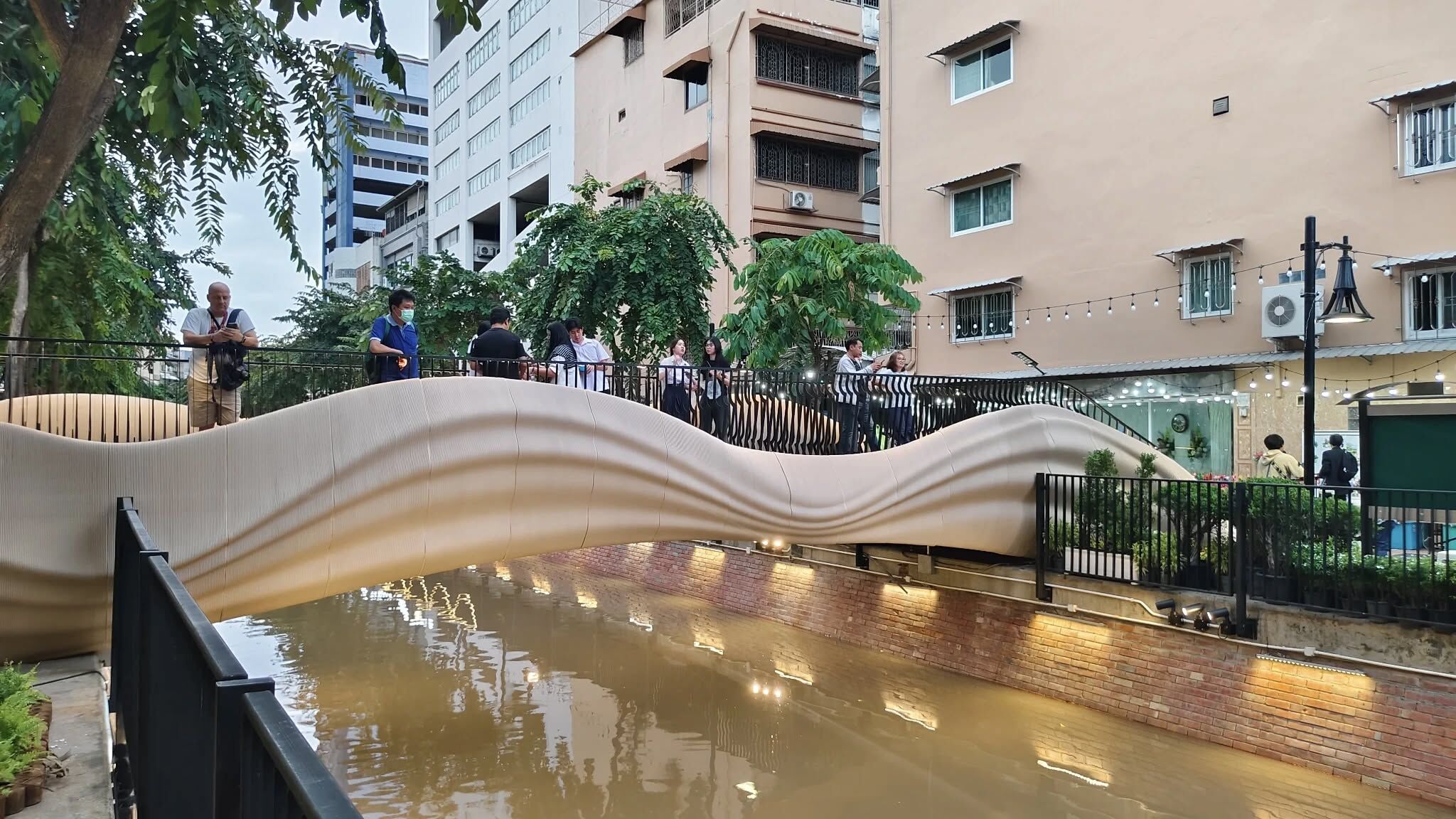
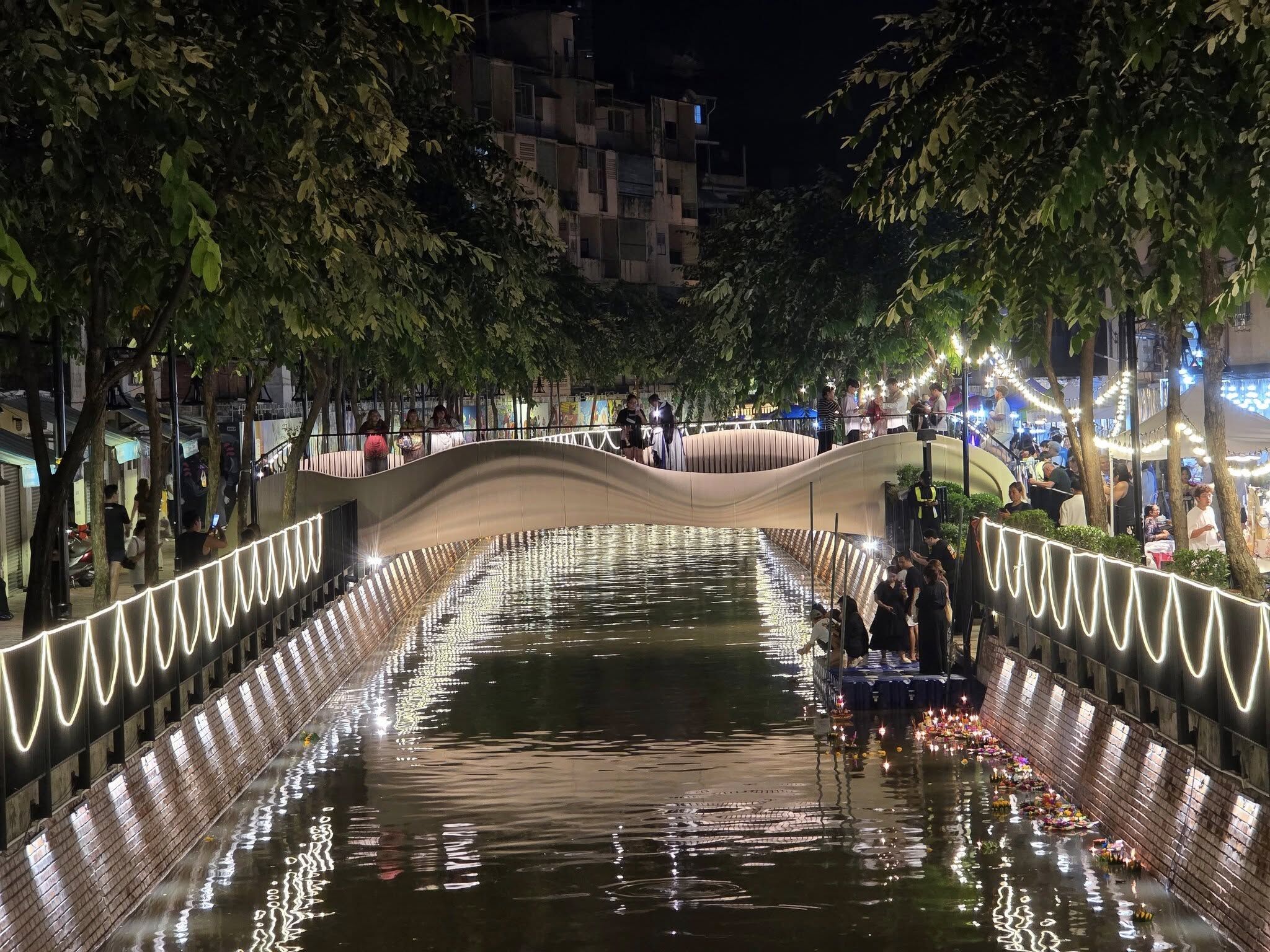
SCG has completed a 3D printed pedestrian bridge spanning Bangkok’s historic Ong Ang Canal, marking one of Thailand’s first uses of large-scale digital fabrication for public infrastructure. The project, finished in 2025 under the Bangkok Metropolitan Administration’s canal revitalization program, combines architectural innovation with local cultural references and sustainability-focused materials research.

Bridging heritage and innovation

Located in Bangkok’s old town, the Ong Ang Canal has long been central to the city’s history, first as a defensive moat and later as a vital commercial waterway. The new pedestrian bridge reinterprets that legacy through an architectural language inspired by water’s motion. Its sculptural form rises and folds like a wave, connecting the canal’s two banks while softening the visual weight of concrete in a dense urban setting.
Designed and built by SCG, the bridge’s fluid shape and continuous curves reflect the canal’s natural rhythm, with light playing across its undulating surfaces. A steel railing features lines derived from the traditional Thai Kranok motif, linking contemporary design with the area’s cultural heritage.

Walking on sustainable materials

All bridge components were 3D printed using a low-carbon concrete known as LC3, which replaces part of the cement with calcined clay to reduce embodied carbon. The use of clay echoes Ong Ang’s past as a center for pottery and earthenware trade, reinforcing the project’s cultural continuity. Each printed segment was reinforced with high-performance concrete to achieve a live load capacity of 500 kilograms per square meter.


©2025 3dptimes.com All Rights Reserved