Home  >  News

July 10, 2026      News      10000

This marks one of the largest single financing deals in the consumer hardware sector since 2025, with capital betting not just on the company but on the industry inflection point driven by multi-color and multi-material capabilities.

On July 8, 2026, consumer 3D printing company Snapmaker completed a 10 billion RMB (approximately $139 million USD) Series C funding round, led by Cathay Capital, with follow-on investment from TAL Education's strategic investment arm, and additional participation from existing shareholders including Meituan Strategic Investment, Meituan Longzhu, Hillhouse Ventures, and Shunwei Capital.
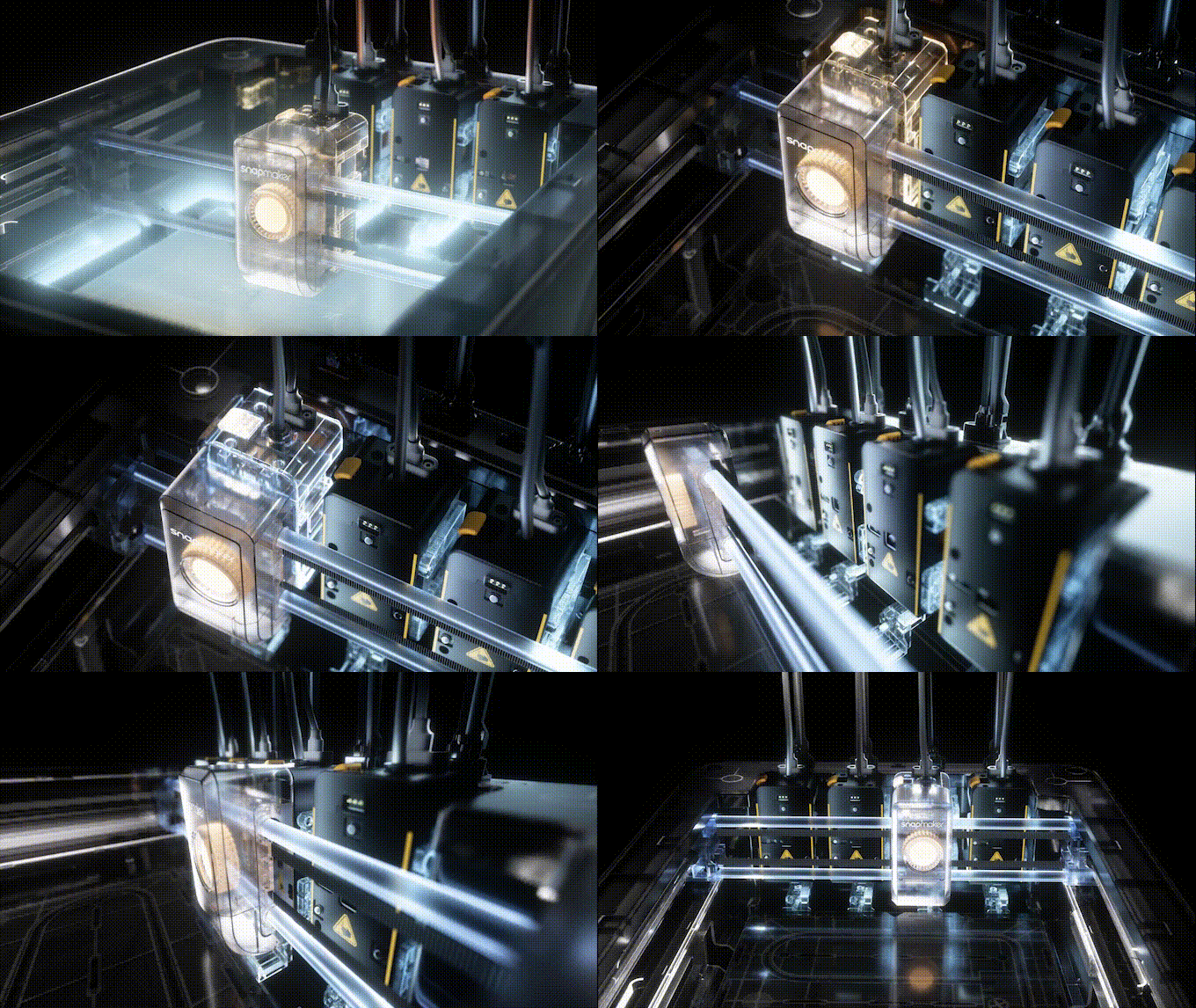
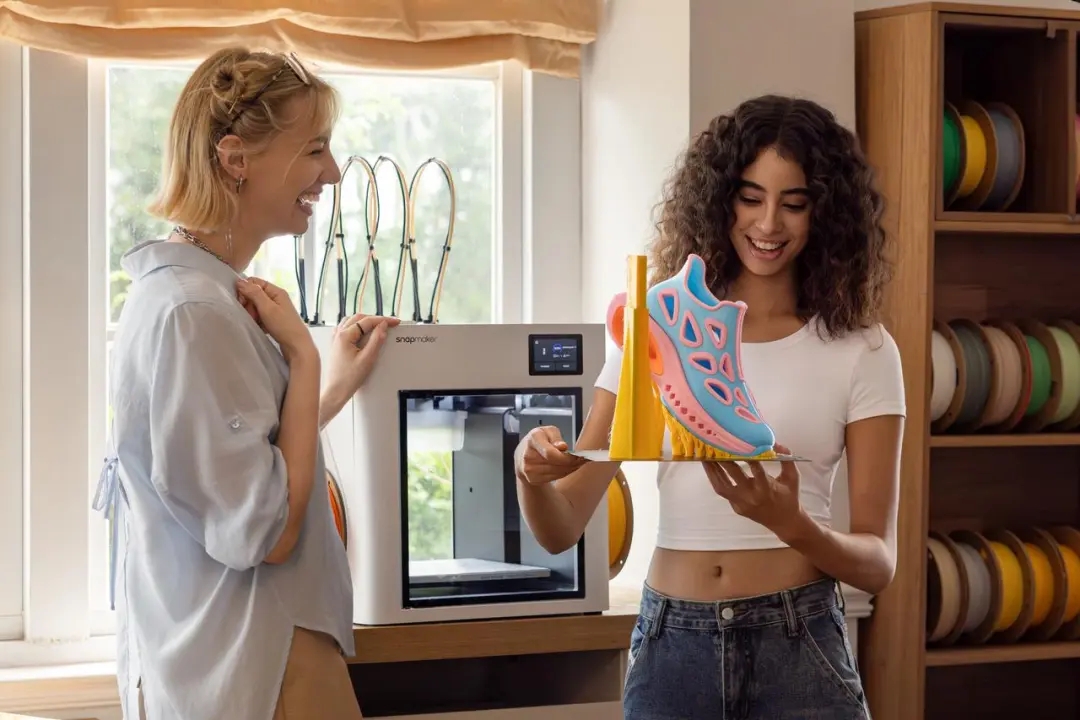
The flagship model U1 is the core confidence behind this funding. It breaks away from the traditional single-nozzle cyclic material-swapping approach, instead adopting four independent toolheads, each with its own role. Color changes are simply toolhead swaps—clean and efficient. Printing speed can be boosted by up to five times, material waste reduced by about 80%, and compatibility for combining soft and hard materials (like TPU and PVA) is greatly expanded. Combined with FullSpectrum color-blending technology, four colors can produce full-color models. This isn't a minor tweak to parameters; it transforms multi-color printing from a compromise of high cost, long wait, and heavy waste into a truly practical workflow.
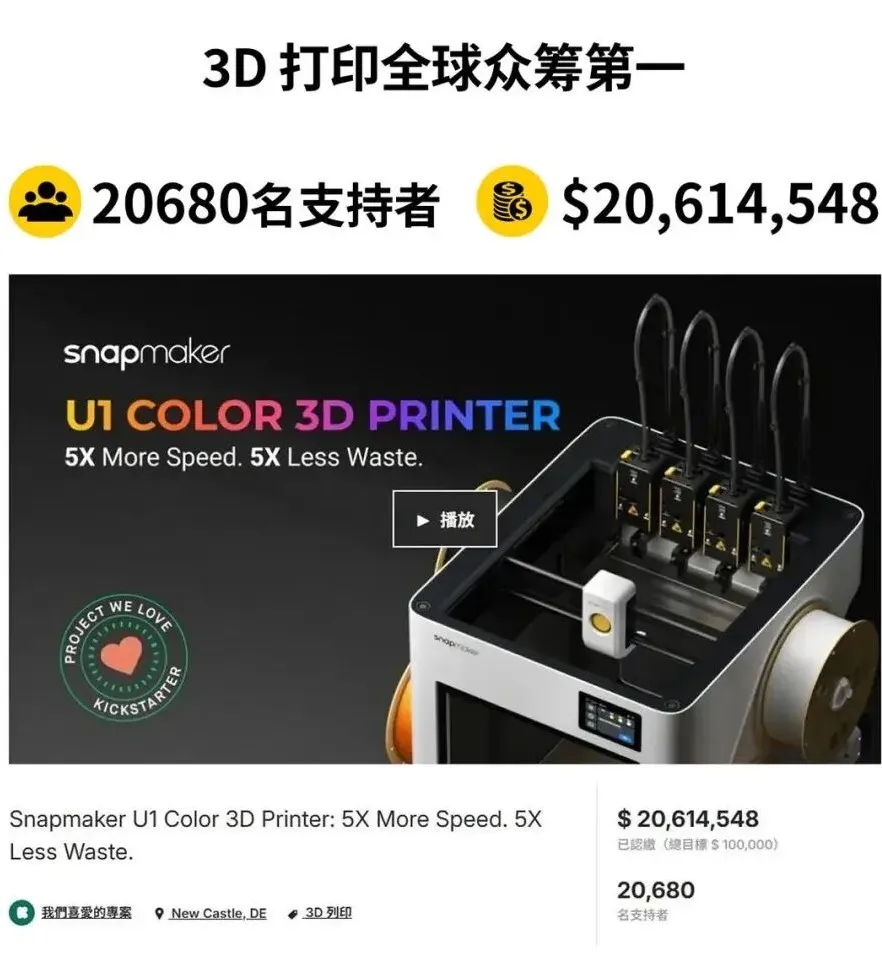
The market has validated this. U1 raised $20.61 million on Kickstarter, setting a new crowdfunding record for 3D printing categories, with support from over 20,000 users worldwide. In China, during the Double Twelve shopping festival, it topped JD.com's category ranking within two hours of its debut, with over 2,000 units sold. During this year's 618 shopping festival, Snapmaker ranked first in growth rate across all categories on JD.com, and U1 secured fourth place on Tmall's PLA printer bestseller list, behind only three models from Bambu Lab.
Desktop 3D printing has long been limited by single-color output and speed, keeping its audience relatively niche. When devices like U1 can directly produce complete, colorful, ready-to-use objects, the industry logic shifts—much like the transition from black-and-white to color printing. Once the experience crosses the "good enough" threshold, the mass market opens up.
With this funding, Snapmaker's focus goes beyond hardware iteration. They aim to build a full creative ecosystem: hardware as the entry point, expanded materials to broaden use cases, a community to enhance experience, and AI design tools to lower the barrier. The ideal future is one where ordinary users generate 3D models with AI, send print jobs with a single tap on their phone, and get colorful physical objects quickly from U1. Shifting from selling equipment to serving the entire creative journey for the masses—that's the long-term value that capital sees.


©2025 3dptimes.com All Rights Reserved