Home  >  News

September 10, 2026      News      9883

Uprise 3D's answer is PEP—Powder Extrusion Printing.

In today's high-end manufacturing, where lightweight design, integration, and extreme operating conditions are key goals, complex metal and ceramic parts often hit a wall with traditional subtractive machining and mold-based forming.
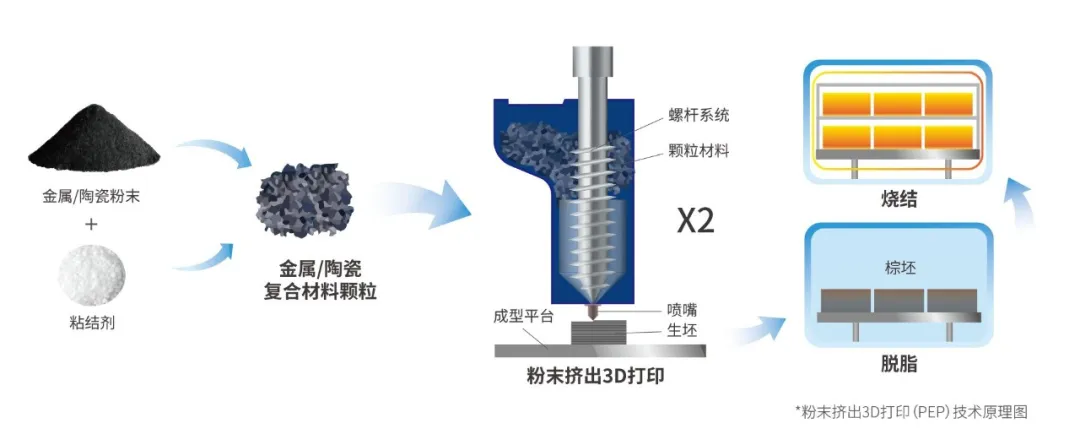
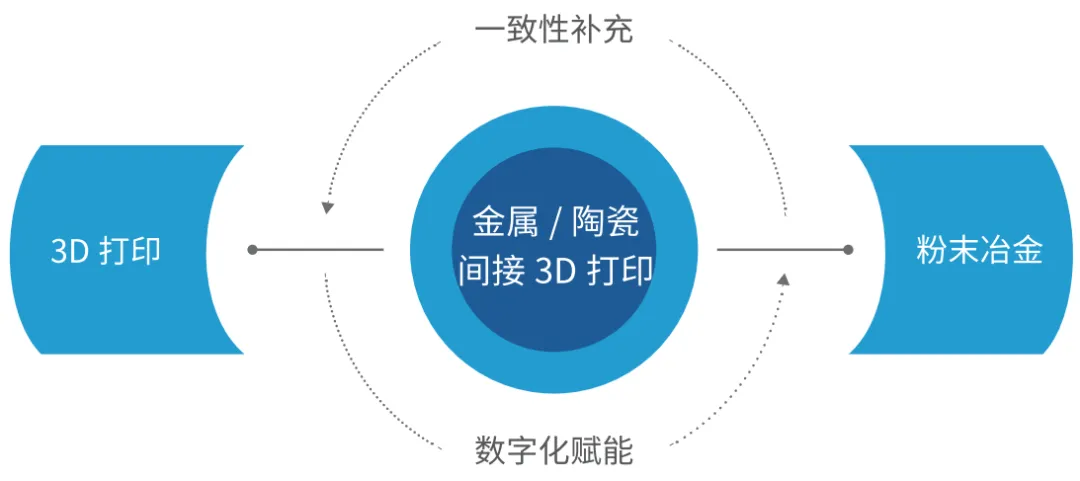
It combines the design freedom of 3D printing with the densification power of powder metallurgy, following an indirect additive route of "low-temperature shaping, high-temperature property formation": powder and binder are mixed and pelletized, then screw-extruded layer by layer into a green part, followed by debinding and sintering. Density can reach 96%–99%, with properties close to forgings. No laser is needed at all, which avoids the challenges of processing highly reflective and refractory materials and reduces thermal-stress cracking.
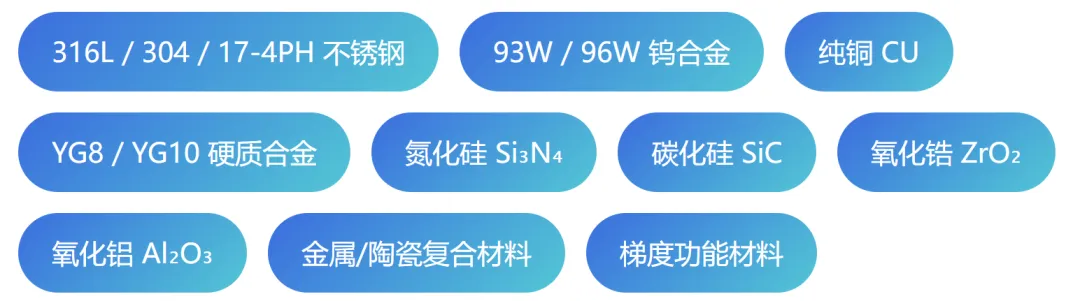
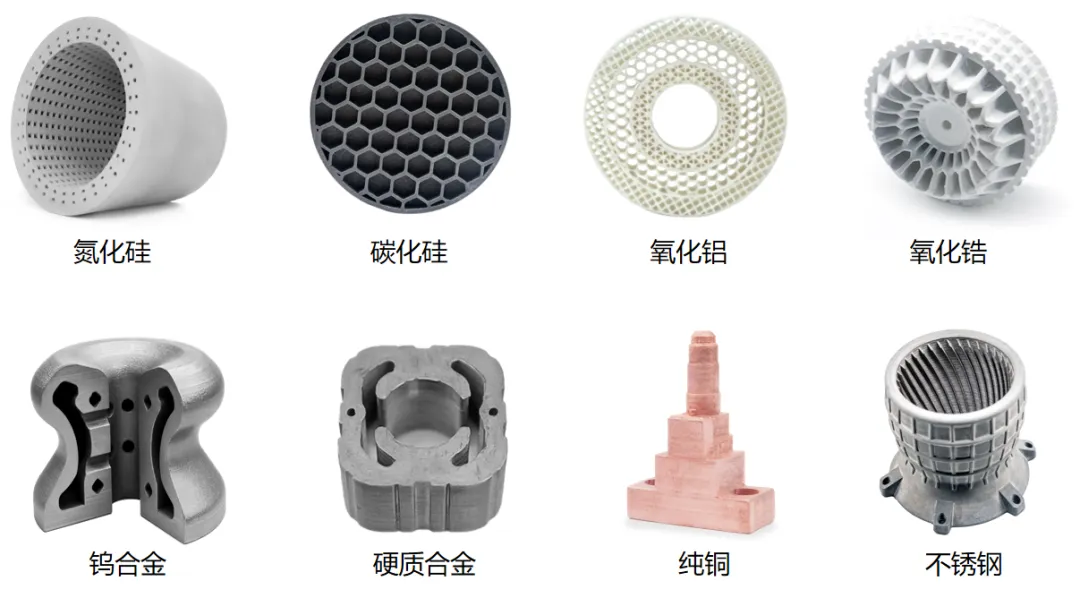
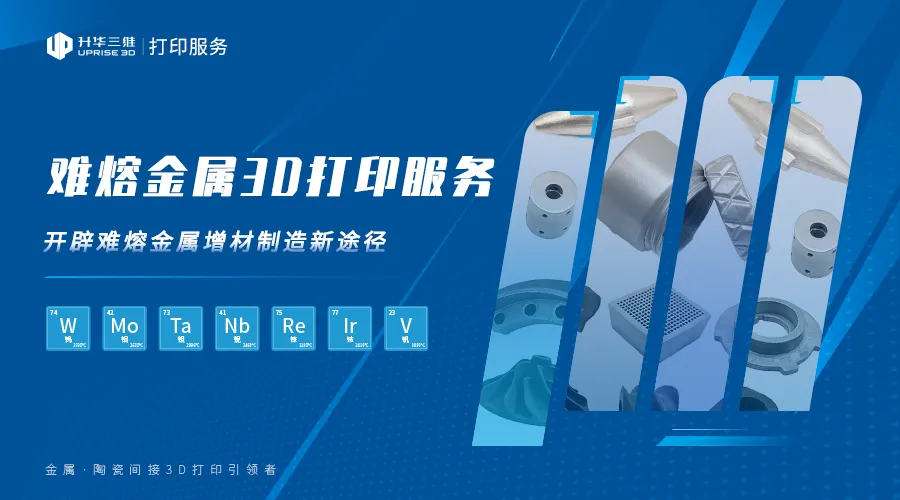
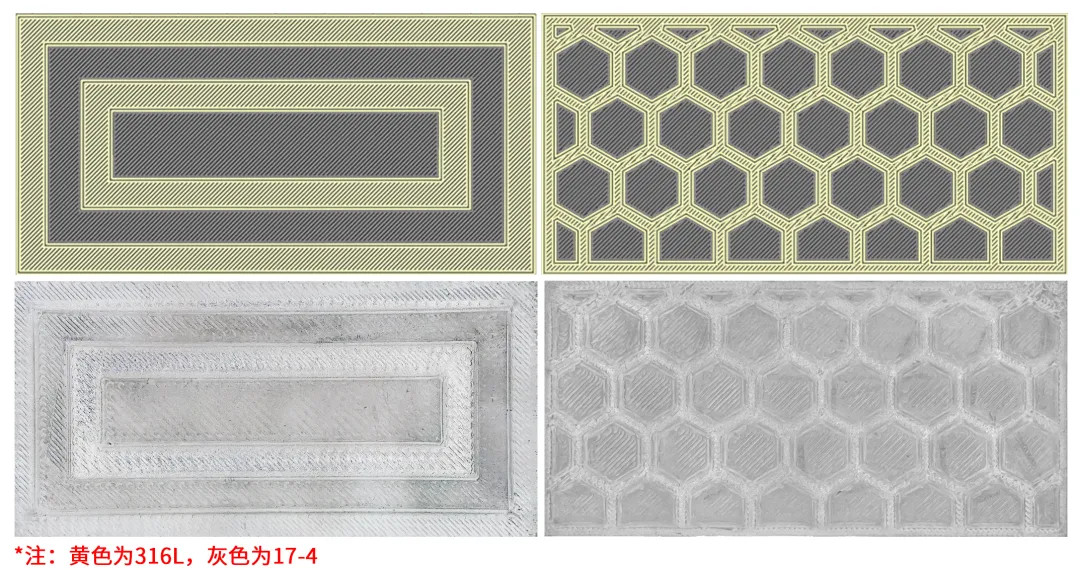
The benefits are practical: low equipment and material costs, and compatibility with mature PIM (powder injection molding) feedstock and post-processing lines; it can print refractory metals such as tungsten, molybdenum, and tantalum, as well as ceramics such as silicon nitride and silicon carbide; the independent dual-nozzle system supports support structures, dual-material printing, specified-region deposition, mirror printing, and copy printing, and also enables both discontinuous and continuous functionally graded materials. Green parts can be recycled and re-pelletized, making the process greener and more cost-effective.
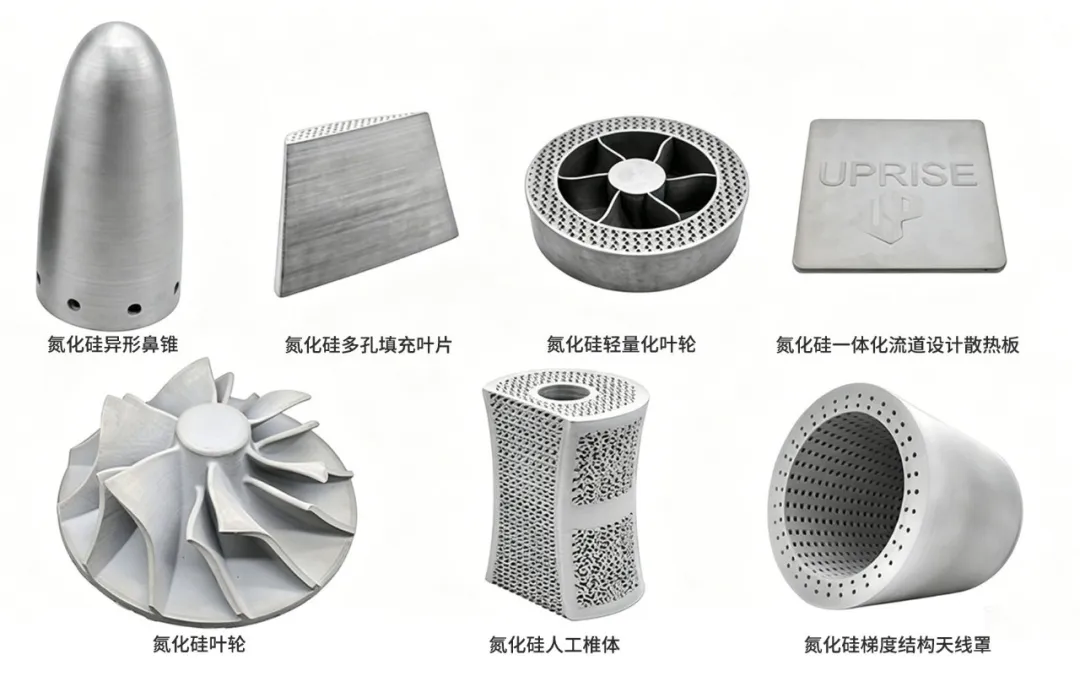
Applications have already entered fields such as aerospace, nuclear industry, medical care, heat exchange, and microreactors, including hollow tungsten alloy parts, engine combustor components, silicon nitride turbine blades, radomes, and artificial vertebral bodies. It is not a replacement for PIM, but a flexible link for small batches, high variety, and complex structures: PEP is used for trial production first, then MIM (metal injection molding) scales it up, with shared materials and post-processing.
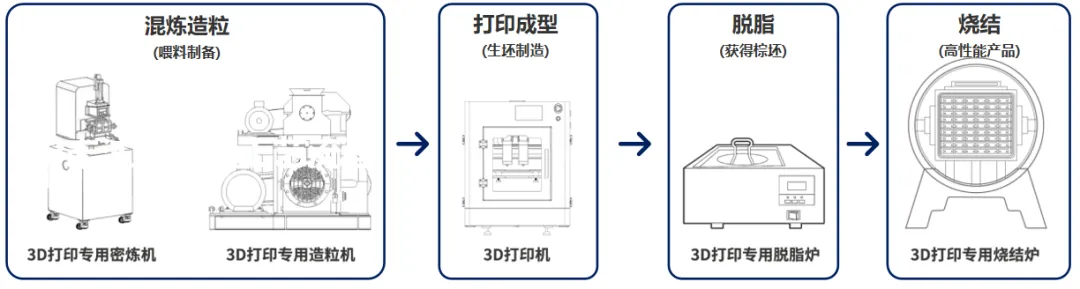
The market is also accelerating. By 2030, metal binder jetting and extrusion-based indirect metal printing are expected to generate USD 54 billion in parts production value. Uprise 3D has built a complete closed loop covering feedstock preparation, printing, debinding, and sintering, and is shifting from an equipment supplier to a full-process solution provider for metal and ceramic manufacturing.


©2025 3dptimes.com All Rights Reserved