Home  >  News

January 18, 2026      News      9613

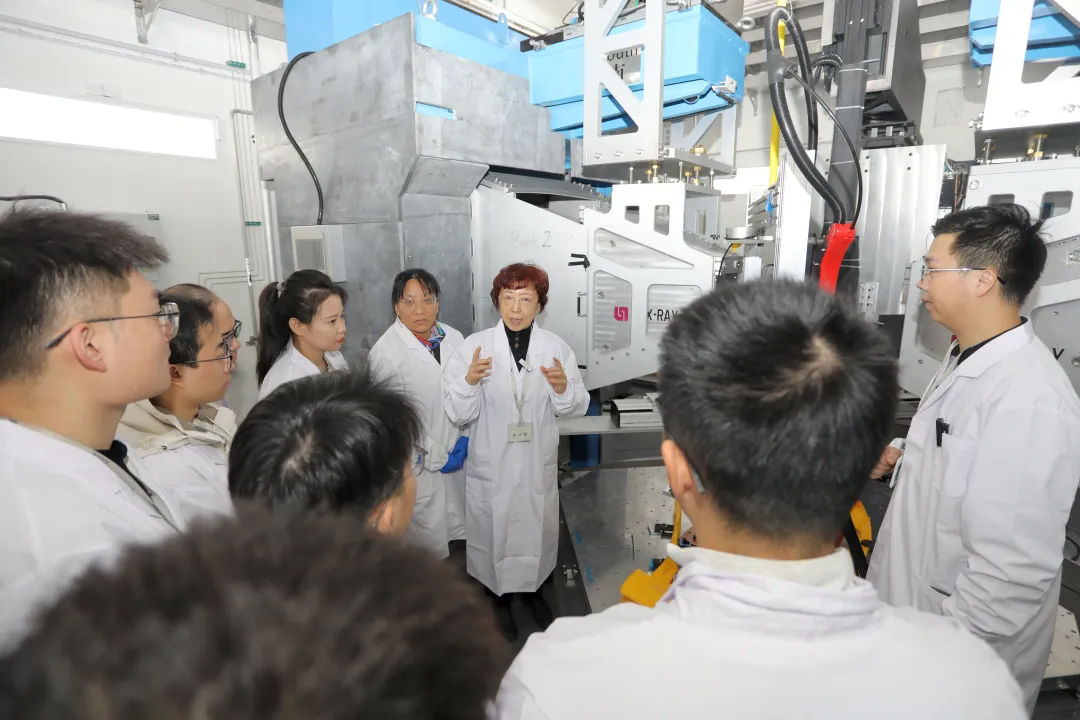
The Metal Additive Manufacturing Team of the 3D Printing and Intelligent Manufacturing Research Center at Dongguan University of Technology recently conducted an in-situ printing experiment for wire arc additive manufacturing (WAAM) at the China Spallation Neutron Source (CSNS) Engineering Materials Neutron Diffraction Spectrometer, which represents an investment of nearly one billion yuan. This experiment successfully addressed the industry challenge that traditional monitoring techniques cannot capture real-time dynamic changes within materials during the 3D printing process.
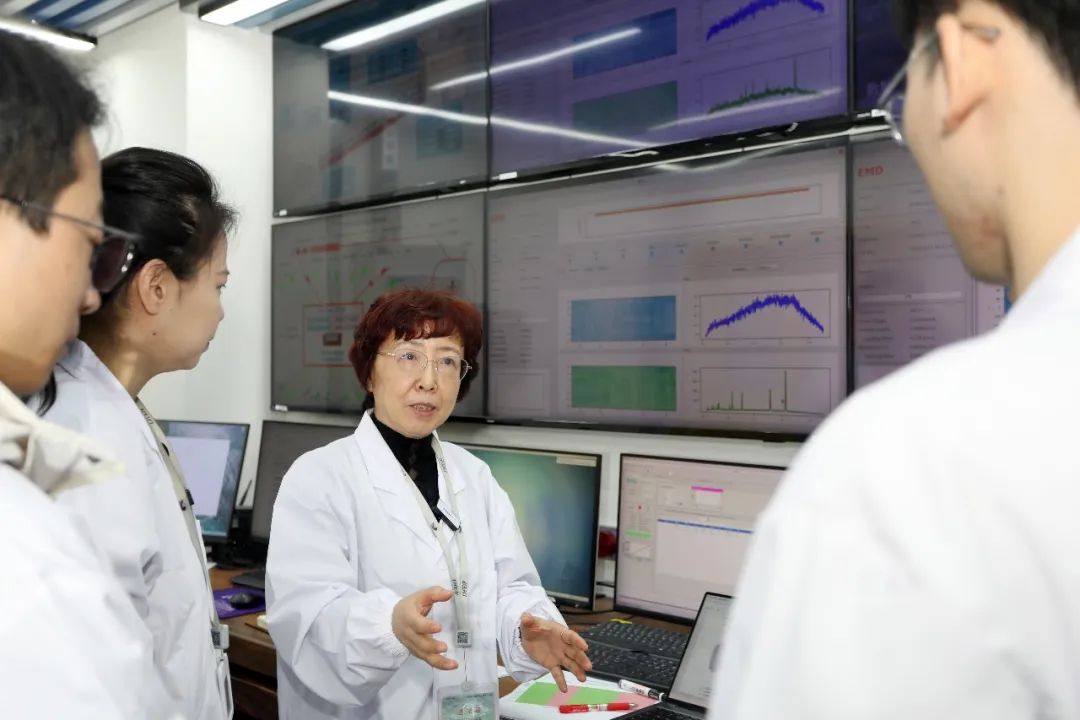
The experiment was primarily undertaken by the research team led by Professor Zhang Lijuan from Dongguan University of Technology. It marks the first time in China that WAAM technology has been integrated with a neutron scattering characterization platform, representing a critical step forward in the field of in-situ observation and mechanism research for metal 3D printing in the country.

This experiment is a core component of the third sub-project, titled "Study on the Behavior and Microstructure Formation Mechanisms of Unconventional Solidification and Solid-State Phase Transformations," under the major applied basic research project in Guangdong Province, "Applied Basic Research on High-Performance Metal Additive Manufacturing Materials and Processes."

WAAM technology holds broad application prospects in high-end equipment manufacturing due to its advantages of high efficiency, low cost, and suitability for producing large-scale complex components. During the point-by-point, layer-by-layer additive manufacturing process, materials undergo rapid heating and cooling as well as multiple thermal cycles, leading to significant changes in their microstructure and stress state. However, conventional detection and characterization methods can only reveal the final outcome of these changes, leaving the specific transformation process unknown, which hinders process optimization and performance enhancement.

This project focuses on the equipment, materials, and process research of WAAM for important engineering alloys, such as high-strength steel and aluminum alloys. It conducts an in-depth and systematic study on the formation and evolution of microstructures, stress states, and their influence on material properties during the forming process. The project's outcomes will provide new solutions for the precise manufacturing of large-scale, high-performance complex components, address core technical bottlenecks, and offer robust experimental validation for research on unconventional solidification mechanisms in additive manufacturing.

After more than two years of dedicated effort, Professor Zhang Lijuan, the Chief Scientist of the 3D Printing and Intelligent Manufacturing Research Center, led the team to overcome numerous equipment and technical challenges, including the coordination of in-situ printing with neutron detection and stable process control under extreme environmental conditions. The team also received strong support from the CSNS Engineering Materials Spectrometer team. Through in-depth collaboration in key areas such as the development of specialized printing equipment, experimental design, parameter calibration, and neutron detection data alignment, the two teams successfully integrated the additive manufacturing equipment with the engineering materials spectrometer. This collaboration established a globally leading in-situ research platform for additive manufacturing, laying a critical foundation for the experiment.

During the experiment, Professor Zhang Lijuan's team leveraged the powerful penetration capability and high-resolution detection advantages of the spallation neutron source to innovatively achieve real-time, dynamic observation of microstructure evolution in materials during the WAAM process. This integrated "manufacturing-characterization" research model breaks through the limitations of traditional "post-printing detection" in additive manufacturing research, providing direct experimental evidence for accurately revealing the correlations between processes, structures, and properties.

This breakthrough experiment vividly demonstrates the efficient and collaborative innovation between major scientific and technological infrastructure in the Guangdong-Hong Kong-Macao Greater Bay Area and university research teams. It not only highlights Dongguan University of Technology's research capabilities in additive manufacturing but also underscores the importance of cross-institutional collaboration in tackling cutting-edge technological challenges. The results of this experiment will provide core technical support for the precise manufacturing of large-scale, high-performance complex components and lay a significant foundation for advancing additive manufacturing technology in China from "empirical optimization" to "scientific design." In the future, Professor Zhang Lijuan's team will continue to deepen its collaboration with the CSNS Engineering Materials Spectrometer, expanding the application of in-situ characterization in multi-material additive manufacturing and extreme environment adaptation, thereby driving continuous innovation in additive manufacturing technology.

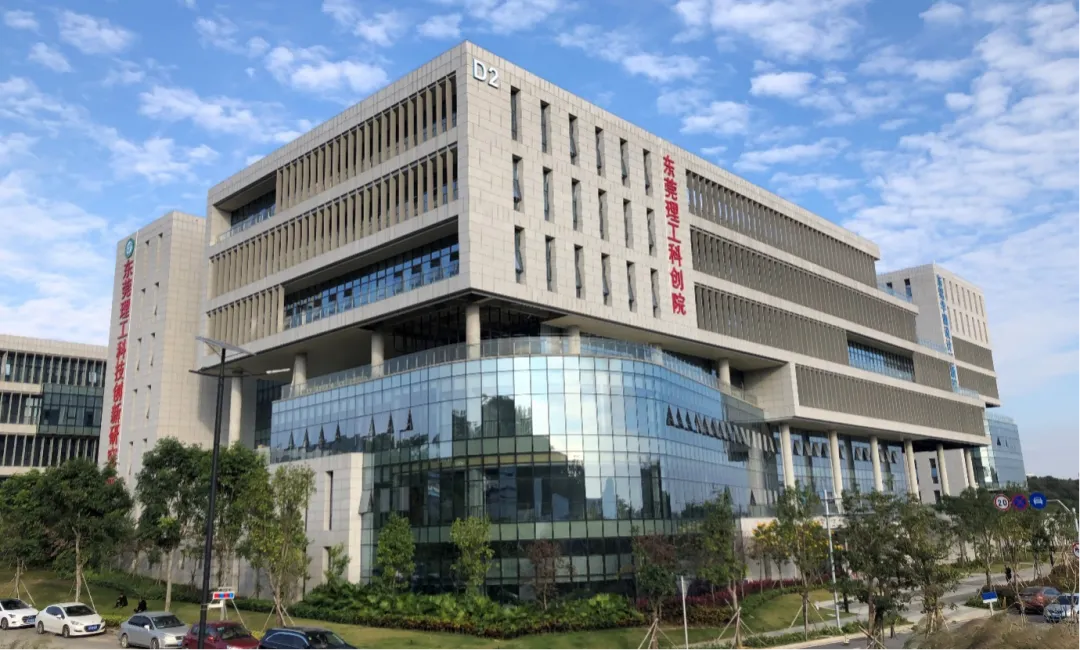
The 3D Printing and Intelligent Manufacturing Research Center at Dongguan University of Technology was established in 2016, with Professor Zhang Lijuan serving as the Chief Scientist. The center has since built a robust additive manufacturing research team with a strong theoretical foundation, practical capabilities, and a rigorous scientific approach. Team members are drawn from various schools and institutes within the university, including the Institute of Technological Innovation, the School of Mechanical Engineering, the School of Materials Science and Engineering, and the School of Excellence in Engineering (Innovation and Entrepreneurship).

At the end of 2020, the team collaborated with the Dongguan Institute of Materials Genome for Advanced Technologies, Beijing University of Aeronautics and Astronautics, and The University of Hong Kong to jointly apply for the Guangdong Provincial Basic and Applied Basic Research Project, "Applied Basic Research on High-Performance Metal Additive Manufacturing Materials and Processes." Professor Zhang Lijuan, representing the Dongguan University of Technology team, serves as the lead for the third sub-project, "Study on the Behavior and Microstructure Formation Mechanisms of Unconventional Solidification and Solid-State Phase Transformations."

Over the past five years, the project team has published 21 SCI papers, applied for 17 invention patents, and trained 19 postdoctoral fellows, doctoral students, and master's students. They have developed four sets of additive manufacturing equipment and four sets of online monitoring and inspection auxiliary devices. This includes the equipment used for in-situ printing process research at the CSNS Engineering Materials Spectrometer, the design, manufacturing, and installation of which were primarily led by the project team.


©2025 3dptimes.com All Rights Reserved