In the field of metal additive manufacturing, “whether it can be printed” is no longer the question.
What truly separates the leaders from the rest is the ability to consistently produce high‑precision finished parts with real engineering value. Especially in scenarios involving micro‑structures, thin walls, porous features, and complex internal cavities, conventional machining and standard metal 3D printing often hit limits in accuracy and consistency – and that is precisely where ultra‑high‑precision metal additive manufacturing proves its worth.
On April 17, 2026, it was noted that Yun Yao Shen Wei, a company focused on ultra‑high‑precision metal 3D printing, has publicly revealed multiple finished case studies. The company has been deeply engaged in micron‑scale metal 3D printing for many years, and has built a portfolio of ultra‑high‑precision metal parts that are producible, repeatable, and deliverable.
1. From “technical specifications” to “real finished parts” – the core measure of ultra‑high precision
Determining whether an ultra‑high‑precision metal additive manufacturing technology is mature ultimately does not depend on how impressive its parameters look on paper, but on three dimensions:
Can it reliably print micron‑scale structures?
Does it deliver engineering‑grade mechanical properties and surface quality?
Can the finished parts go directly into application or testing environments?
Based on its proprietary Micro‑LPBF/SLM micron‑scale metal additive manufacturing technology, YunYao Shenwei has achieved the following in actual finished parts:
Typical forming accuracy: 2–10 microns
Surface roughness Ra: 0.8–2.8 microns
Support‑free printing for various structures at angles above 10°
One‑shot forming of micro‑structures, significantly reducing post‑processing and assembly errors
These metrics are not just laboratory samples – they have been realized in actual finished parts.
Micron‑scale complex structure finished parts: represented by medical and precision functional components
Micron‑scale complex structure finished parts: represented by medical and precision functional components
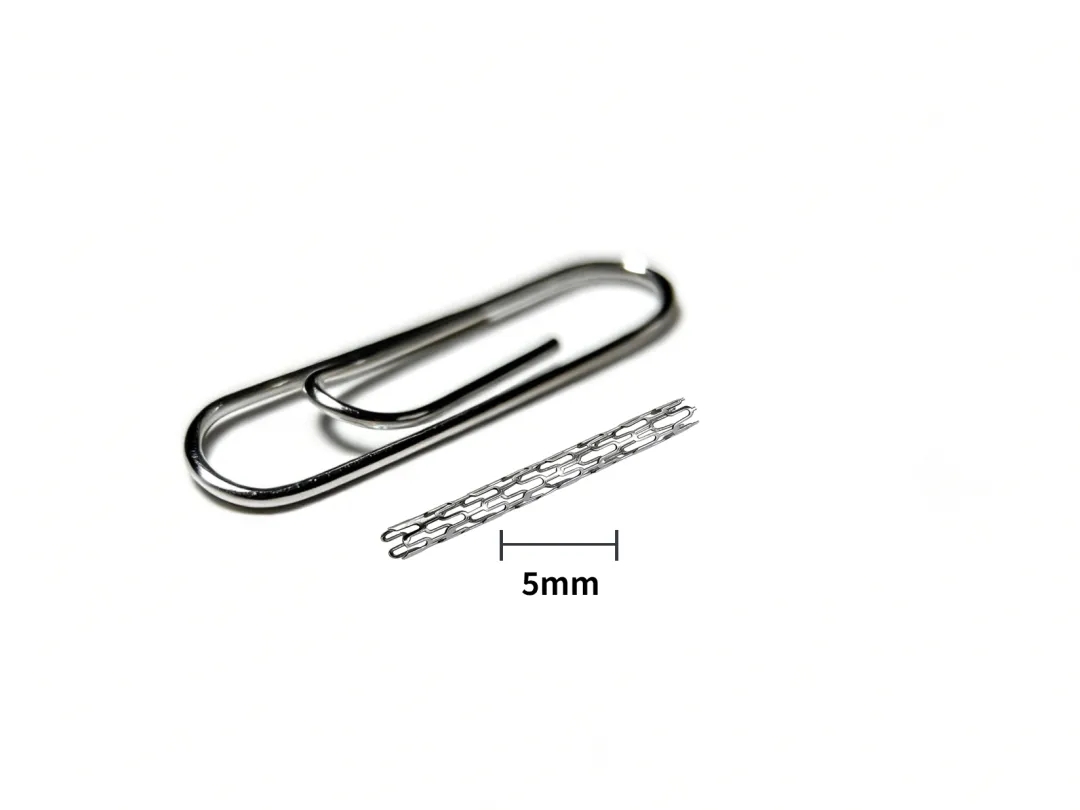
Among the finished case studies from YunYao Shenwei, Nitinol cardiovascular stent‑like parts are a highly representative micron‑scale printing achievement. Such finished parts typically feature:
Extremely thin walls combined with regular micro‑hole structures
Very high requirements for dimensional consistency and roundness
Strict demands on surface quality and metallurgical bonding
Comparison of a 3D printed vascular stent vs. a paper clip
With the micron‑scale printing process, stent‑like parts can be formed with complex, irregular hole structures in a single print, avoiding the deviations caused by multiple processing and assembly steps in traditional methods, while ensuring mechanical continuity and reliability of the overall structure.
These finished parts are widely used in medical device R&D, micro‑fluidic structure validation, and precision functional structure testing.
3. Precision mechanical and integrated structural finished parts: breaking the “manufacturability boundary”
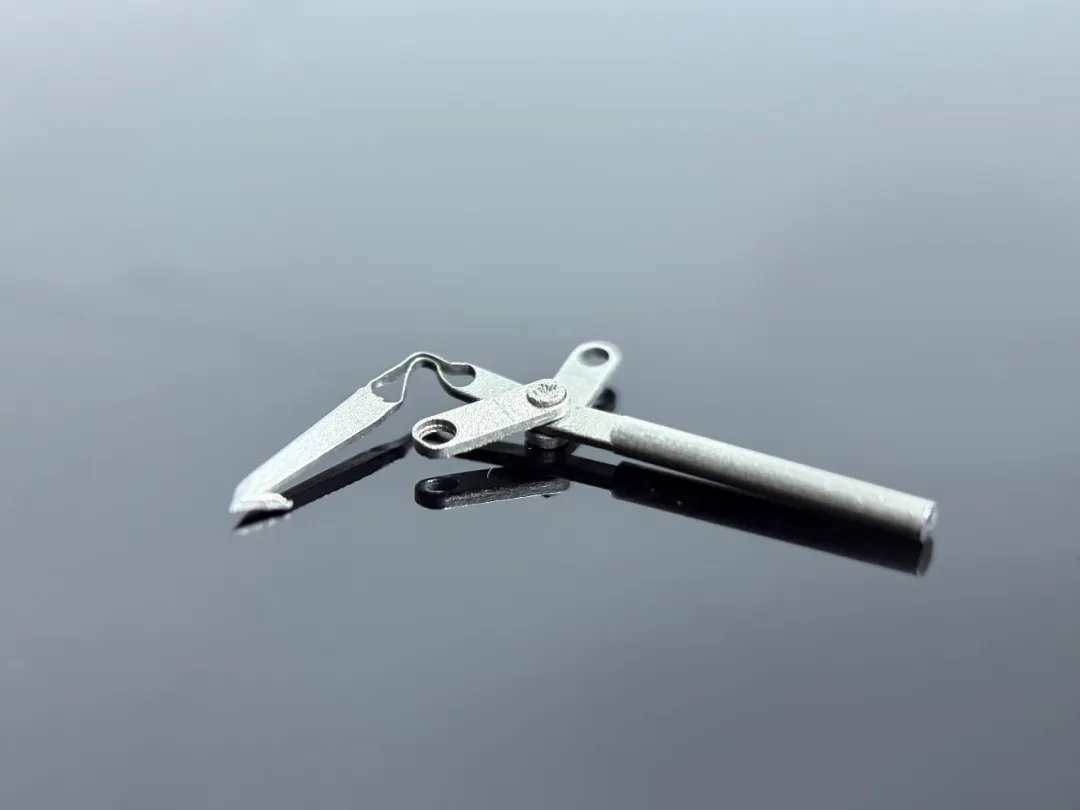
Micro‑hinges and complex linkage structures
In precision mechanics, many structures are not “impossible to make” – rather, the cost and consistency of making them are unacceptable. Using micron‑scale metal additive manufacturing, YunYao Shenwei has successfully printed various finished parts that integrate embedded hinges, thin‑wall linkages, and complex overhang structures in one piece.
The common features of these finished parts are:
Multi‑function structures formed in one piece, requiring no post‑assembly
Overhang and internal cavity structures printed with minimal or no supports
Local feature sizes reaching tens of microns
For high‑end instruments, precision mechanisms, and small actuation units, such finished parts are not only “usable” – they significantly shorten R&D cycles and reduce trial‑and‑error costs.
4. Finished parts for R&D and engineering validation: serving real development scenarios
Material research and structural validation samples
In universities, research institutes, and corporate R&D departments, ultra‑high‑precision metal additive manufacturing is often used as an engineering validation tool.
YunYao Shenwei has completed relevant finished parts including:
Micro‑scale porous structure samples
Gradient material test pieces
Complex internal flow channel test parts
Micro‑scale mechanical test specimens and structural comparison parts
Leveraging an open process system with more than 200 adjustable parameters, these finished parts can be precisely controlled for different materials and structures, allowing researchers to focus on material behavior and structural performance rather than being repeatedly limited by manufacturing accuracy.
5. Practical finished part applications for high‑end manufacturing
Although some commercial finished parts cannot be disclosed due to customer confidentiality agreements, based on completed projects and application areas, YunYao Shenwei’s ultra‑high‑precision finished parts have formed a stable application foundation in several high‑end manufacturing directions:
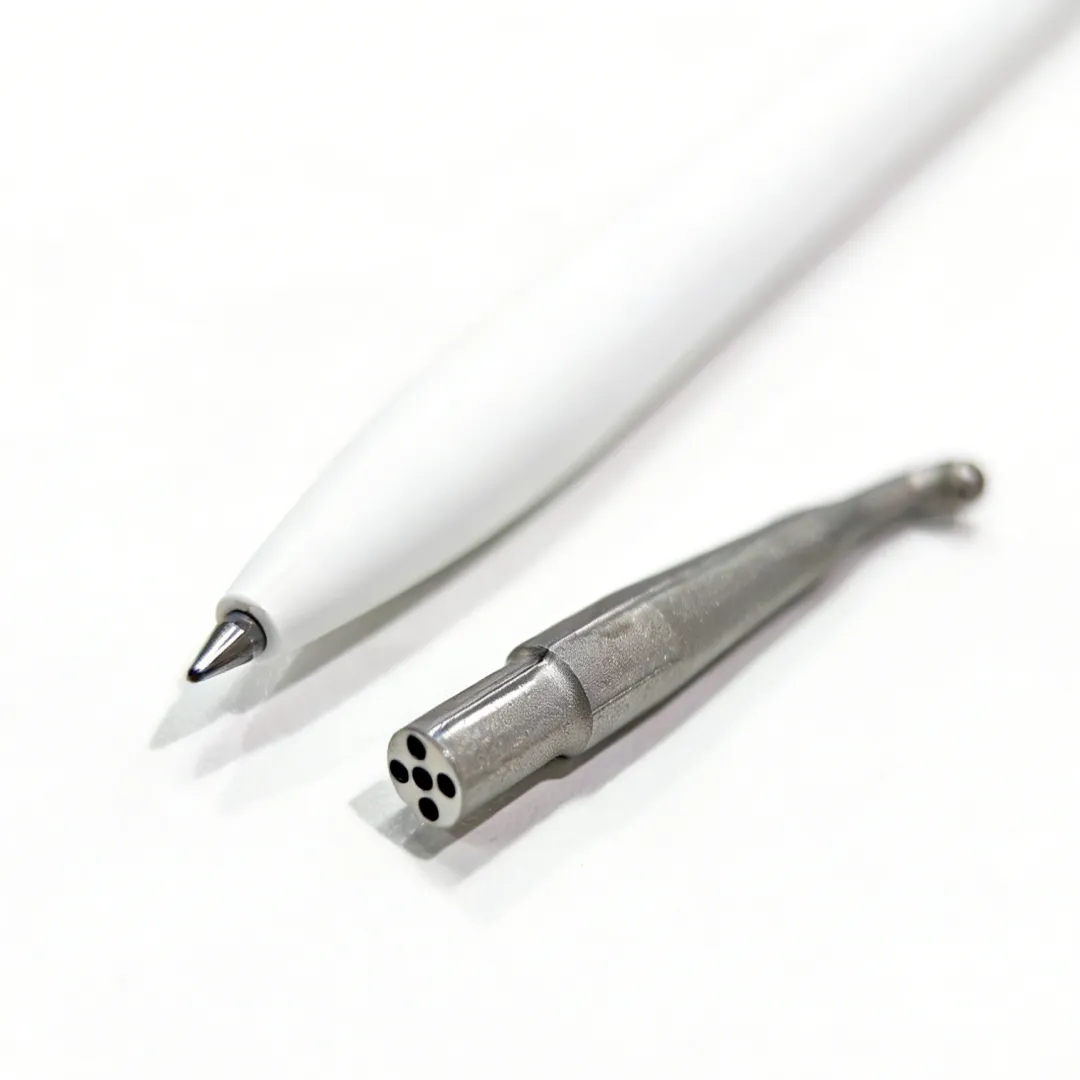
Aerospace and high‑temperature structural parts – small fuel nozzles, precision support structures, nickel‑based superalloy complex channel parts
Medical and personalized implants – precision implant structures in titanium and Nitinol, highly consistent customized parts
Microelectronics and precision instruments – high‑precision sensor structures, micro metal housings and functional modules
What these finished parts have in common is extremely high demands for precision, reliability, and structural integrity – areas where traditional processes struggle to balance efficiency and quality.
6. YunYao Shenwei’s core manufacturing capabilities as seen through finished parts
Returning to the concept of “finished parts” themselves, Yun Yao Shenwei’s advantage lies not in a single parameter, but in a complete closed‑loop manufacturing capability:
Micron‑scale forming accuracy ensures manufacturability of complex structures
Excellent surface quality significantly reduces post‑processing
Support‑free printing capability increases design freedom
Multi‑material and high‑temperature preheating capability broaden application boundaries
Proven mass production experience ensures consistency of finished parts
For this reason, YunYao Shenwei’s ultra‑high‑precision metal additive manufacturing is steadily moving from “technology leadership” to “engineering trustworthiness.”