Home  >  News

September 18, 2026      News      9896

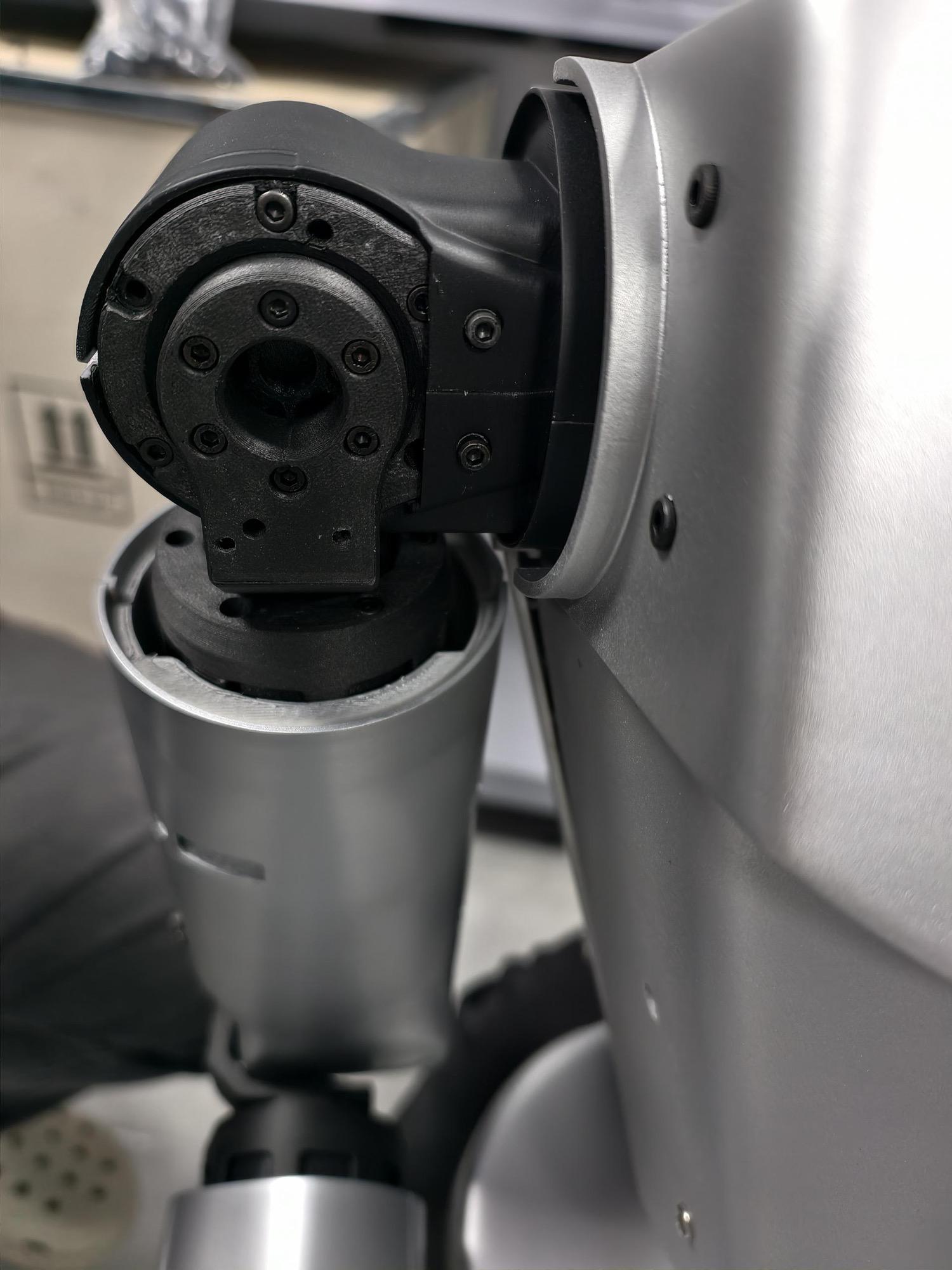
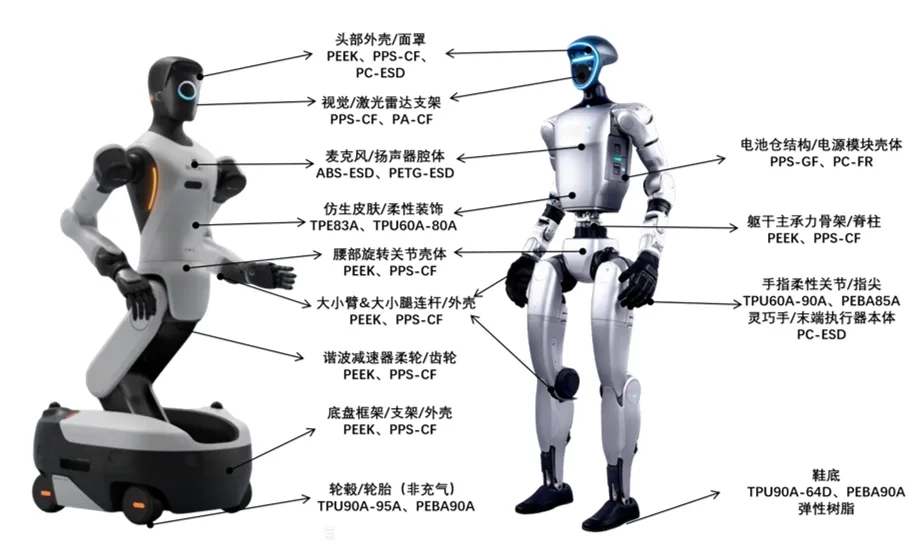
At 2026 Formnext China, eSUN showcased a very special humanoid robot. Its main structural parts, outer shell, and limbs are all made by 3D printing.

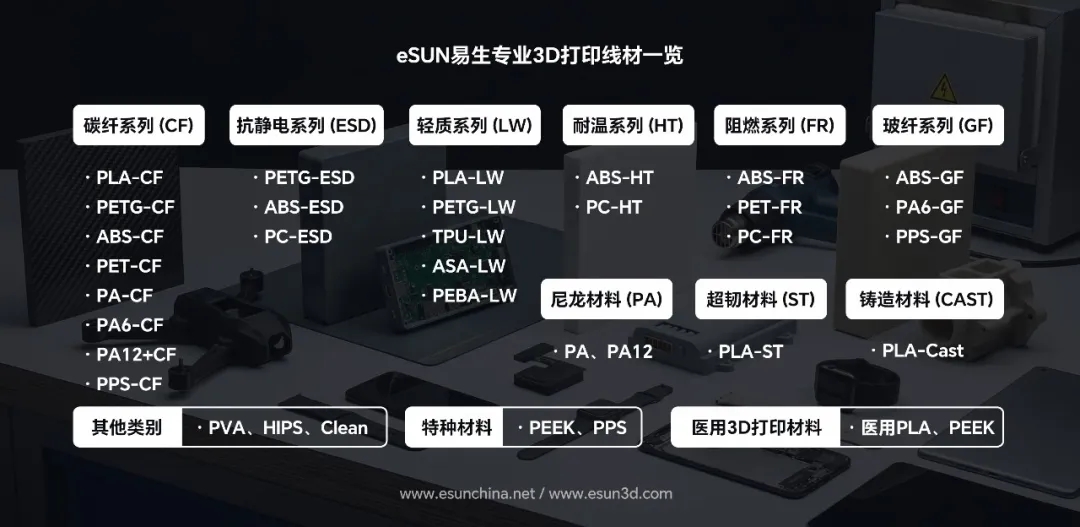
The skeleton uses PA-CF carbon-fiber nylon, while the limbs and buffering parts use a single-component elastic resin. One is hard, the other is elastic—the material properties directly translate into the robot’s functions.
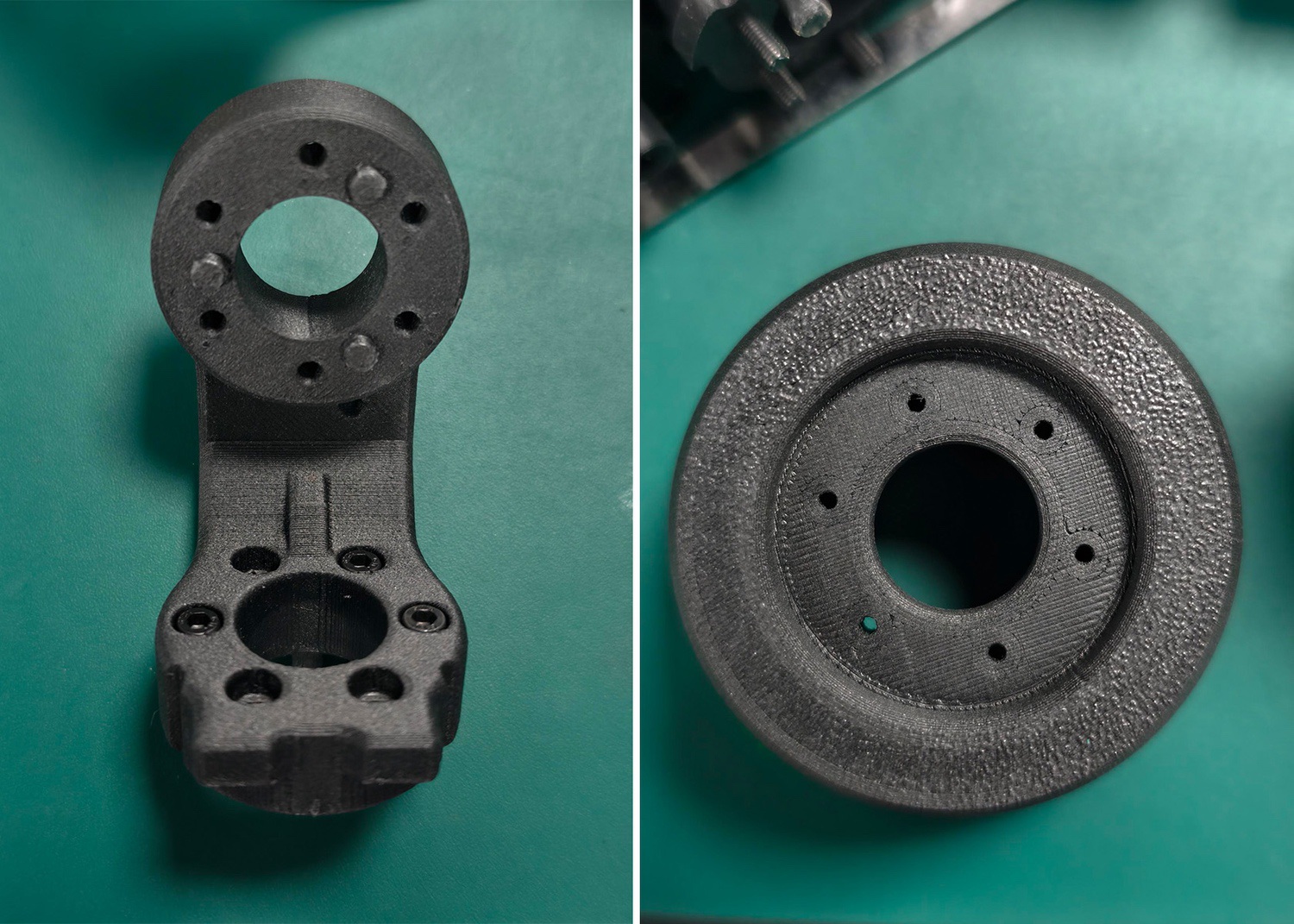
FDM-printed PA-CF is mainly used for joint brackets, connecting bases, and load-bearing structures. These parts must carry loads during movement while staying as light as possible. Carbon-fiber nylon is much less dense than aluminum alloy, which helps reduce motor load and energy consumption and improves response speed. It also offers high rigidity, high strength, wear resistance, and fatigue resistance, with low shrinkage and stable dimensional accuracy, making complex assembly and structural validation easier. For prototypes and small-batch parts, PA-CF makes the “plastic instead of aluminum” lightweight route more practical.
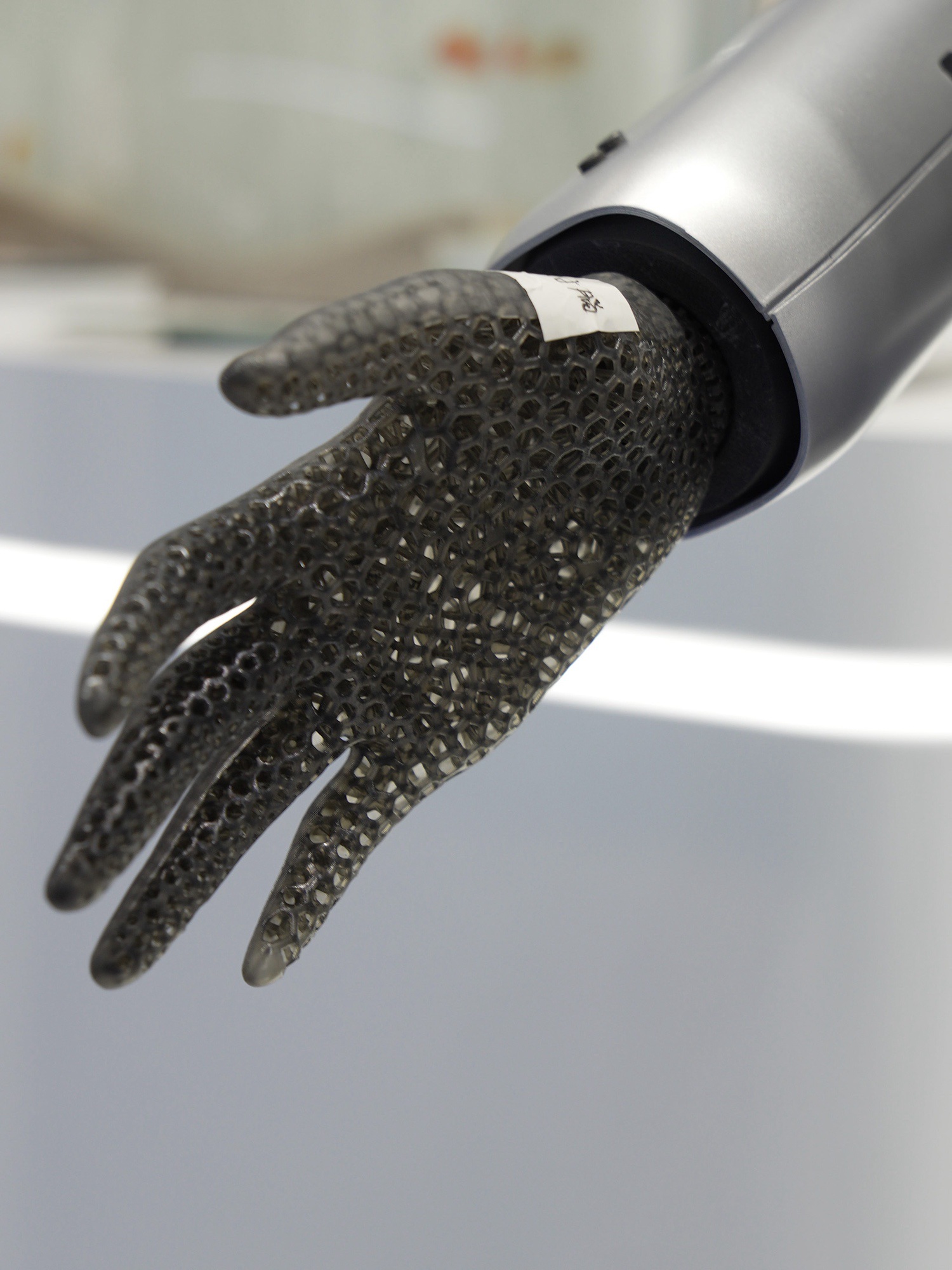
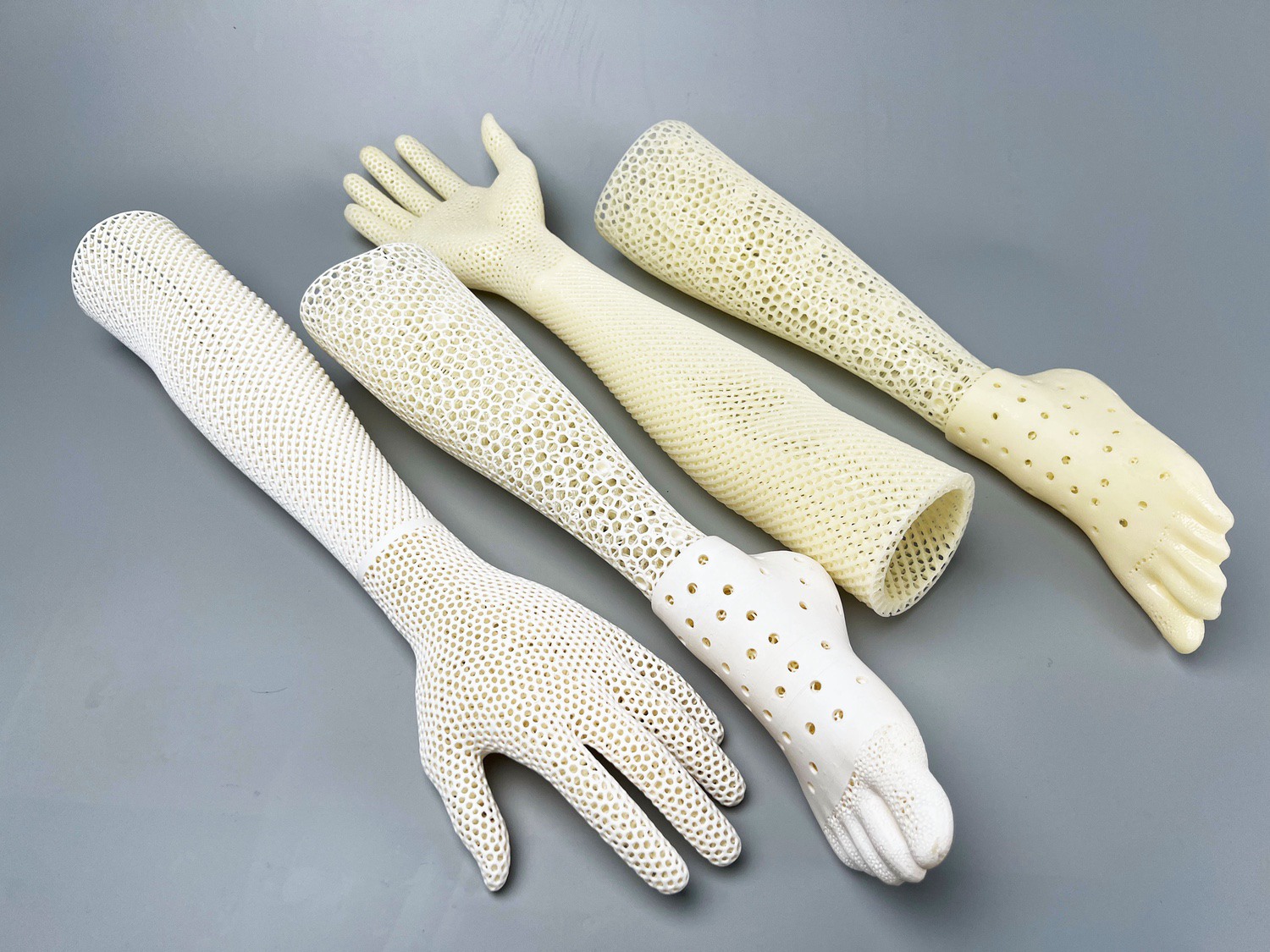
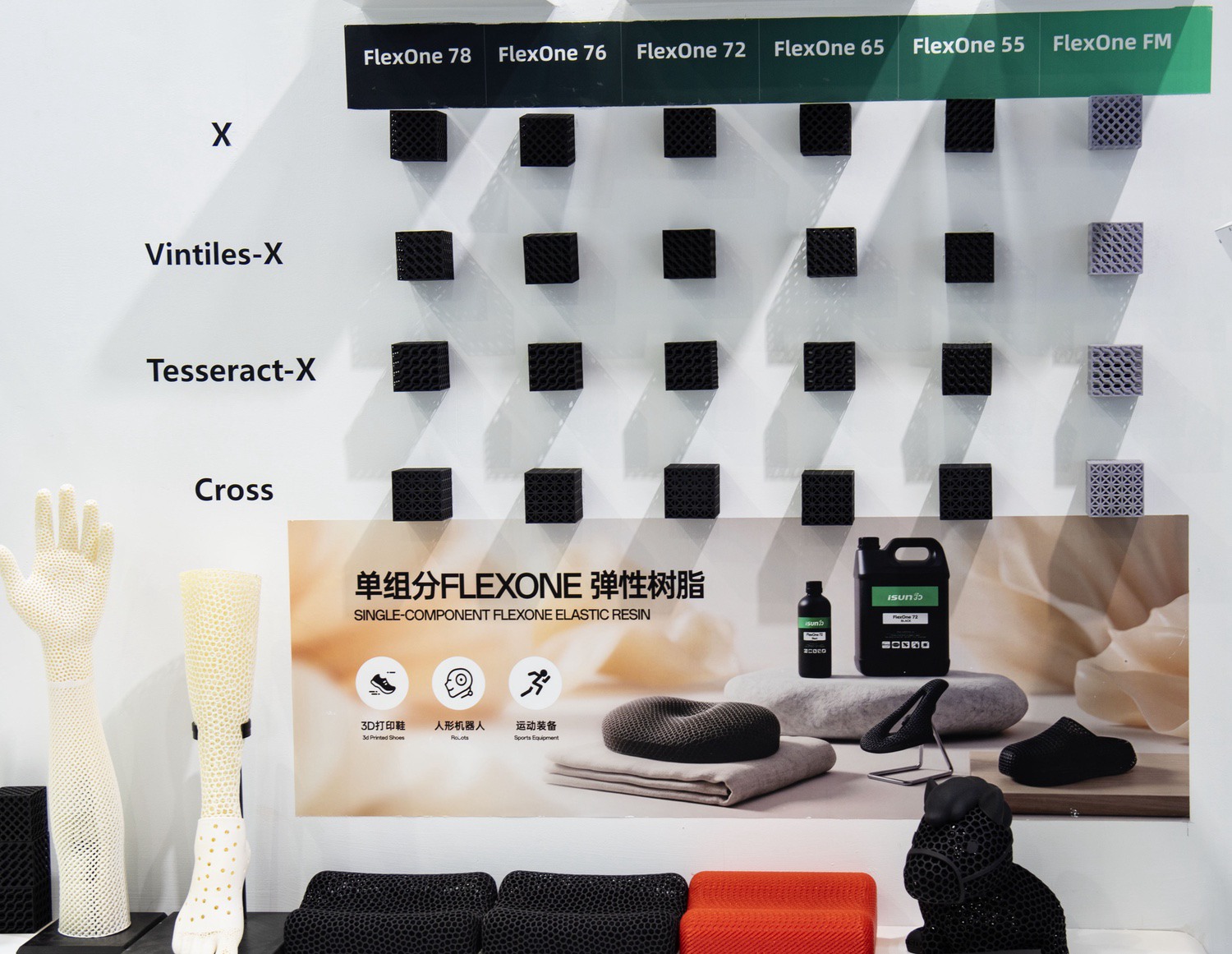
On the photopolymer side, elastic resin acts like the robot’s “muscles and skin.” Combined with biomimetic lattice design, it can print complex hard-and-soft integrated components in one piece. For bionic hands and feet, it can create an internal porous skeleton and use an external lattice to achieve gradient stiffness—so the part can bear high loads while still having a human-like soft touch. FlexOne single-component elastic resin is ready to use, requires no mixing, and is not limited by pot life, improving efficiency and part consistency. The 55A version has high elongation at break, good rebound, and excellent flex fatigue resistance. It has also passed skin sensitization and irritation tests, making it suitable for muscle and joint applications in humanoid robots.
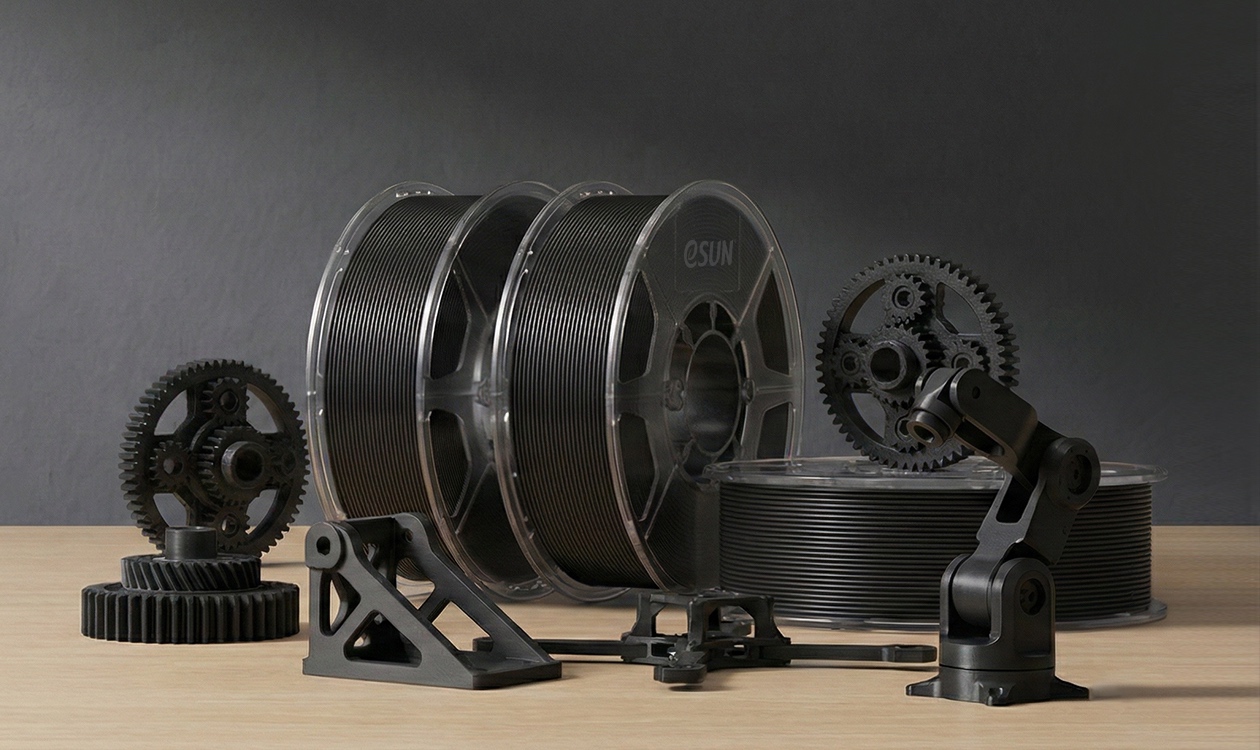
Humanoid robots iterate quickly, so manufacturing must be flexible. 3D printing turns digital models directly into physical parts; design changes do not require new molds, and small-batch validation can respond quickly. Materials are the foundation for making this real. From high-strength, lightweight materials such as PA-CF, PA6-CF, and PPS-CF, to directions like high-temperature resistance, wear resistance, flame retardancy, and anti-static properties, and then to FlexOne elastic resin, eSUN is using material innovation to keep pushing the boundaries of 3D printing in robotics.


©2025 3dptimes.com All Rights Reserved