Home  >  News

May 13, 2026      News      9903

4D printing adds a "time dimension" to 3D printing, allowing structures to change shape automatically under stimuli such as heat, moisture, or light. This concept is not entirely new.

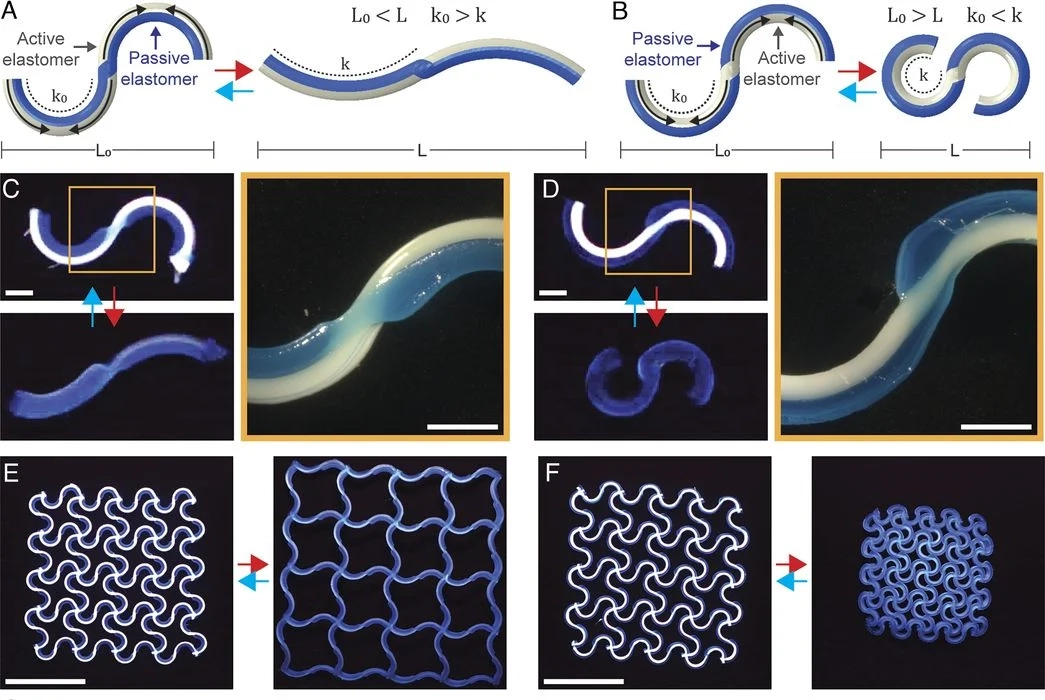
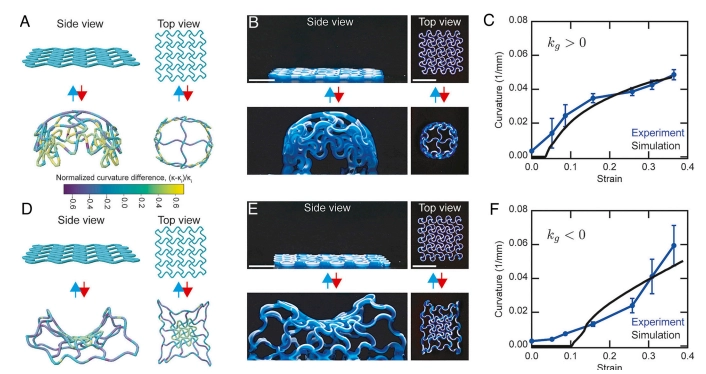
Conventional multi-material extrusion or direct ink writing (DIW) has primarily relied on planar bilayer structures or simple hinges to achieve deformation, with shape changes largely confined to the print layer plane. A recent study published in PNAS shows that the Lewis Lab at Harvard University has used a rotating multi-material 3D printing method to encode three-dimensional bending and twisting responses directly into each extruded filament, building lattice structures with programmable shape transformation capabilities. This breakthrough is expected to accelerate the development of 4D printing technology.
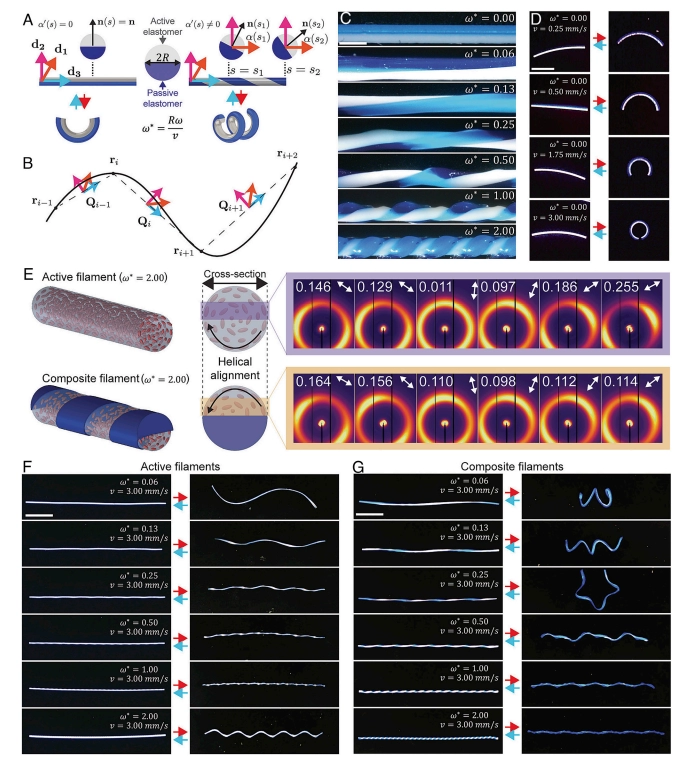
The core idea is to co-extrude an "active ink" (e.g., a liquid crystal elastomer that expands or contracts when heated) side‑by‑side with a dimensionally stable "passive material." The mismatch between the two materials under stimulation generates an internal torque, similar to how a bimetallic strip works. The key is that the nozzle rotates continuously during extrusion, spiraling the material interface along the filament's axis. The combination of rotation speed, filament diameter, and the relative position of the two phases determines whether the structure bends, twists, unfolds, or locks into a curled shape when heated. The team has successfully printed sinusoidal filament lattices that can reversibly expand/shrink or even undergo out‑of‑plane deformation, and they have demonstrated concept prototypes such as a temperature‑controlled filter and a gripper.
Compared to existing 4D printing methods that only support single‑plane bending, this "programming motion at the filament level" achieves spatially varying deformation responses. Currently, the technique relies mainly on direct ink writing (DIW), which limits material choices and has relatively slow printing speeds. In addition, mainstream slicing software does not yet support integrated control of nozzle rotation, toolpath, and multi‑material coordination, so a customized toolchain is still required. Nevertheless, this approach holds promise for applications in soft robotics, biomedical devices, and consumer products that need to be shipped compactly and deployed on‑site. When extrusion‑based printing determines not just where material is placed, but also how it will move in the future, designers may begin to see each filament as an integrated actuation unit rather than just a structural material.


©2025 3dptimes.com All Rights Reserved